
MALDIVES
OVERVIEW – MALDIVES
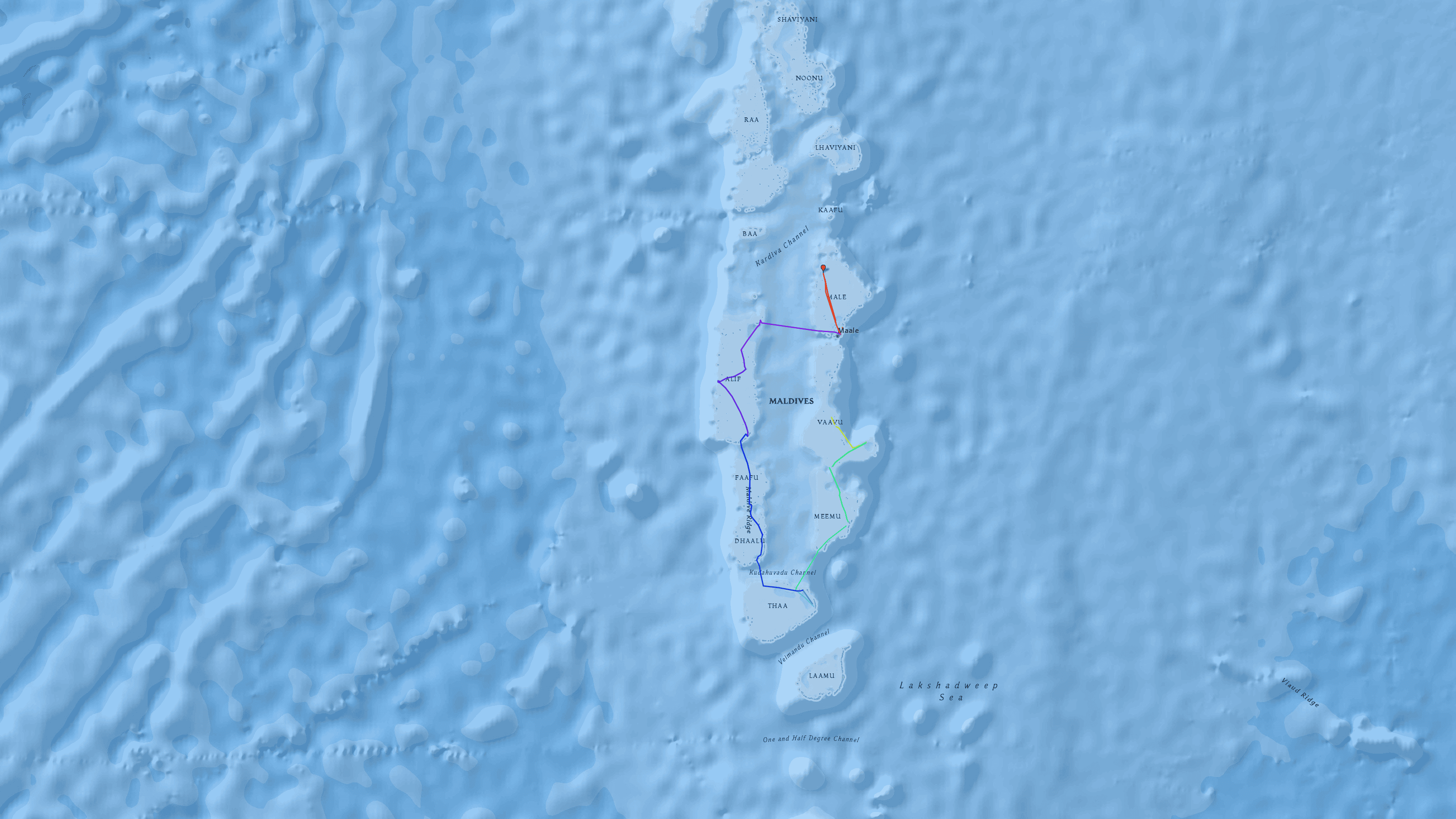
Lisa, my diving partner, and I booked our trip to the Maldives a full year in advance. As January 2023 approached, the anticipation grew enormous. At the end of 2022, I met my girlfriend, which made saying goodbye three months later all the harder. Ahead of us were three weeks filled with snorkeling and diving adventures. We spent the first five days at a resort called Eriyadu Island, followed by a liveaboard diving safari on the vessel Carpe Vita.
For me, this trip was an emotional rollercoaster — but overall, a very positive experience. But see for yourself!
ERIYADU ISLAND RESORT – MALDIVES
As soon as we landed, it became clear just how incredibly hot it was. Luckily, we found our speedboat fairly quickly and were soon on our way to the island. The only thing casting a shadow over it all was the fact that none of my luggage had arrived. I had nothing — just my camera, my dive mask, and the clothes I was wearing.
Never mind, we were in paradise after all — surely there would be something to buy. After racing across the Indian Ocean and finally arriving at the resort, we checked in. Then came the next blow: there were no clothes or hygiene products available to buy. Fortunately, I was wearing zip-off pants — which meant I technically already had two pairs of trousers. With borrowed clothes from Lisa, I could at least go to the restaurant, and wearing shorts, a dive mask, and my camera, I could go snorkeling. But during the first night, my tonsils became inflamed as well. Thankfully, Lisa came to the rescue once again — this time with antibiotics.
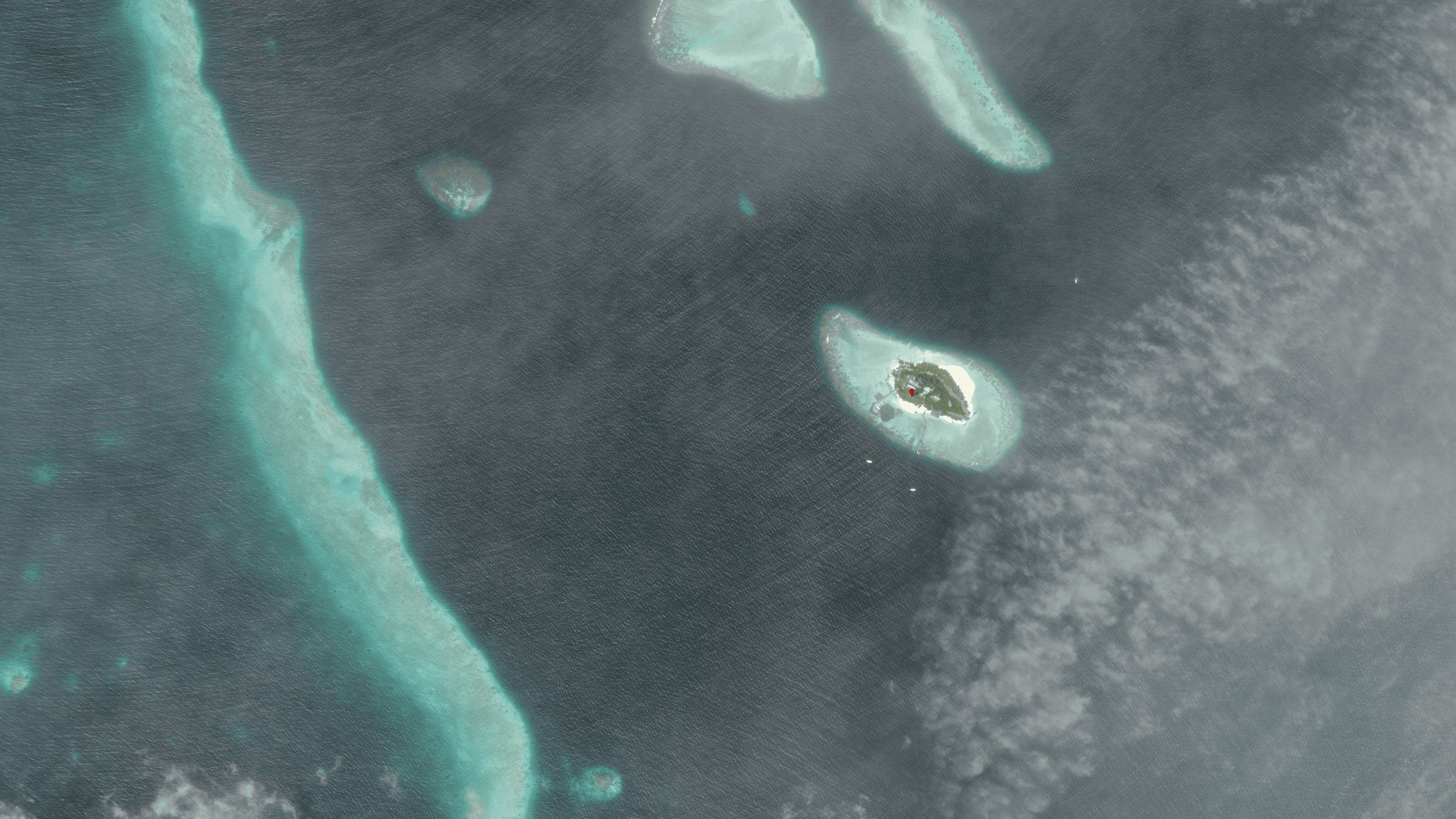
The next day already looked much brighter: my luggage was on its way, and my throat felt much better. So the trip could finally continue. I used the time to fly my drone for a few rounds. Since the island was tiny — you could walk around it in five minutes — I managed to capture some fantastic photos and videos.
MY LUGGAGE & THE HOUSE REEF
On the third day, it finally arrived: my luggage. The bright yellow, fully packed bag was already waiting for me at the reception. I unpacked everything immediately, brushed my teeth, dug out my swim gear — and off we went.
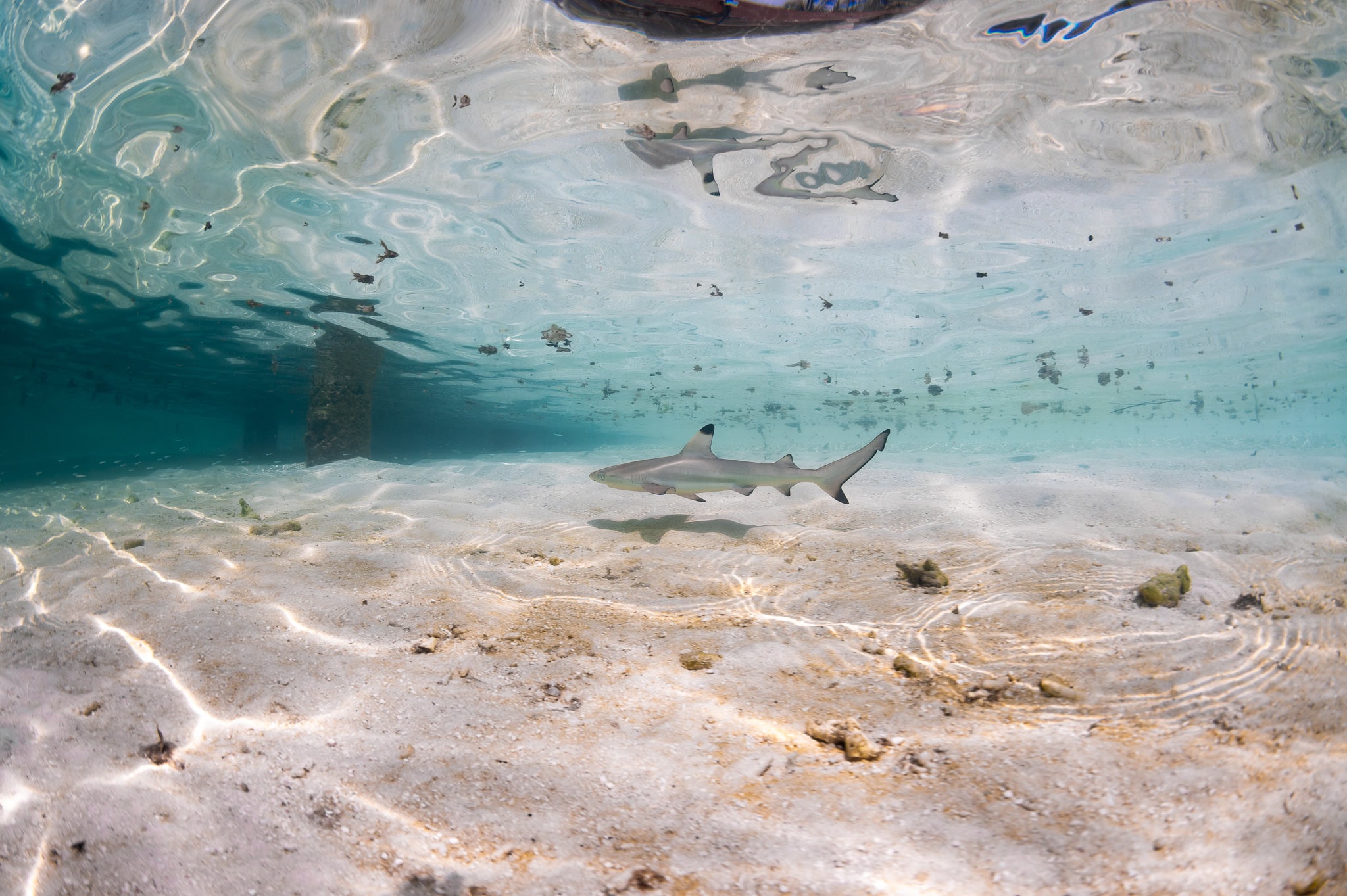
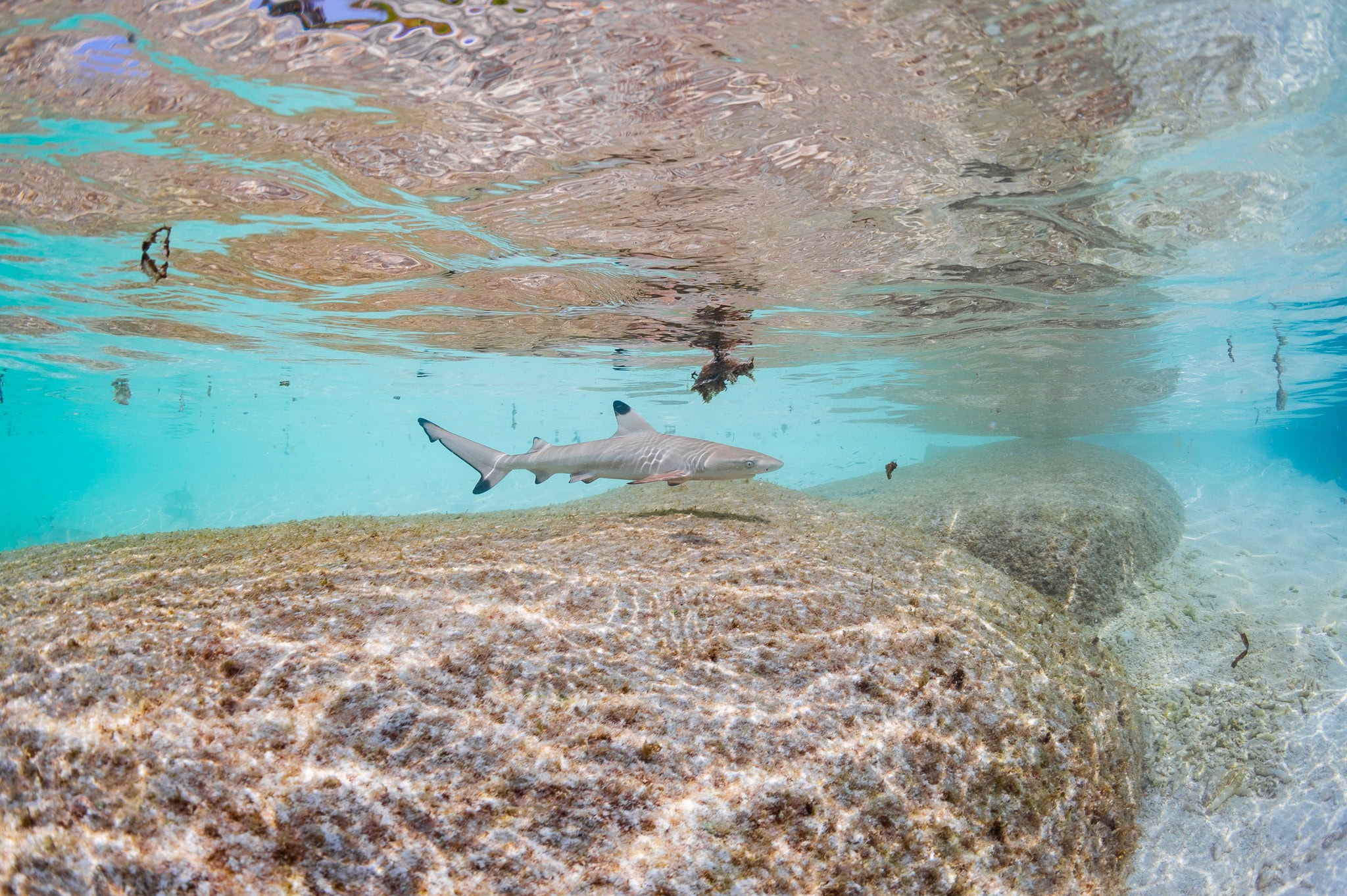
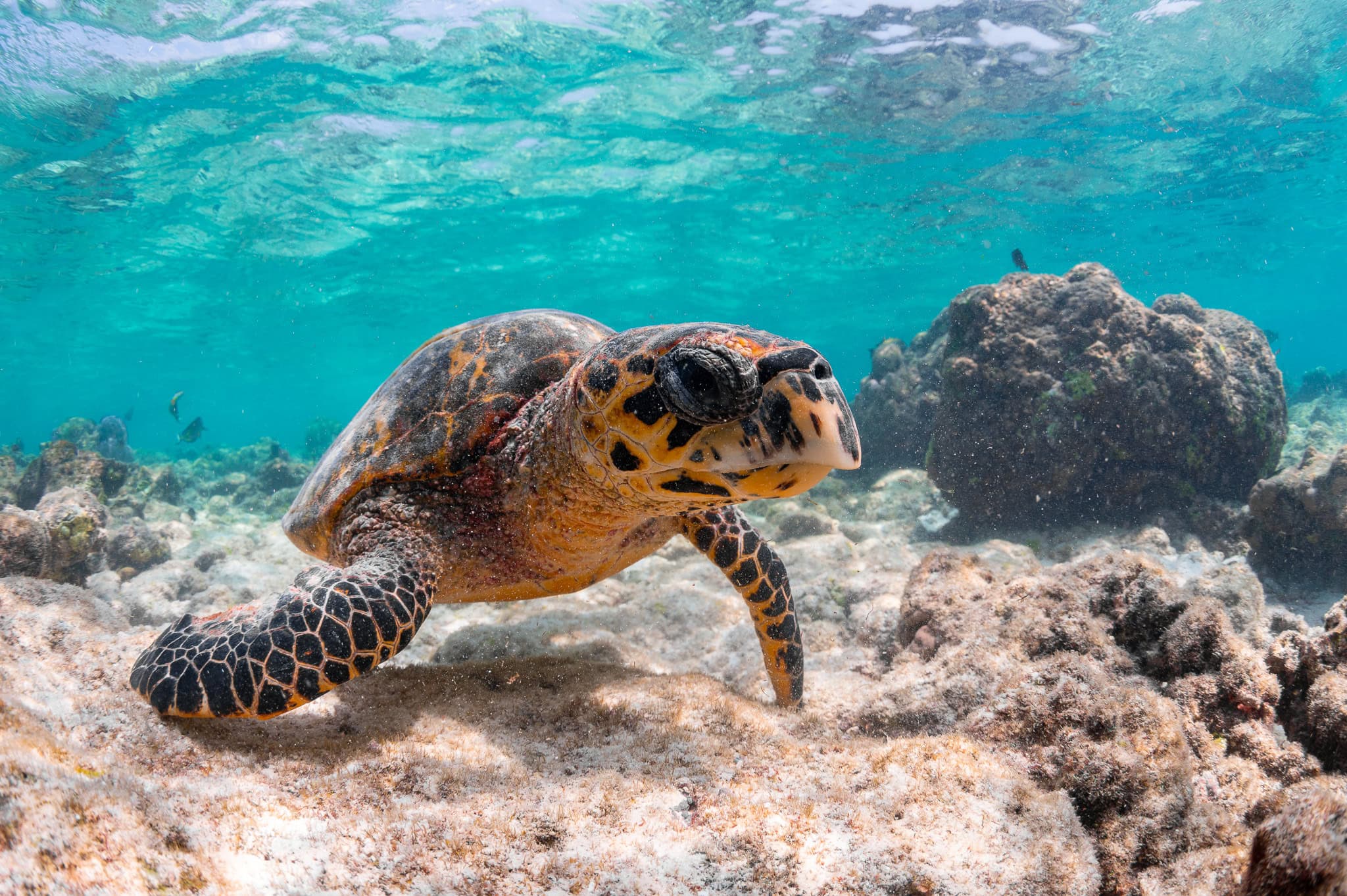
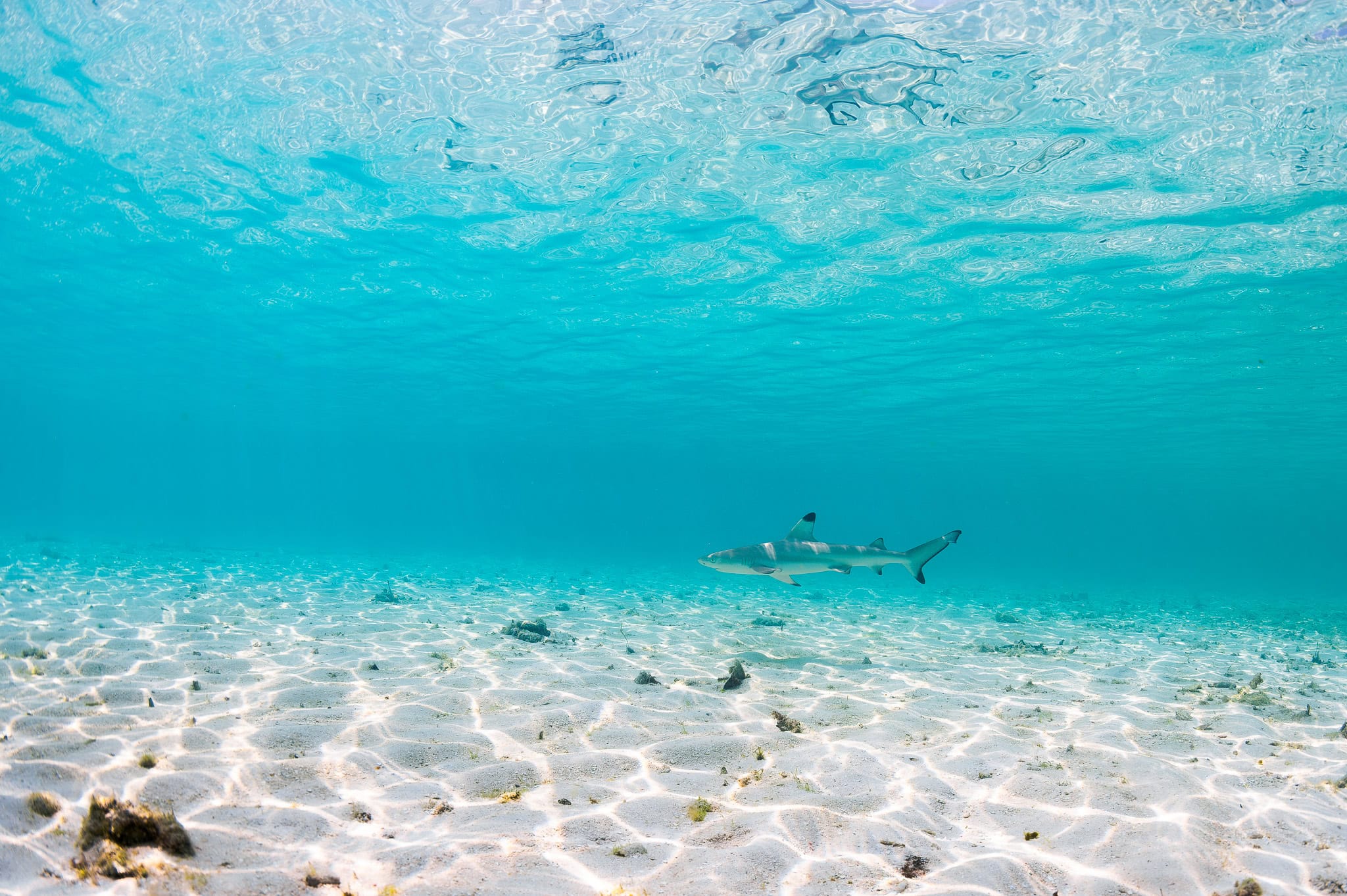
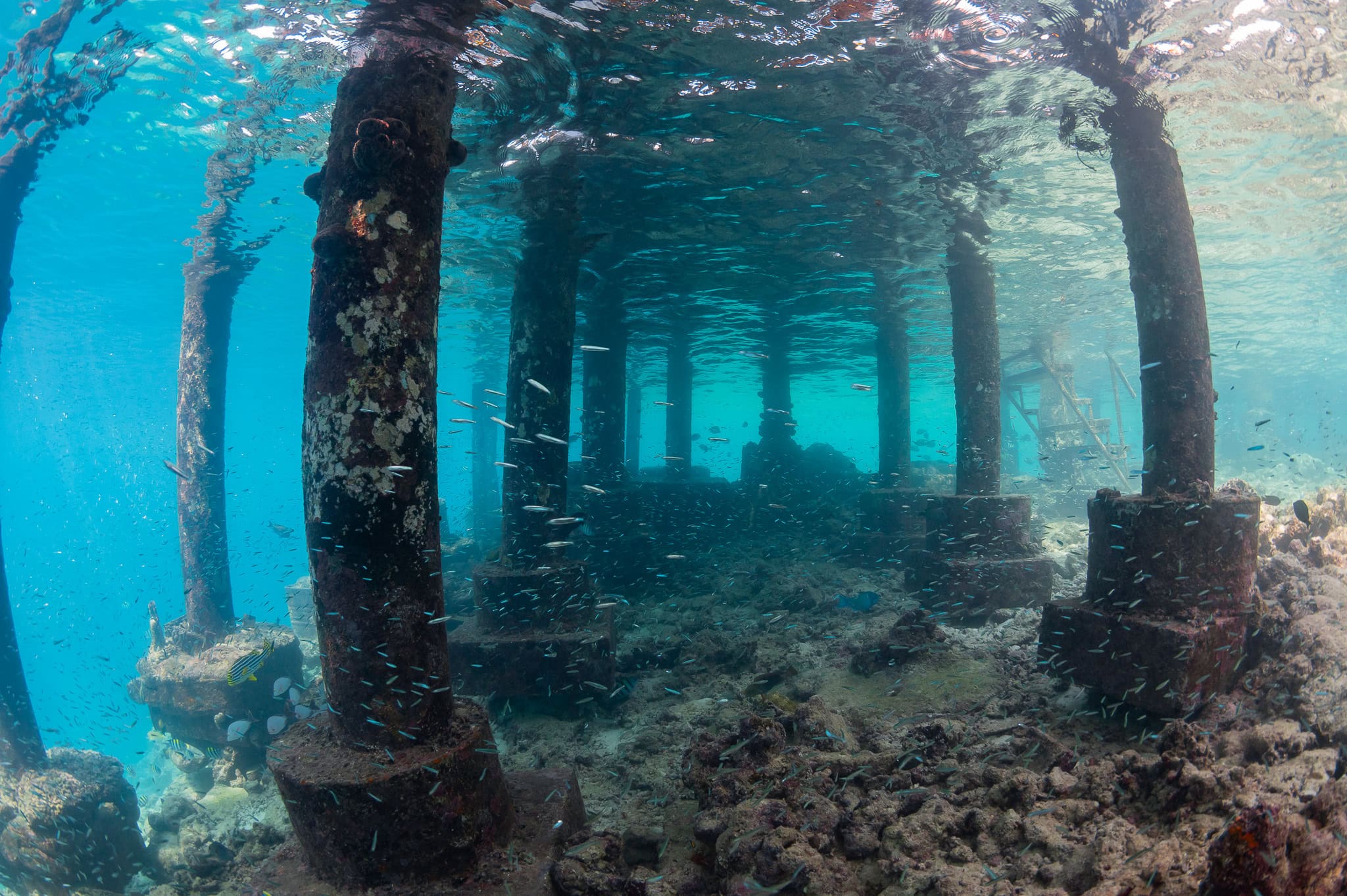
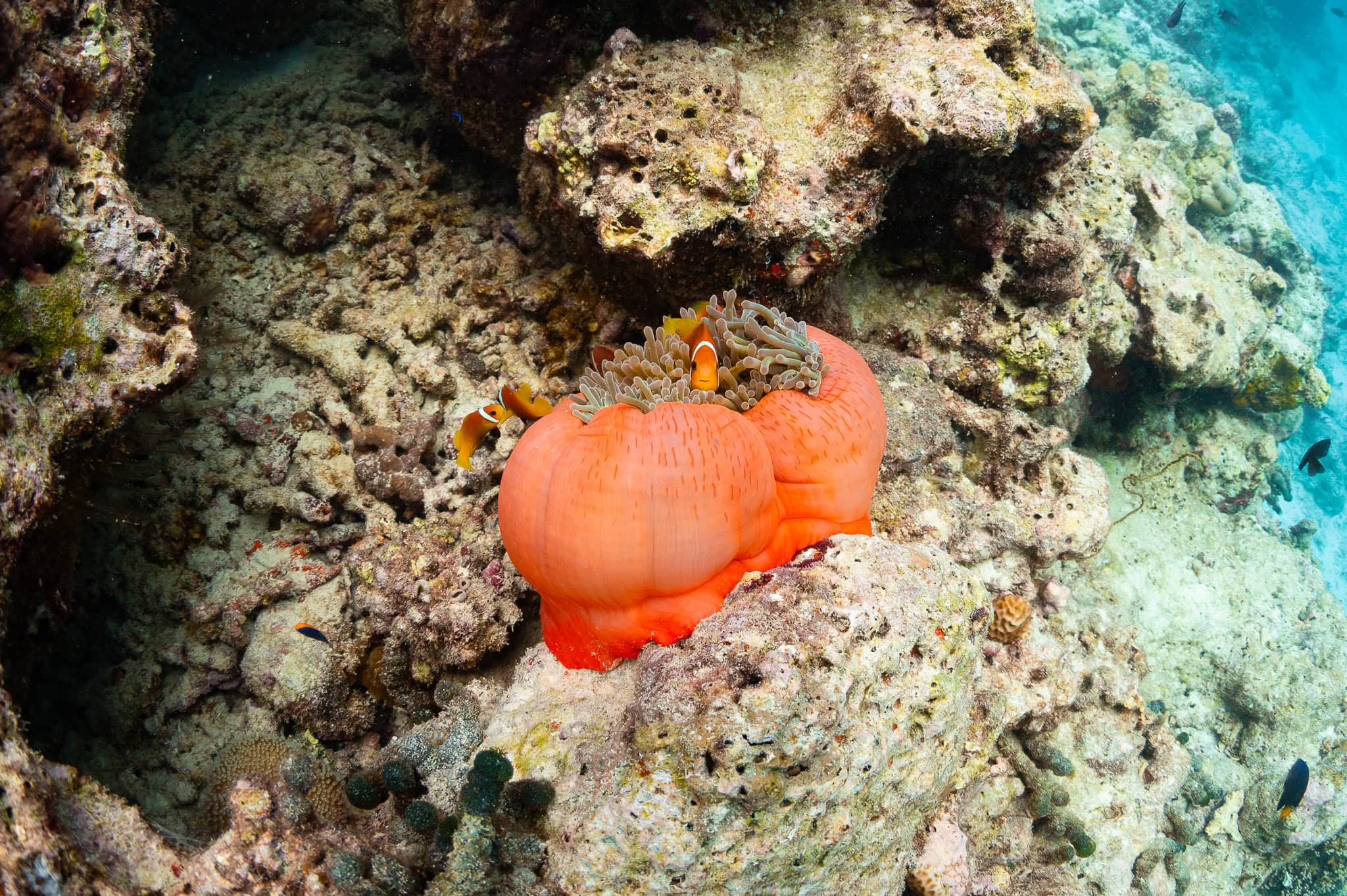
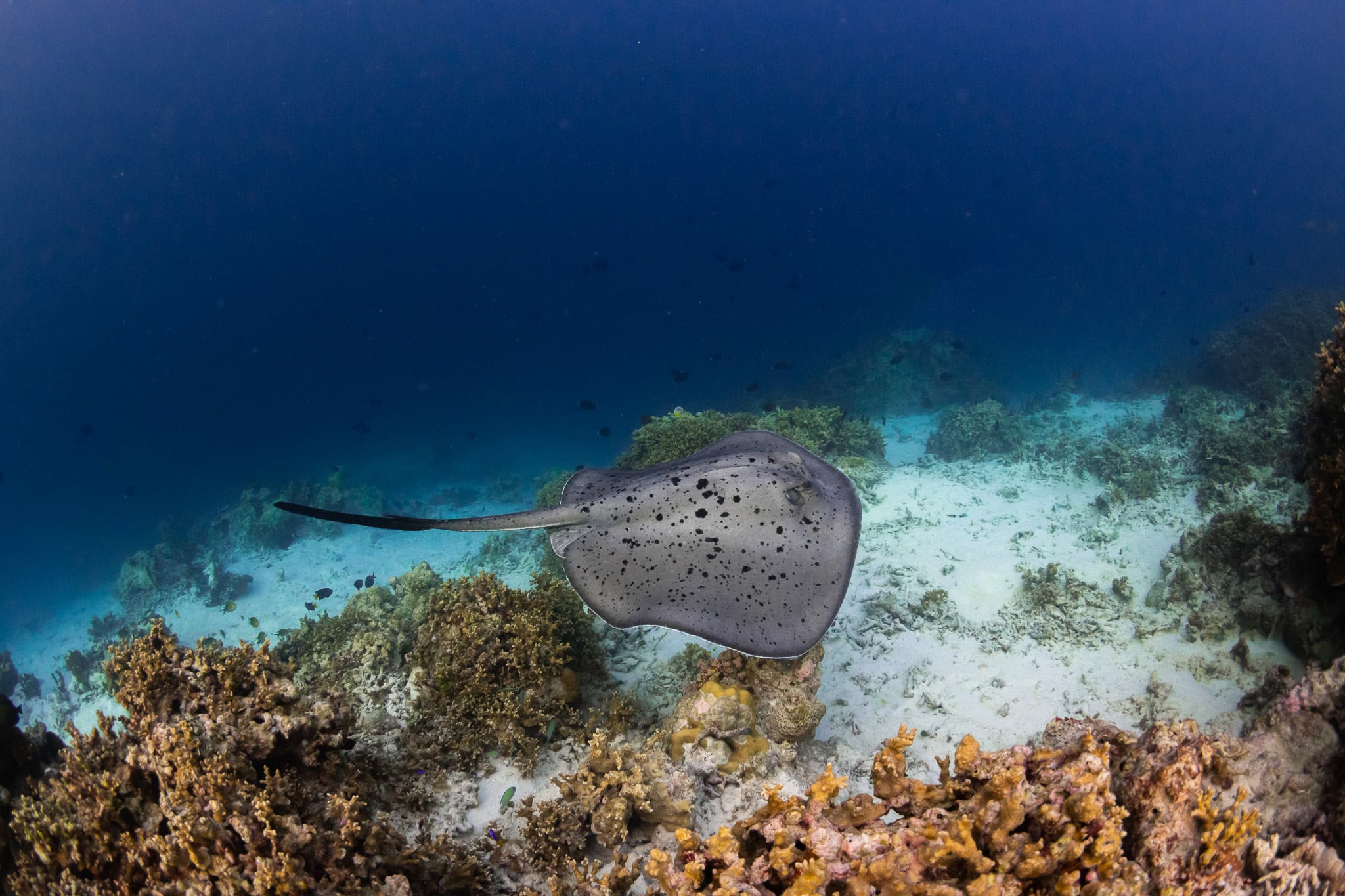
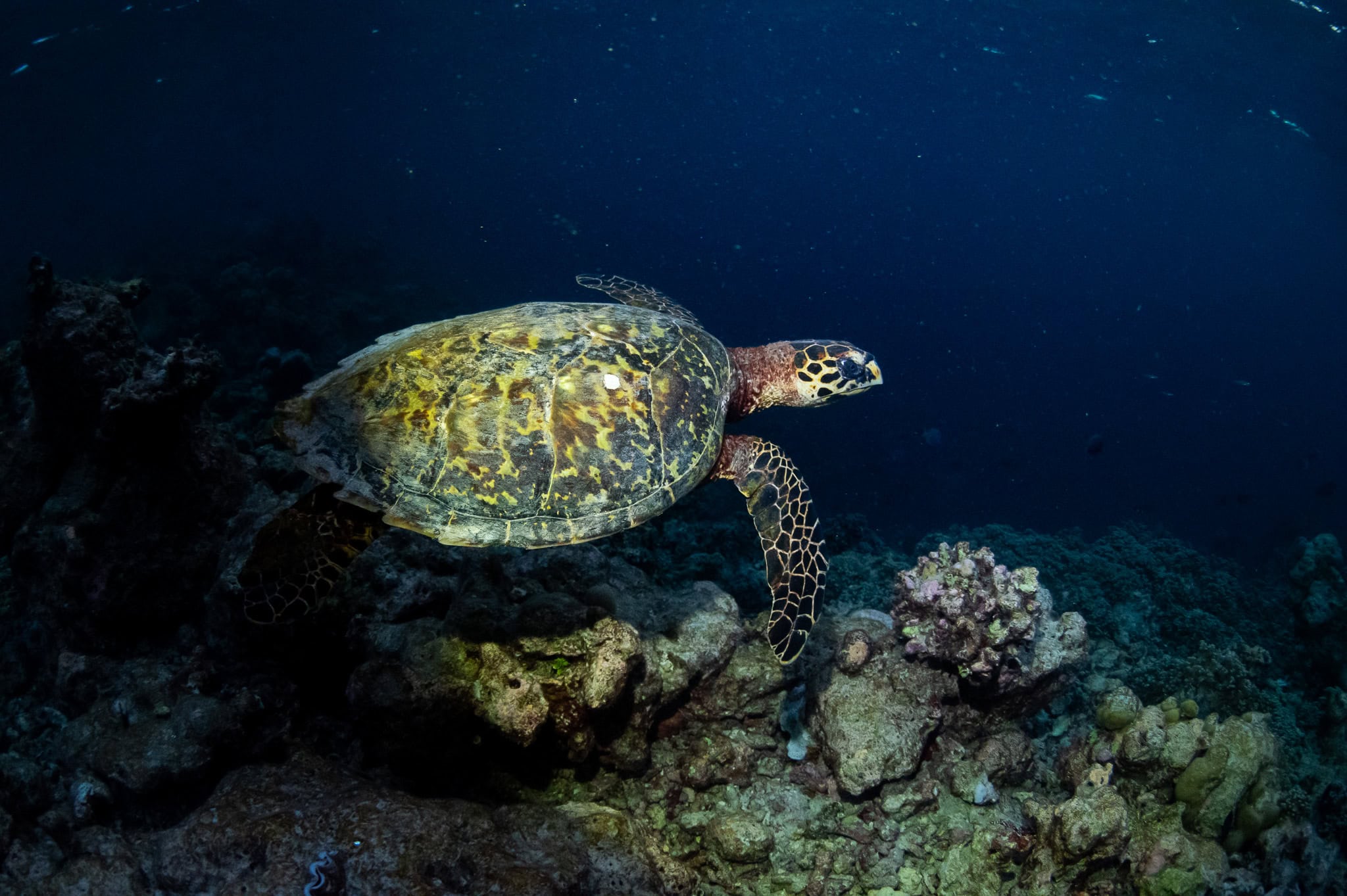
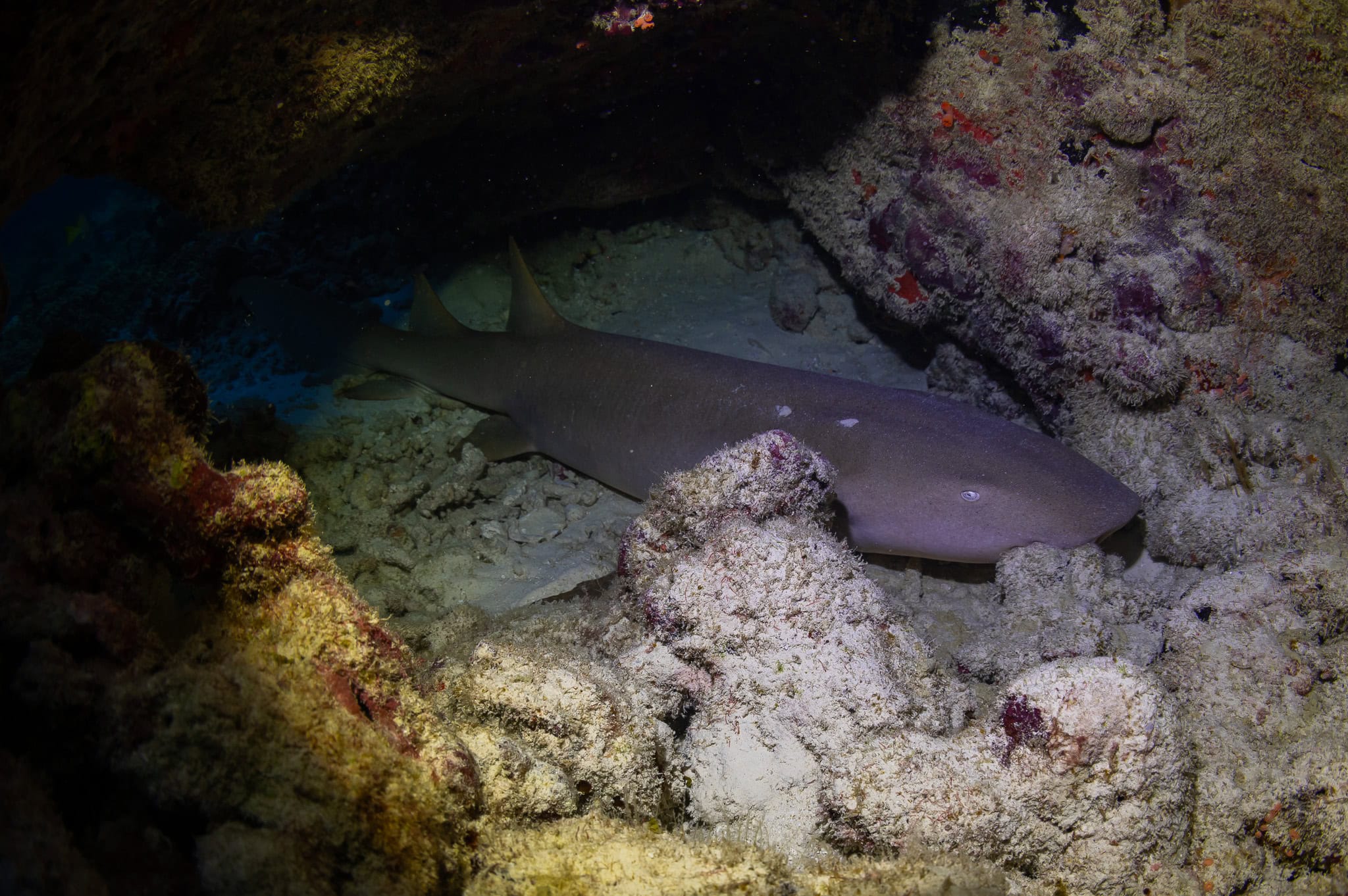
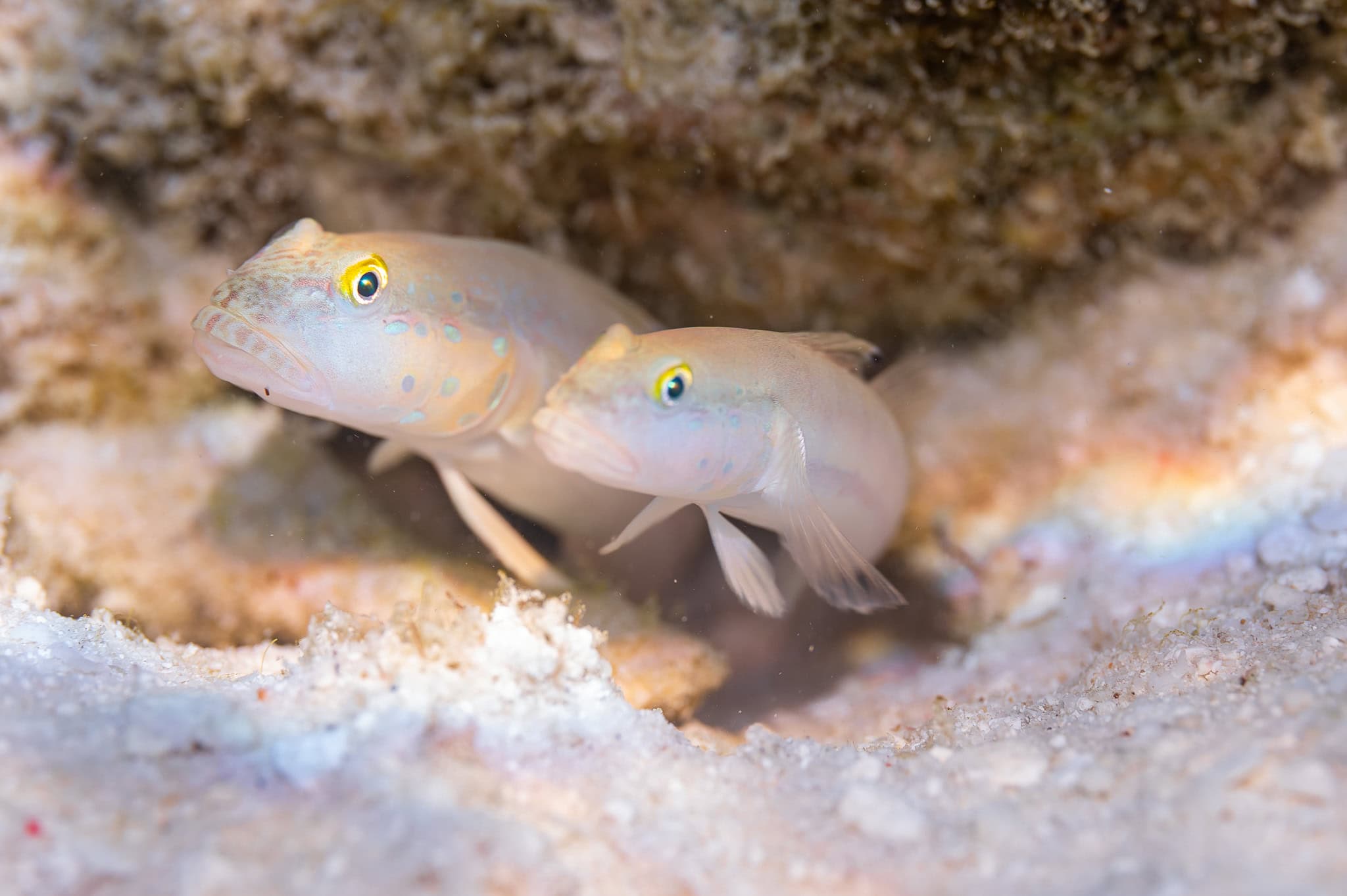
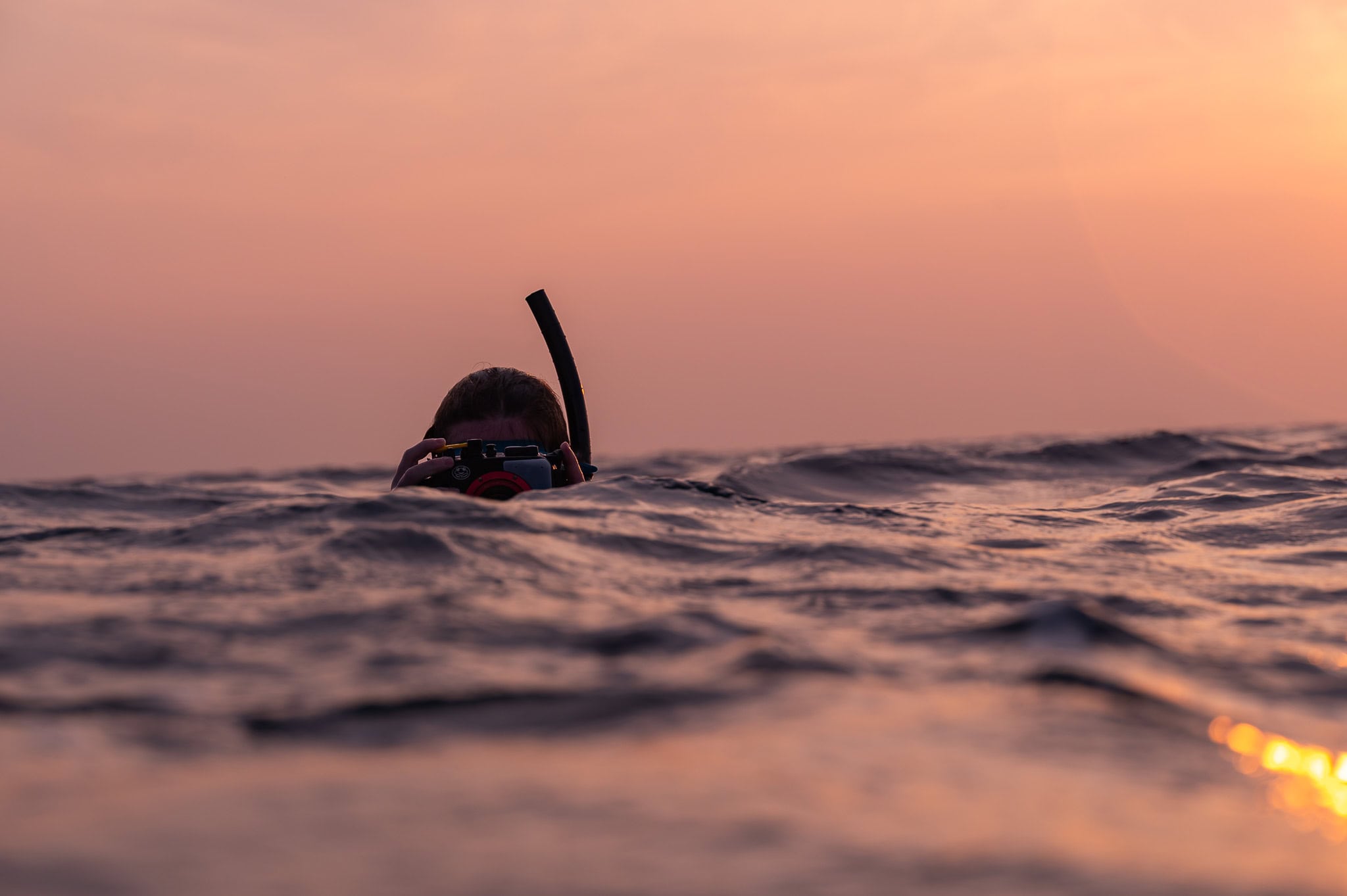
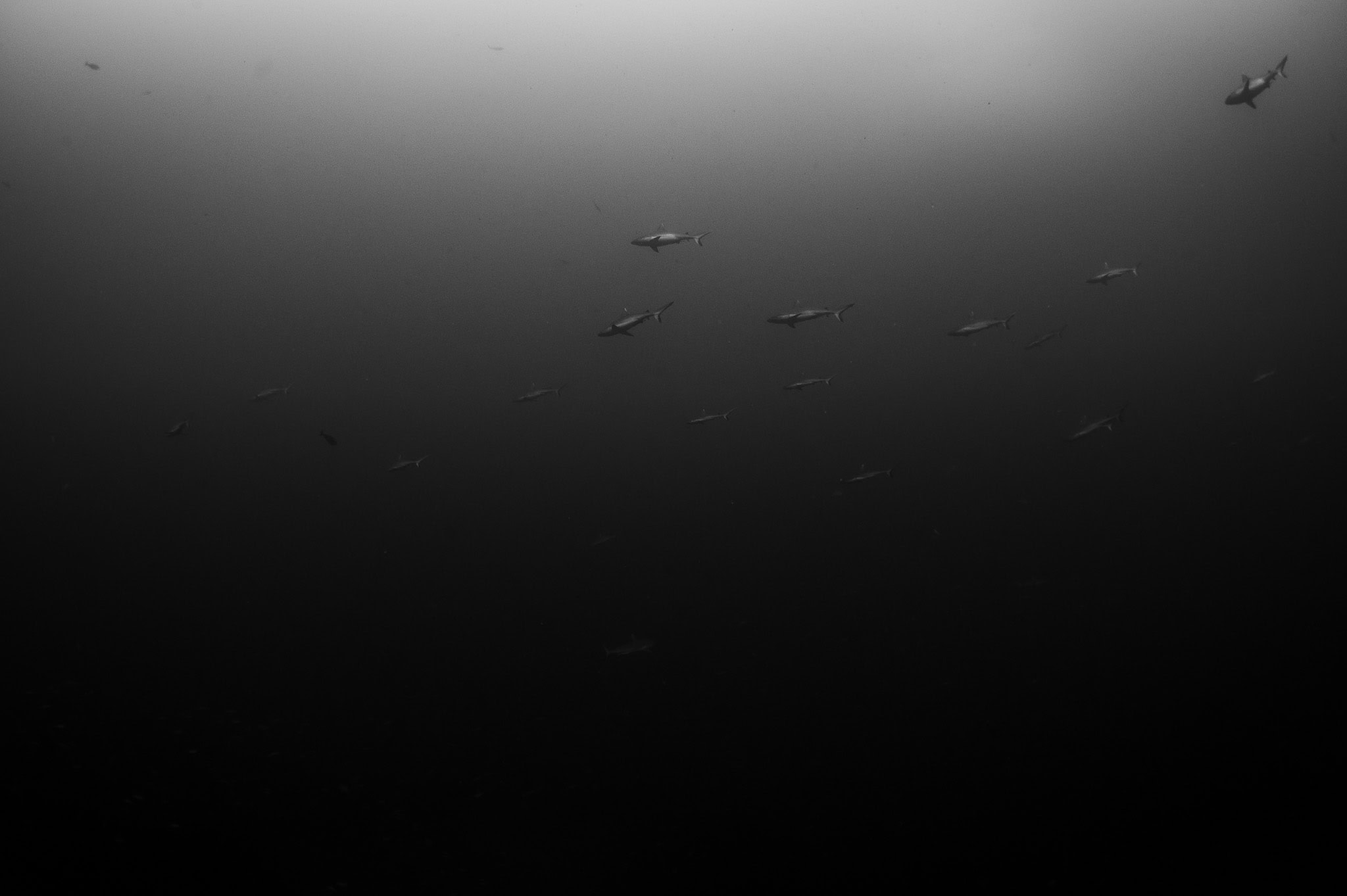
By then, we had already settled into a routine: snorkeling around the island in the morning and evening, resting during the day, and heading out to the reef edge around noon to snorkel in the open blue, searching for wildlife. It was incredible what you could see right at the house reef. Dozens of sharks from three different species, rays, turtles, octopuses, and countless colorful fish accompanied us every single time. On top of that, there were huge hunting mackerel during our night snorkels. We kept wondering how the liveaboard safari could possibly top this.
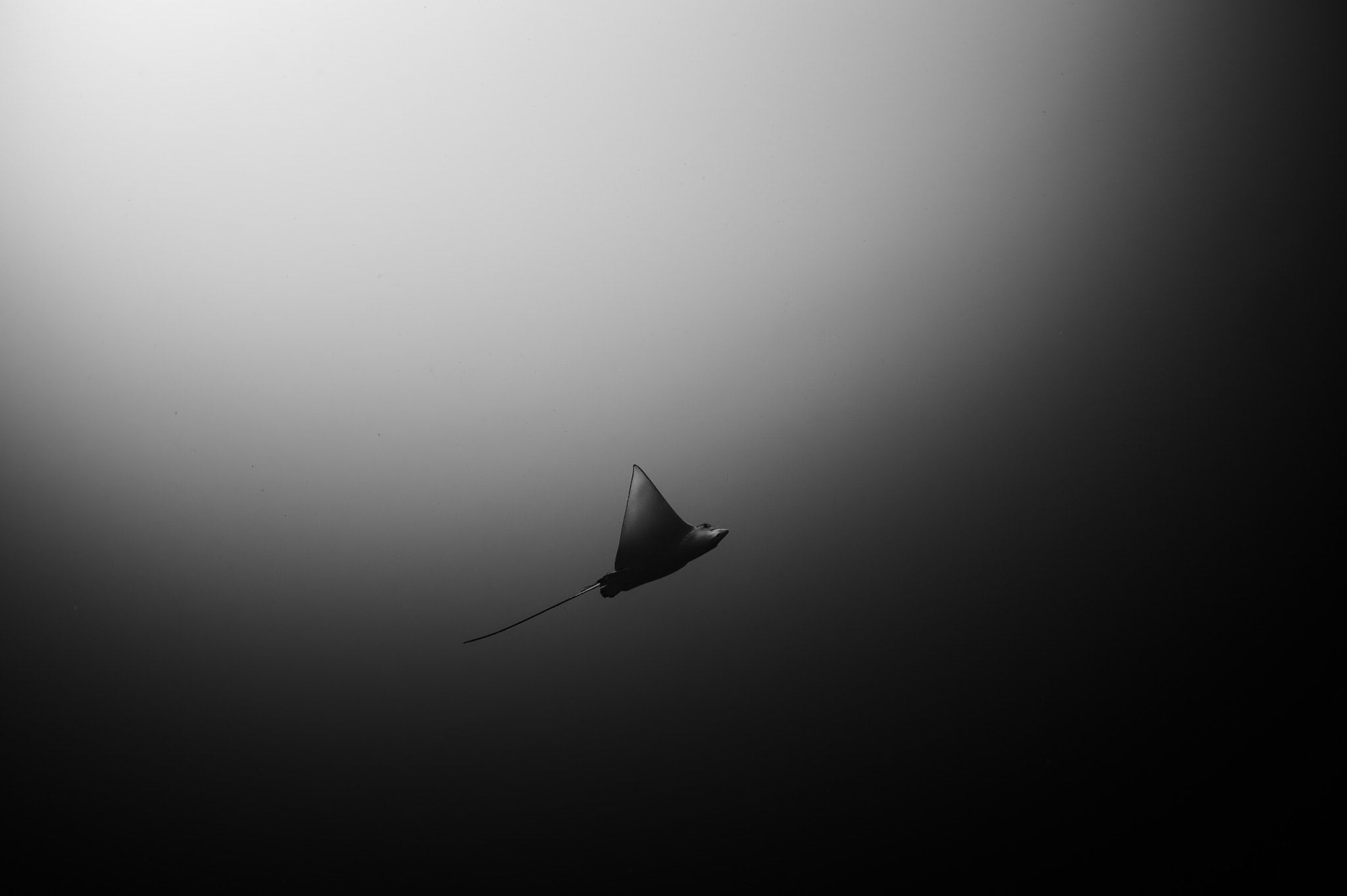
Every evening, I talked to my girlfriend on the phone. One night, at 4:00 a.m., I was still standing on the jetty, watching the ocean, when suddenly two ornate eagle rays (Aetomylaeus vespertilio) swam past me. The dive center manager was able to confirm the sighting the next day, as he had seen them on another occasion as well.
CARPE VITA – ONCE AROUND THE MALDIVES
Our stay on the island came to an end all too quickly, and we headed back to the airport. There, we met the others who had booked the liveaboard safari with us.
For the past two years, we’ve been going on safaris now and then with the “Scuba Freaks” from the Rhineland. The Maldives were our first major trip with the Freaks, after several liveaboards in the Red Sea. After a joyful reunion, we finally boarded the boat and, following the first briefings, went straight into the water.
Our vessel had its own dive tender that accompanied us at all times and carried all our equipment. For each dive, we simply switched to the tender, geared up there, and jumped in. Most of the time, the tender took us a bit farther out, as it was smaller and had a shallower draft. After an uneventful check dive, we raised a glass at dinner to a great time ahead.
SHARK TANK
The first dive took us to a site right in front of the harbor. We weren’t given a clear explanation as to why we were diving there — only that there were supposed to be many rays and a few sharks. The camera, Lisa, and I were definitely ready.
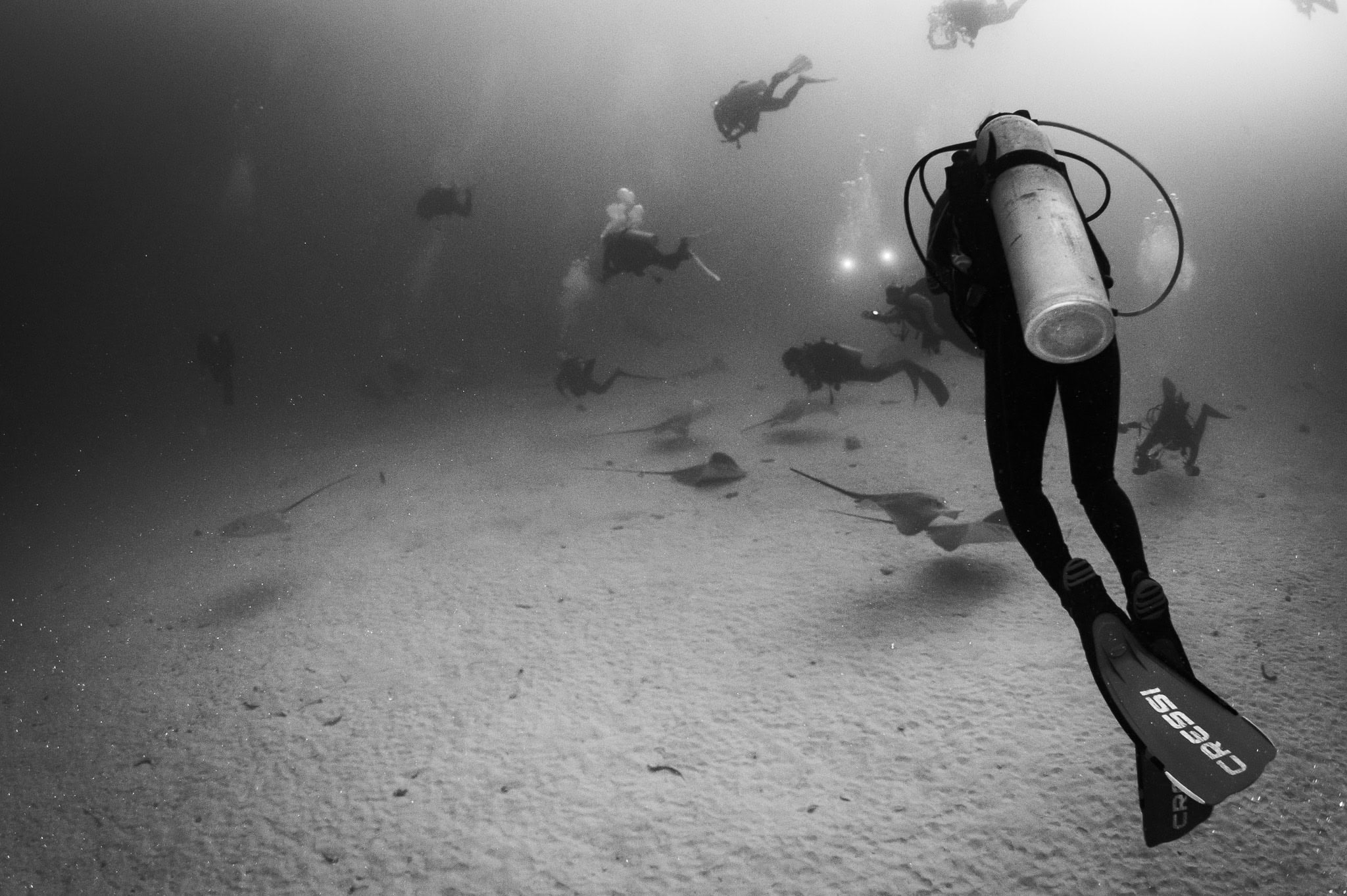
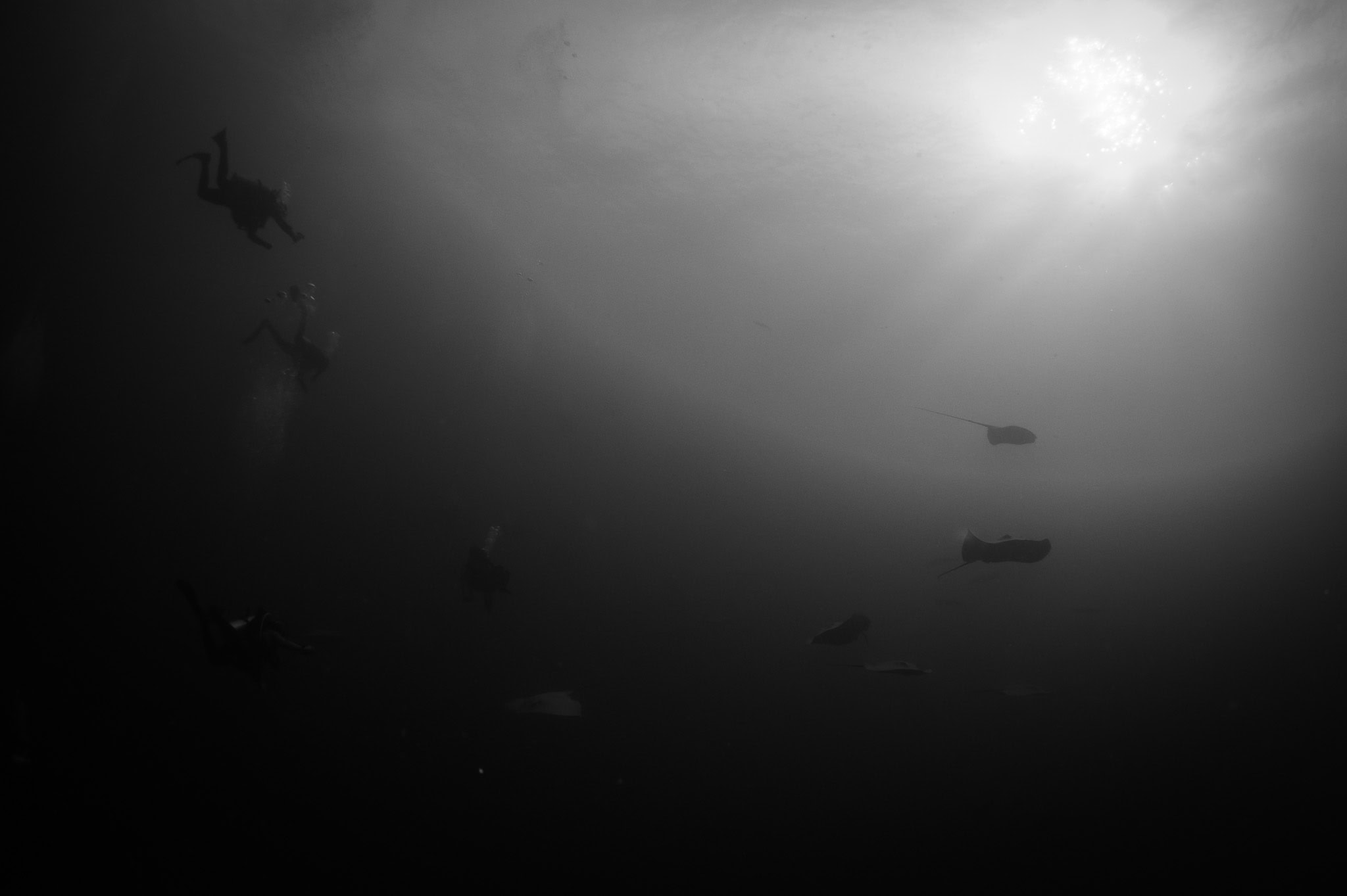
As soon as we jumped in, we sensed a strange atmosphere. We were floating in a greenish soup that seemed to come from the harbor and its waste facility. Above us, ship engines roared, and visibility was practically zero. But after a few meters, once we left the wastewater layer behind, the water suddenly cleared — and we saw a few rays gliding through the blue.
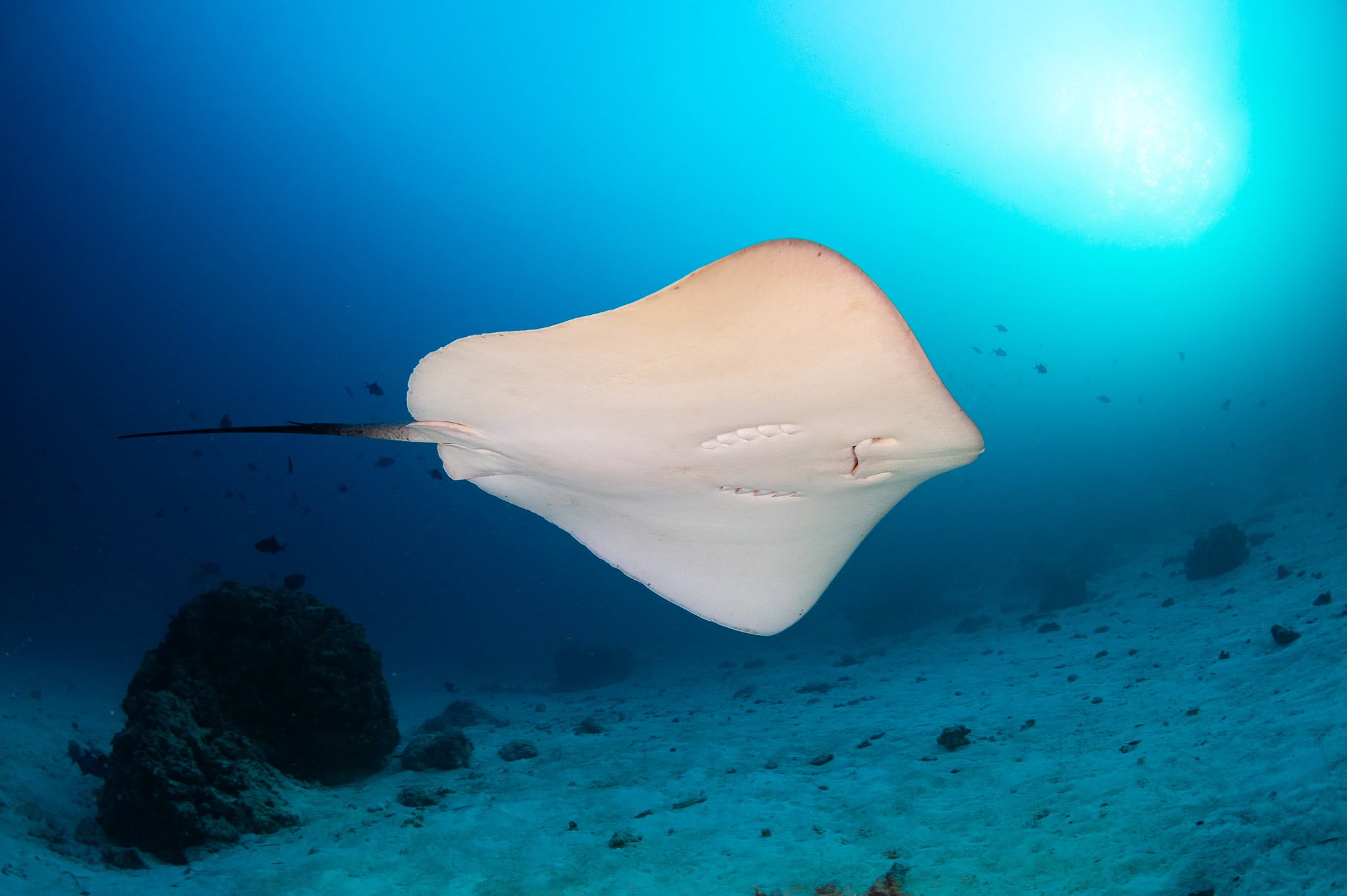
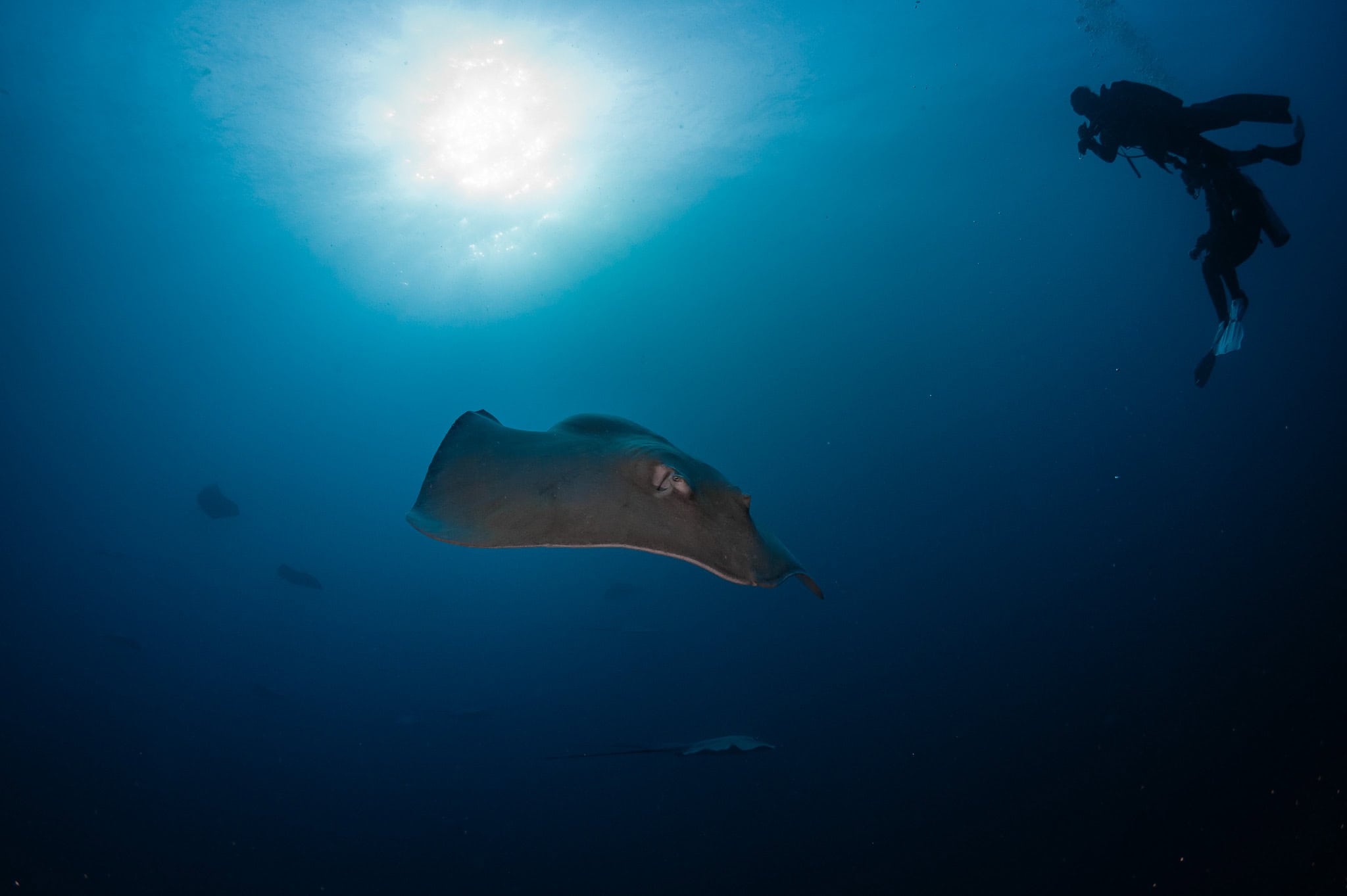
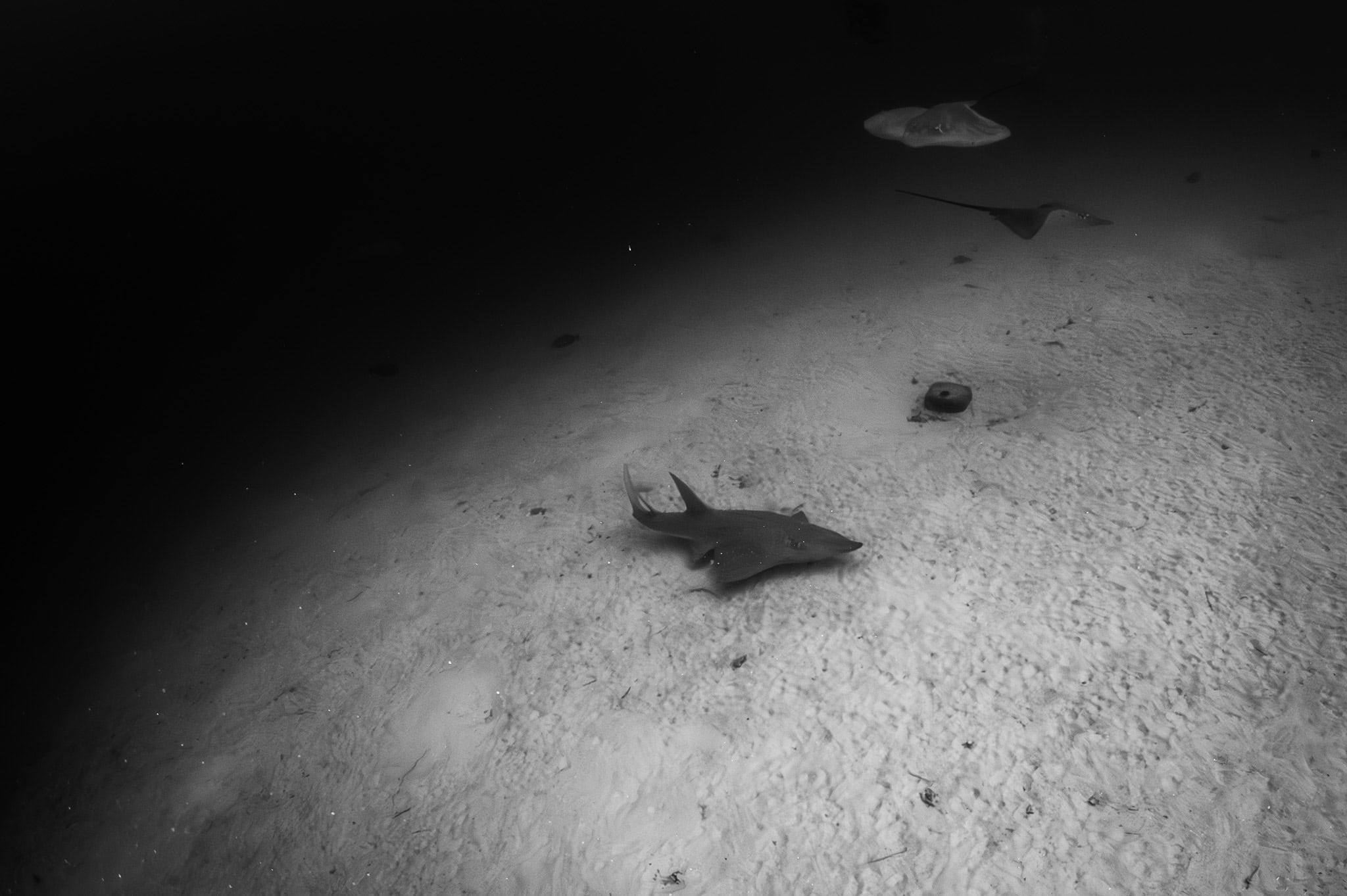
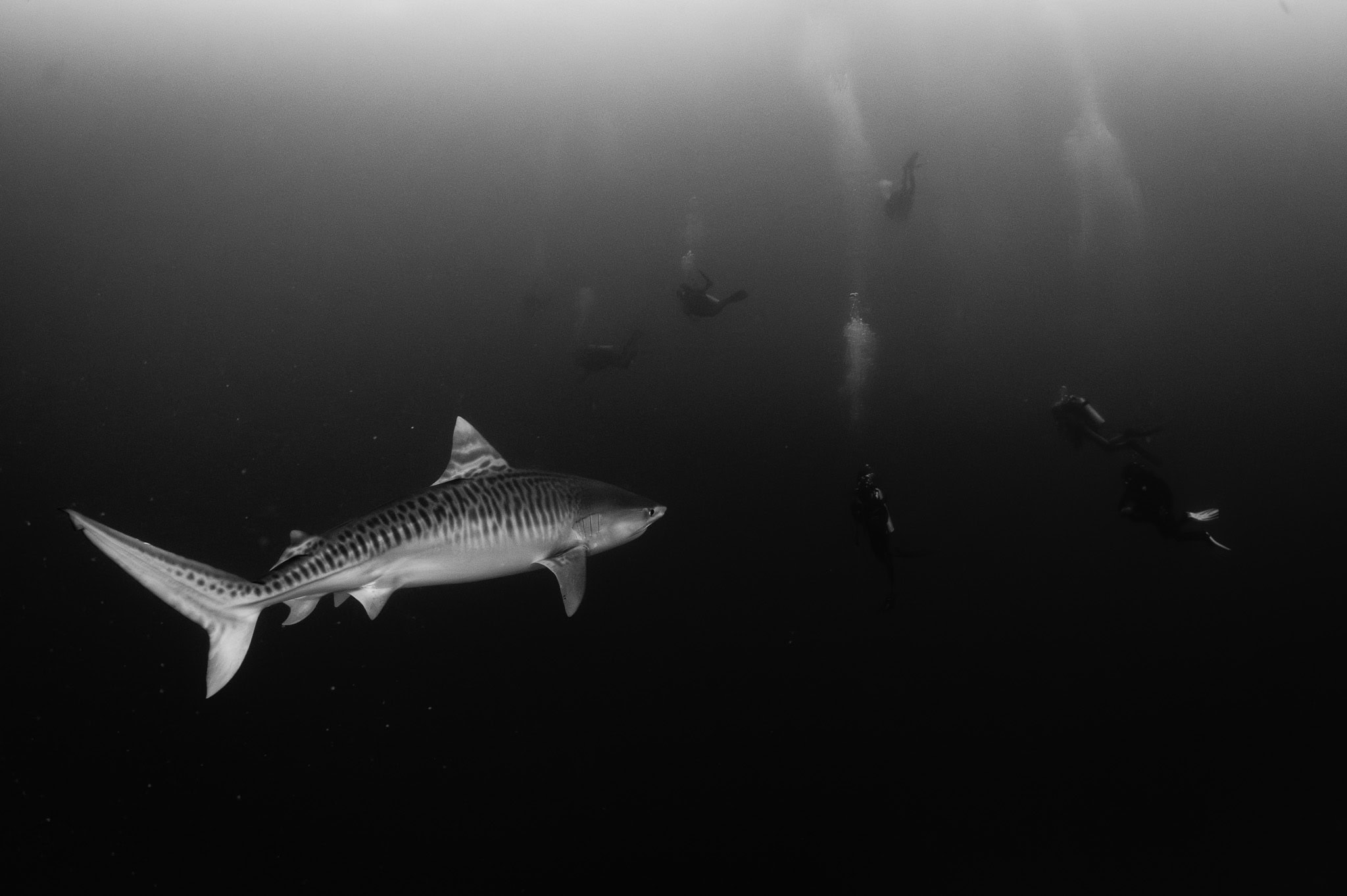
Then everything happened very quickly. First, dozens of large pink whiprays (Pateobatis fai) surrounded us. Suddenly, a giant guitarfish (Rhynchobatus djiddensis) emerged from the depths. Then a school of spinner sharks (Carcharhinus brevipinna) passed beneath us — and when I briefly looked to my left, a young 2.5-meter tiger shark (Galeocerdo cuvier) was swimming straight toward me.
All of this happened within ten minutes. I tried to take in the situation, keep an eye on Lisa and the sharks, and at the same time capture decent photos.
This dive was the most impressive of the entire Maldives trip. The “shark tank” lived up to its reputation. When we surfaced, I noticed a fisherman drifting right between the liveaboard boats, throwing fish scraps into the water. That quickly explained the chaos below the surface.
This was one situation where I would have wished for better communication and a more thorough safety briefing from the crew and guides.
DIVE, DIVE, DIVE
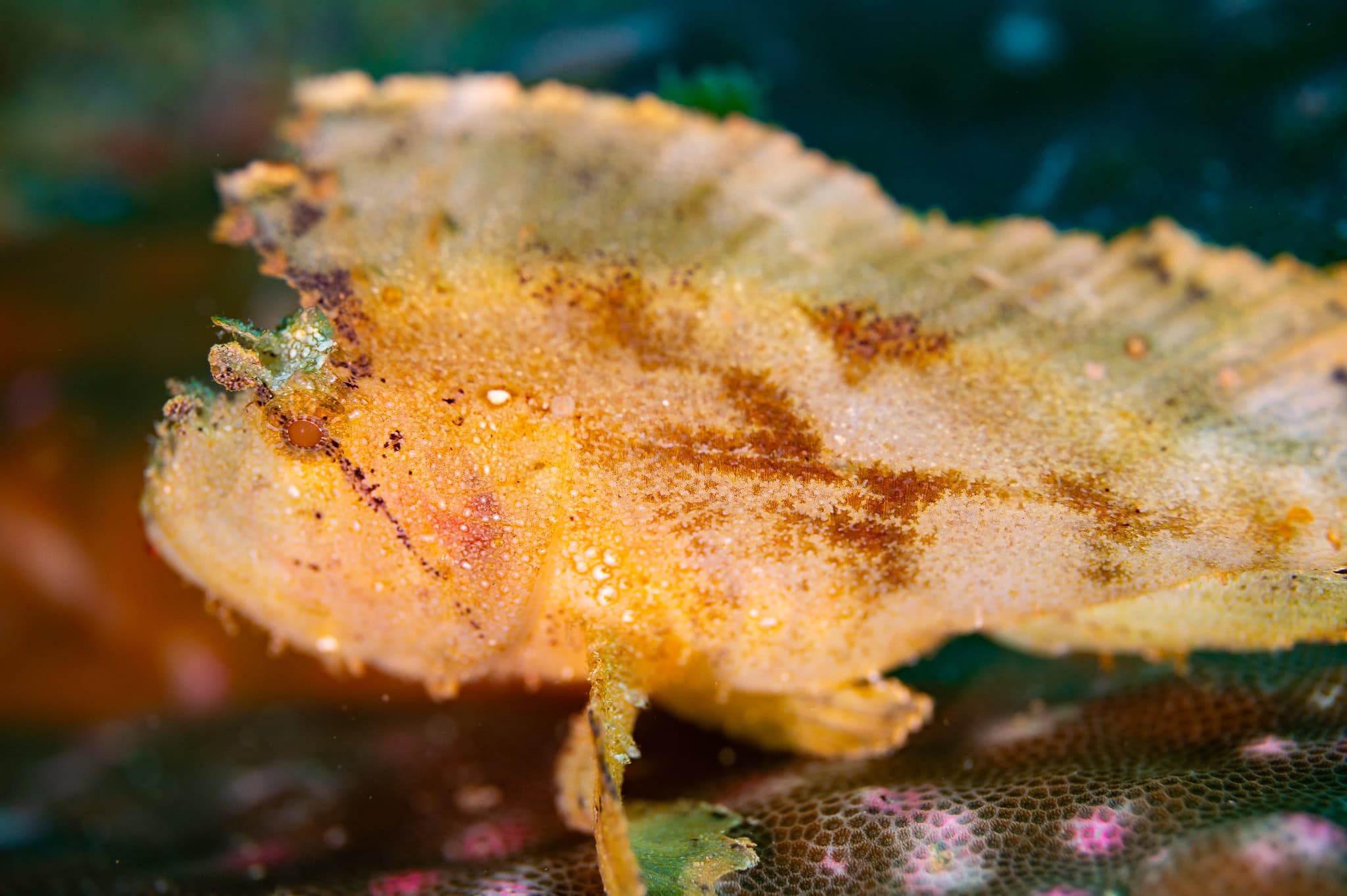
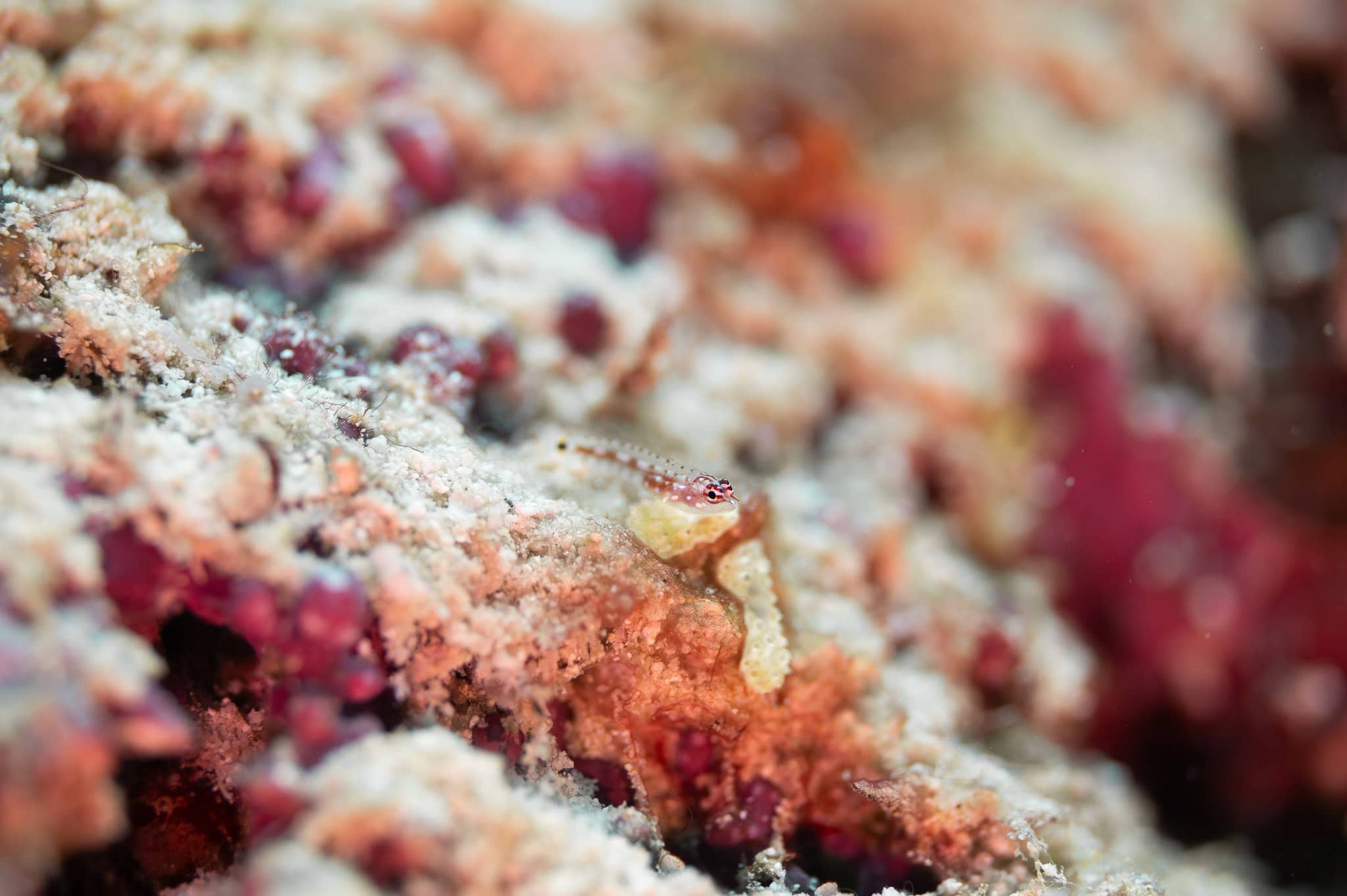
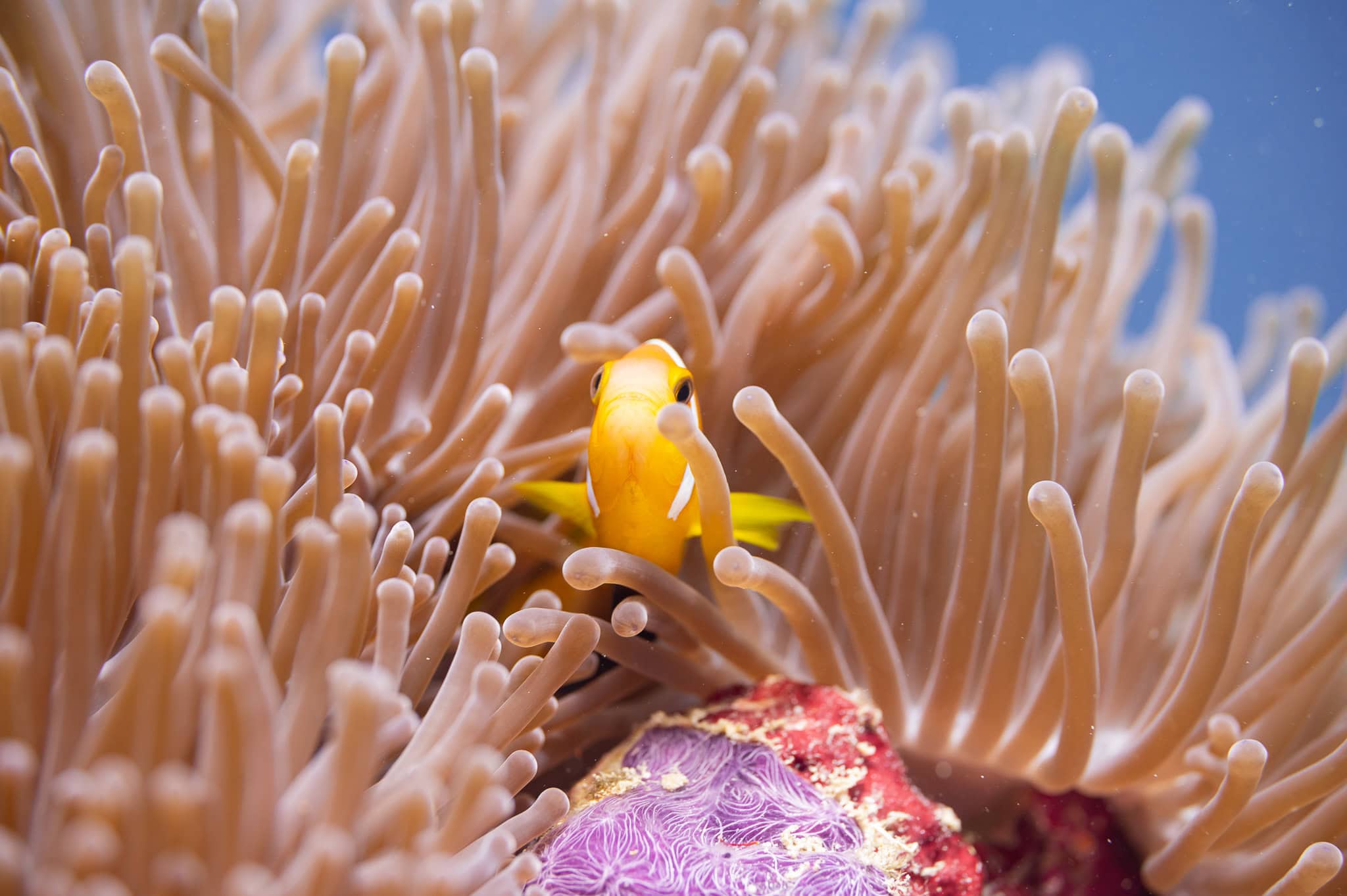
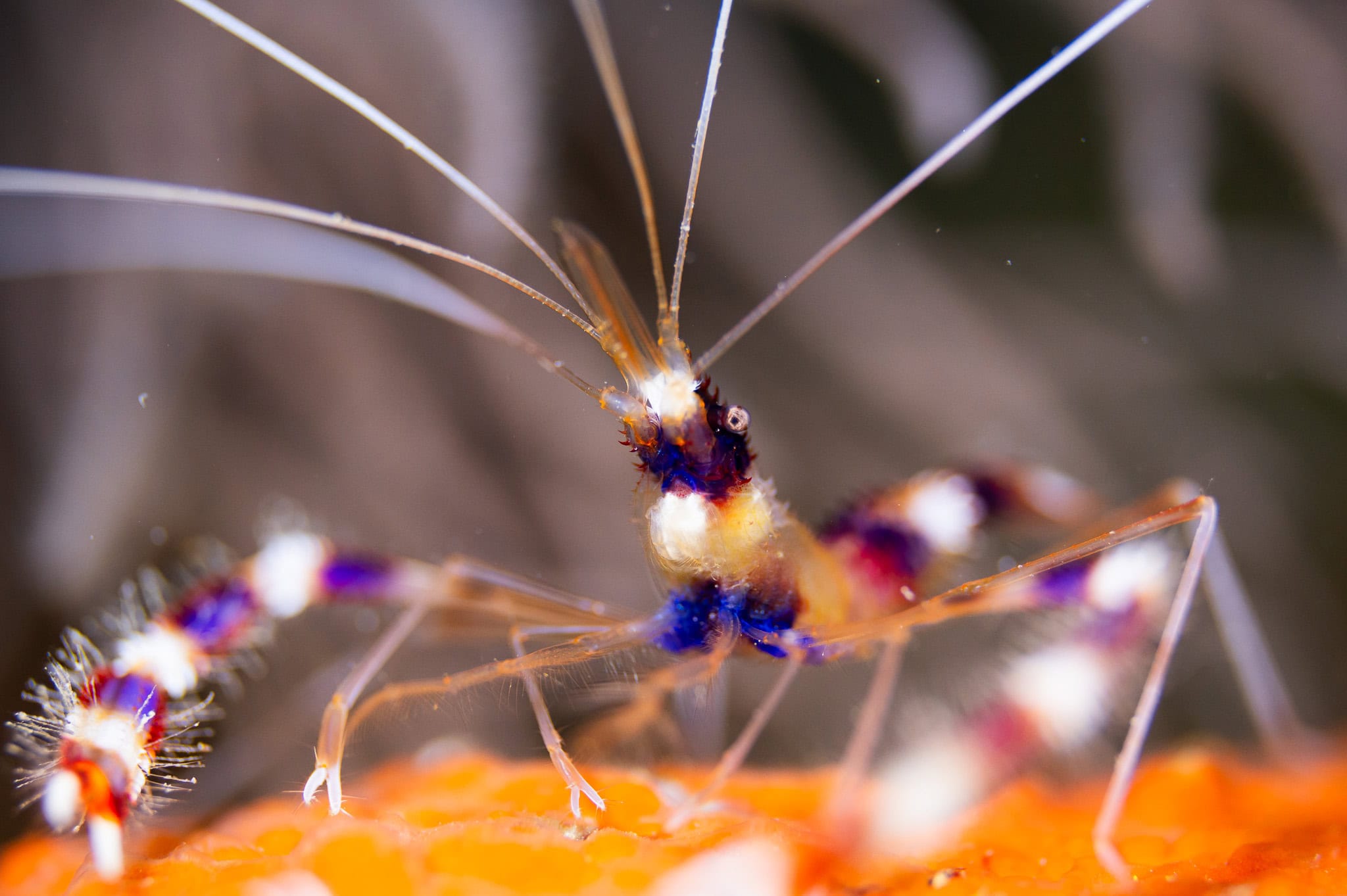
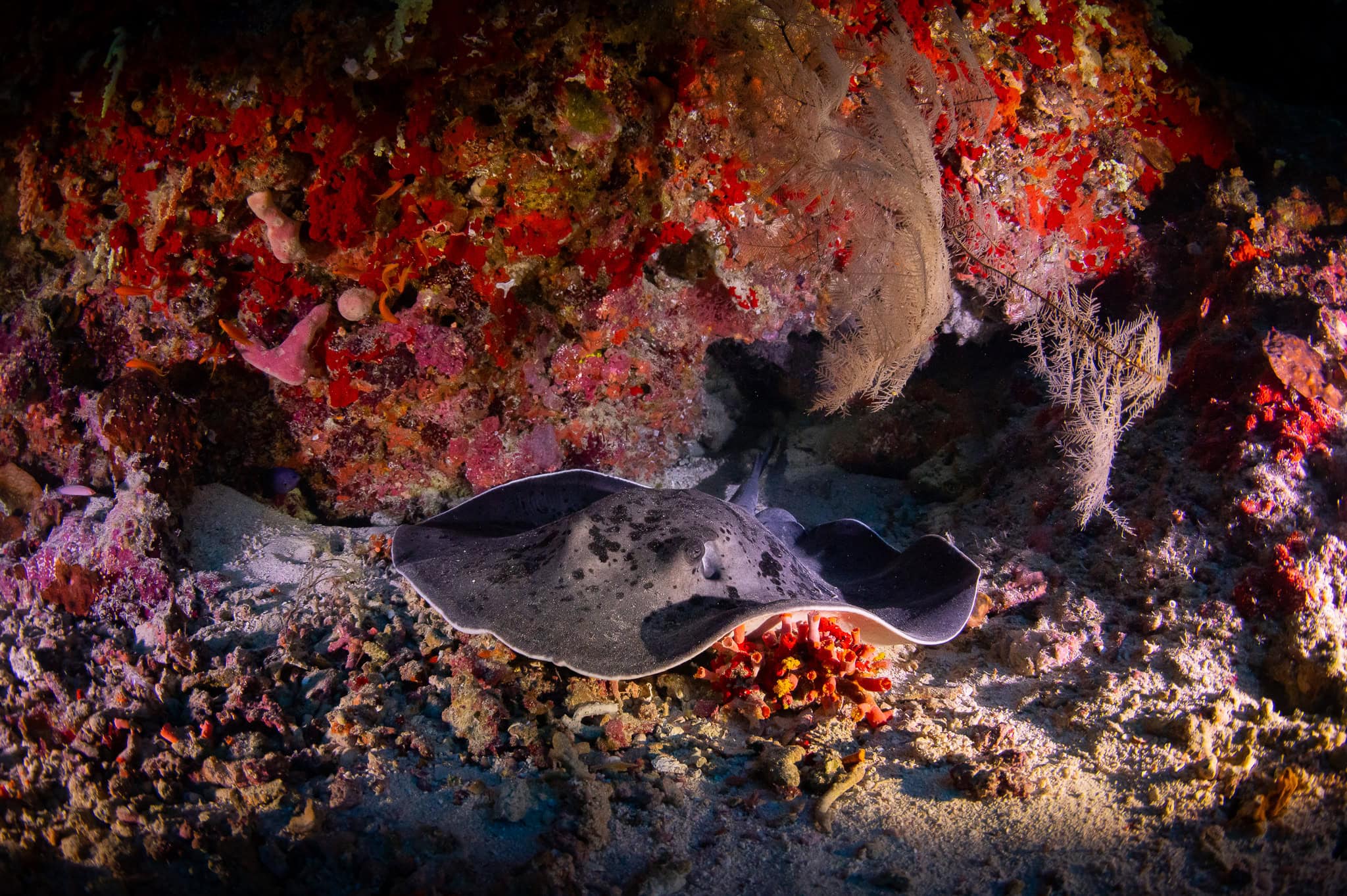
The dives that followed were all fantastic, each bringing new experiences. For the first time, I had the chance to try my macro lens underwater, but I quickly realized it wasn’t really my thing. While it was fun to photograph tiny details up close, the limited perspective made me feel somewhat constrained.
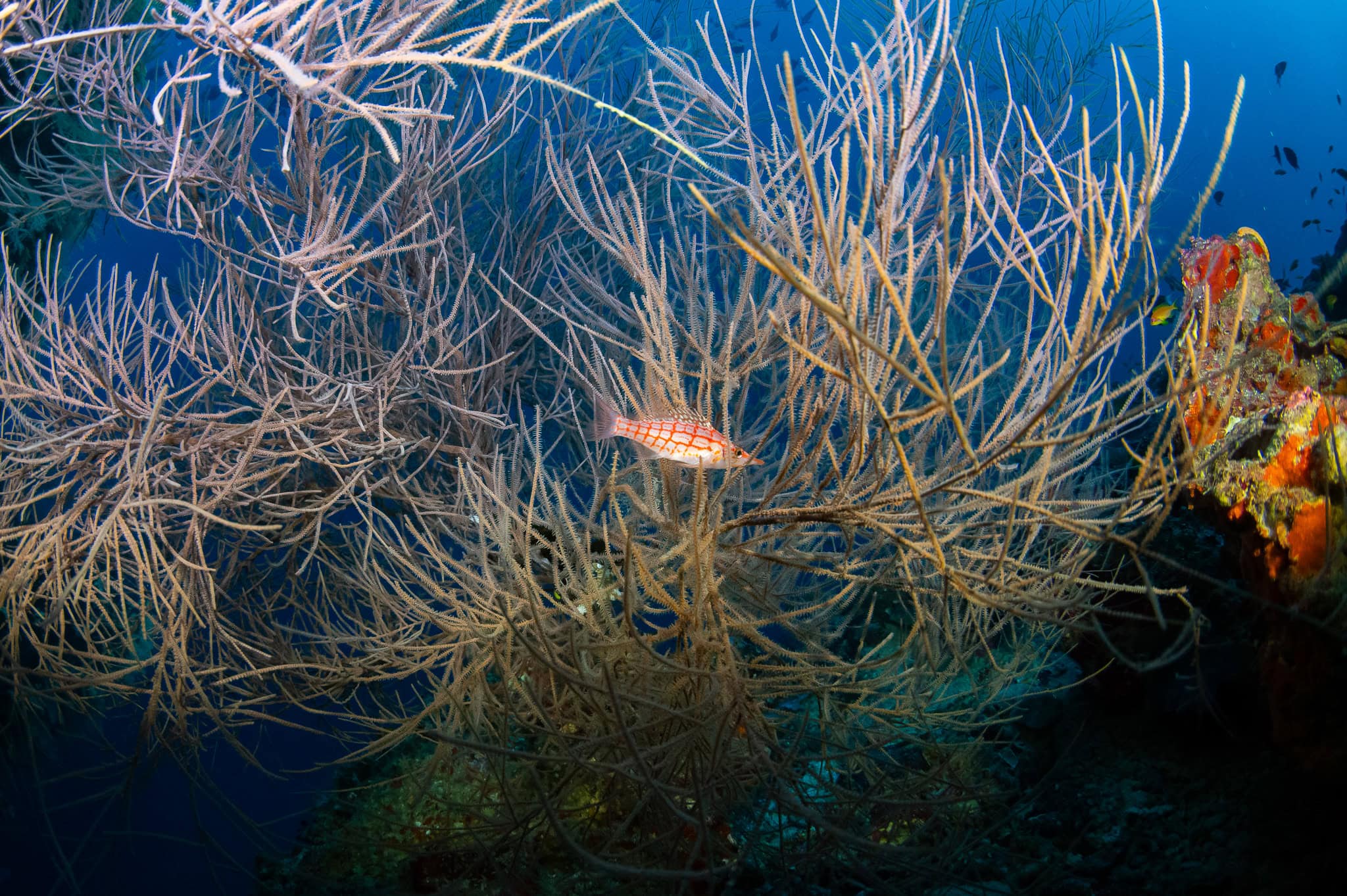
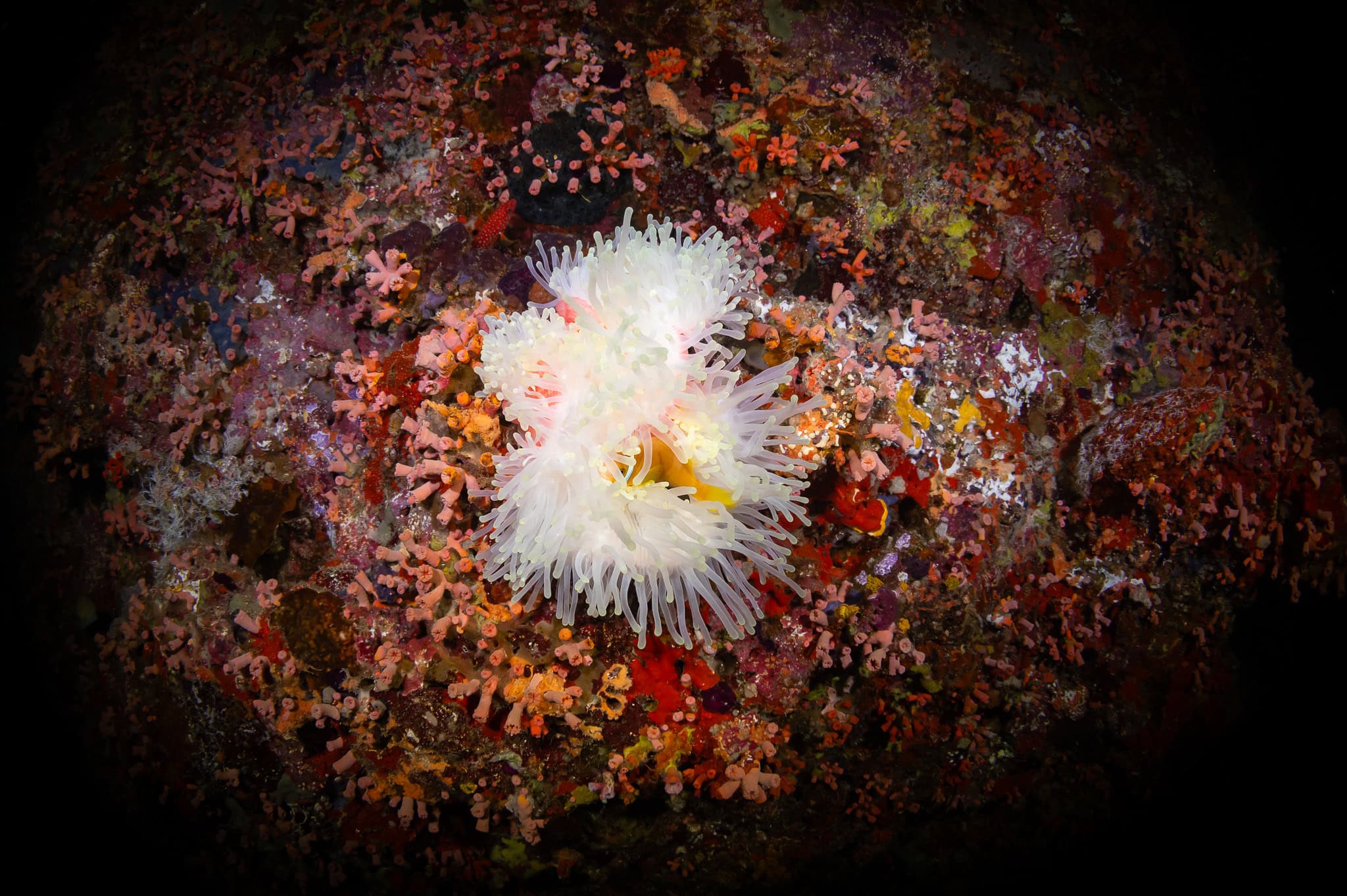
Still, I loved gliding through the pleasantly warm 28°C water and taking in the incredible biodiversity of the Maldives. One highlight followed the next, and the memory cards filled up fast. With three to four dives a day, there was hardly any time to review the images right away. In between dives, there were plenty of meals, and we had time to rest while the boat was already moving on to the next site.
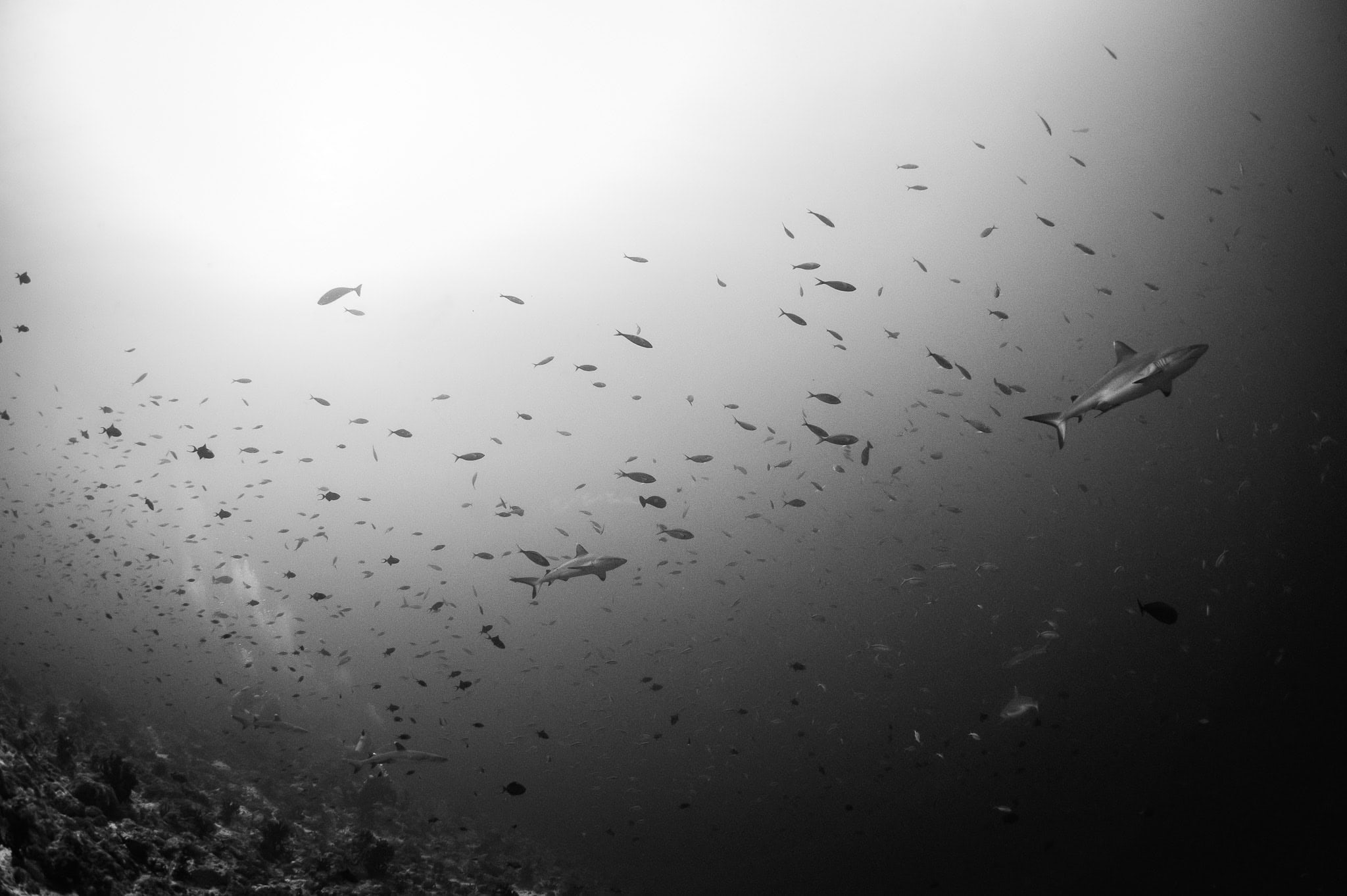
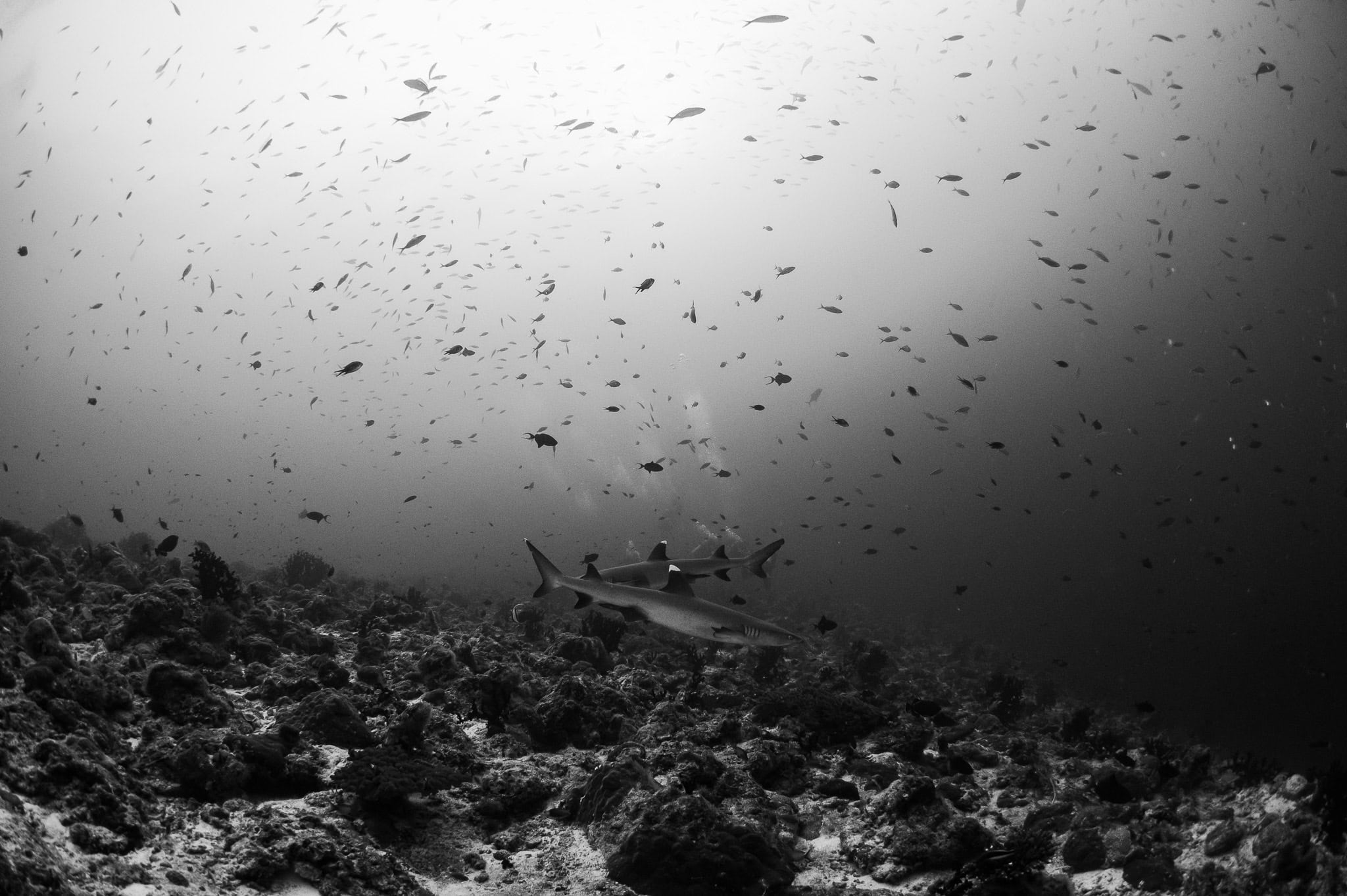
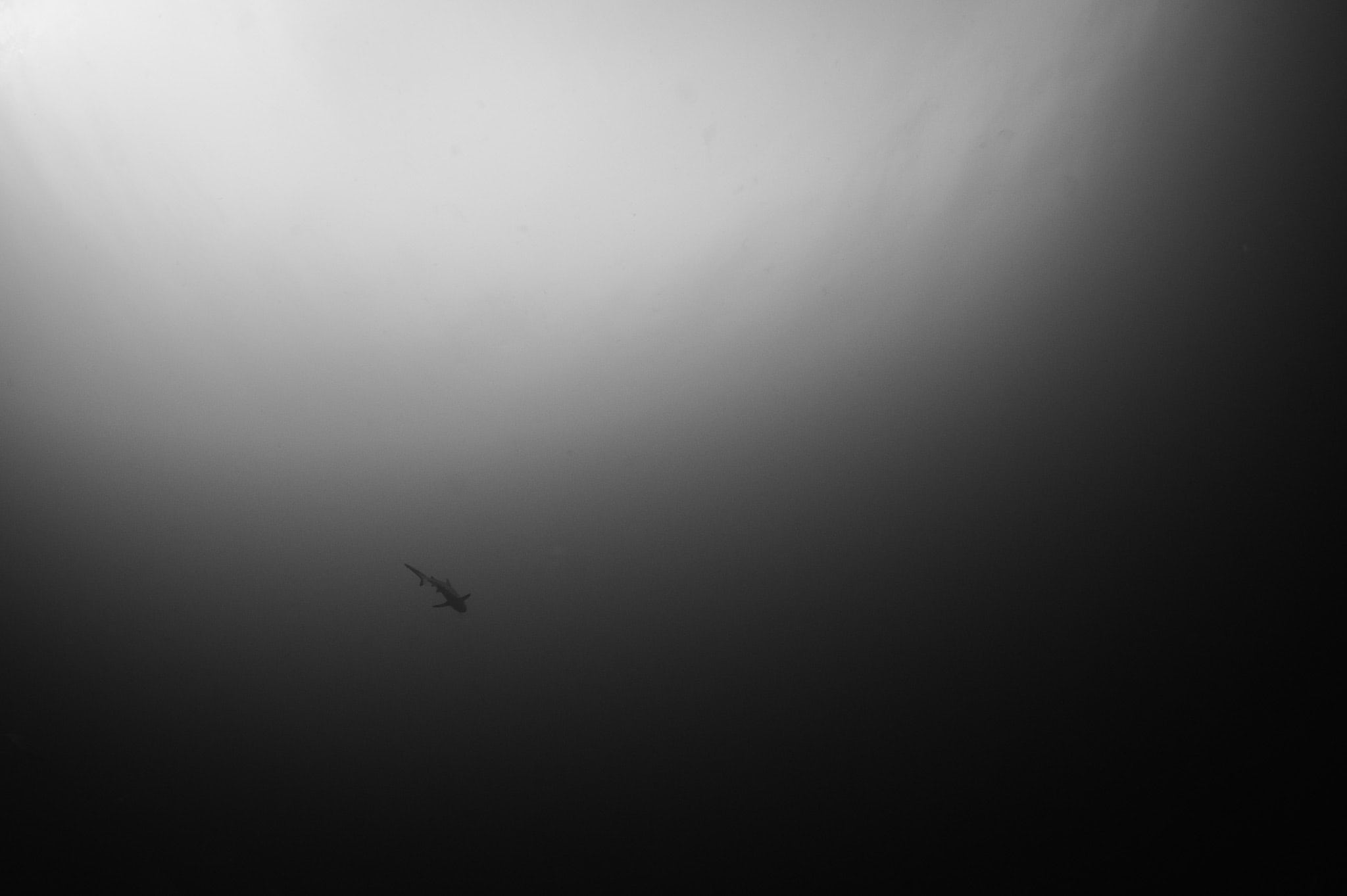
The drift and current dives in particular were spectacular. We hooked ourselves onto rocks along the reef edge using reef hooks and let the current carry us. Meanwhile, countless sharks, majestic eagle rays, and huge schools of fish passed by. It was an incredible feeling to simply hold the camera steady and still capture breathtaking footage.
However, during one especially strong current dive, I became acutely aware of the immense power of the water. Suddenly, I was caught in a downwash — a current that pulls water sharply downward along the reef wall. Within seconds, I was pushed deeper, and my air bubbles swirled chaotically around me, leaving me unable to see anything. My BCD was completely powerless against the force, and for a brief moment, I didn’t know how to free myself. Fortunately, I remembered the most important rule in such situations: swim away from the reef. I acted immediately — and after a few wild seconds, I was free again.
Rarely had I felt the raw power of the ocean as intensely as during that dive.
NIGHT DIVE WITH NURSE SHARKS
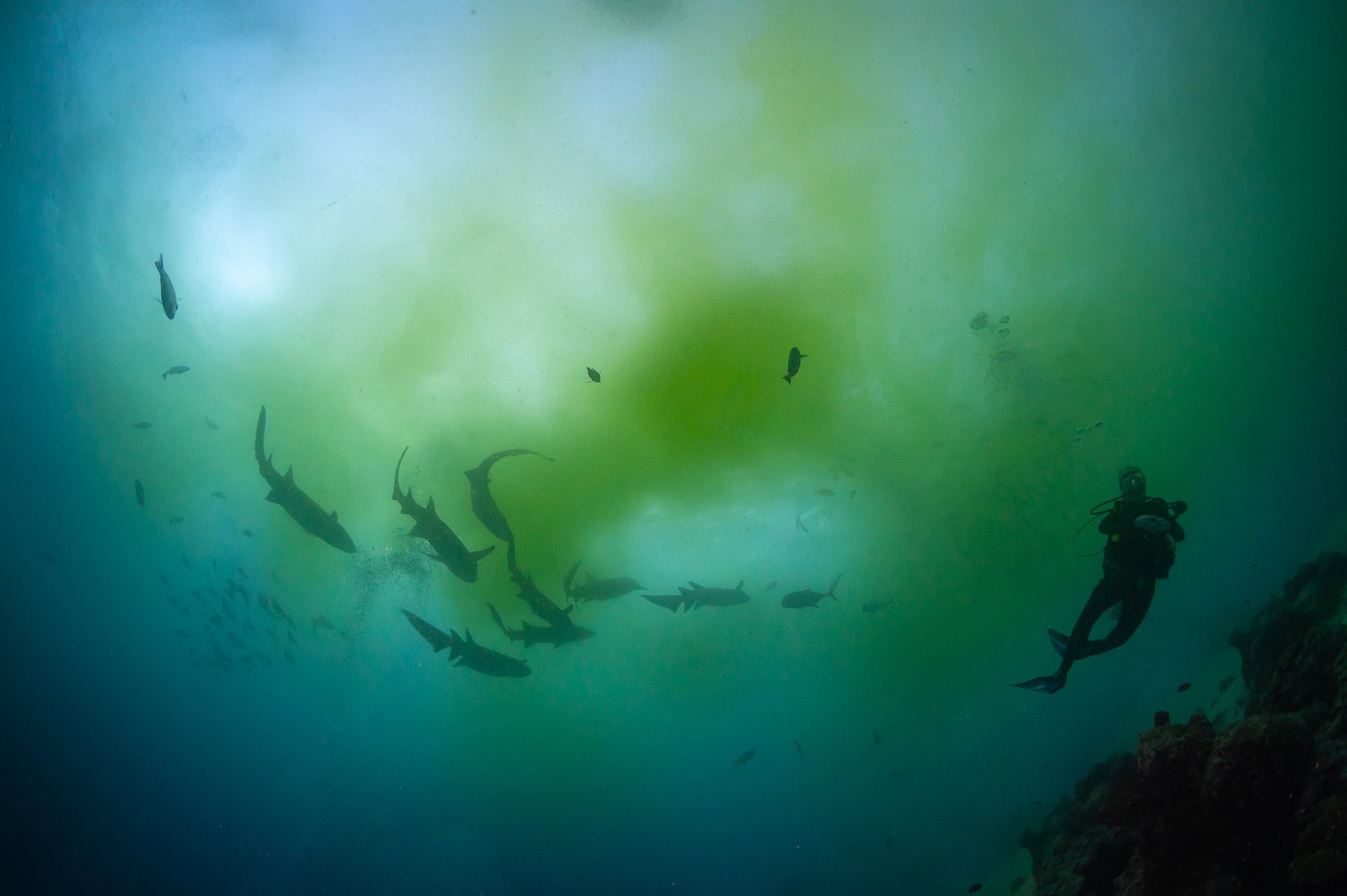
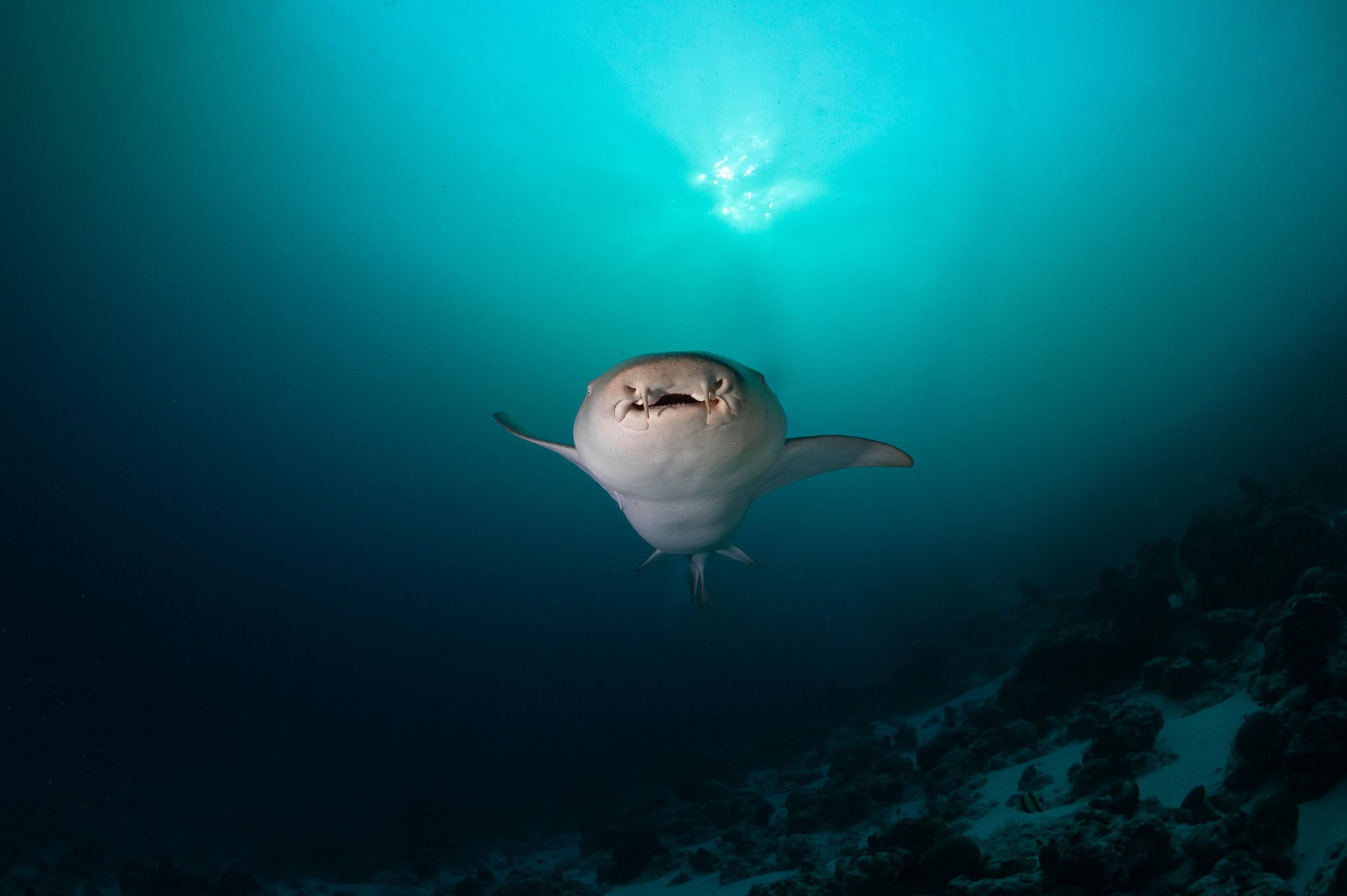
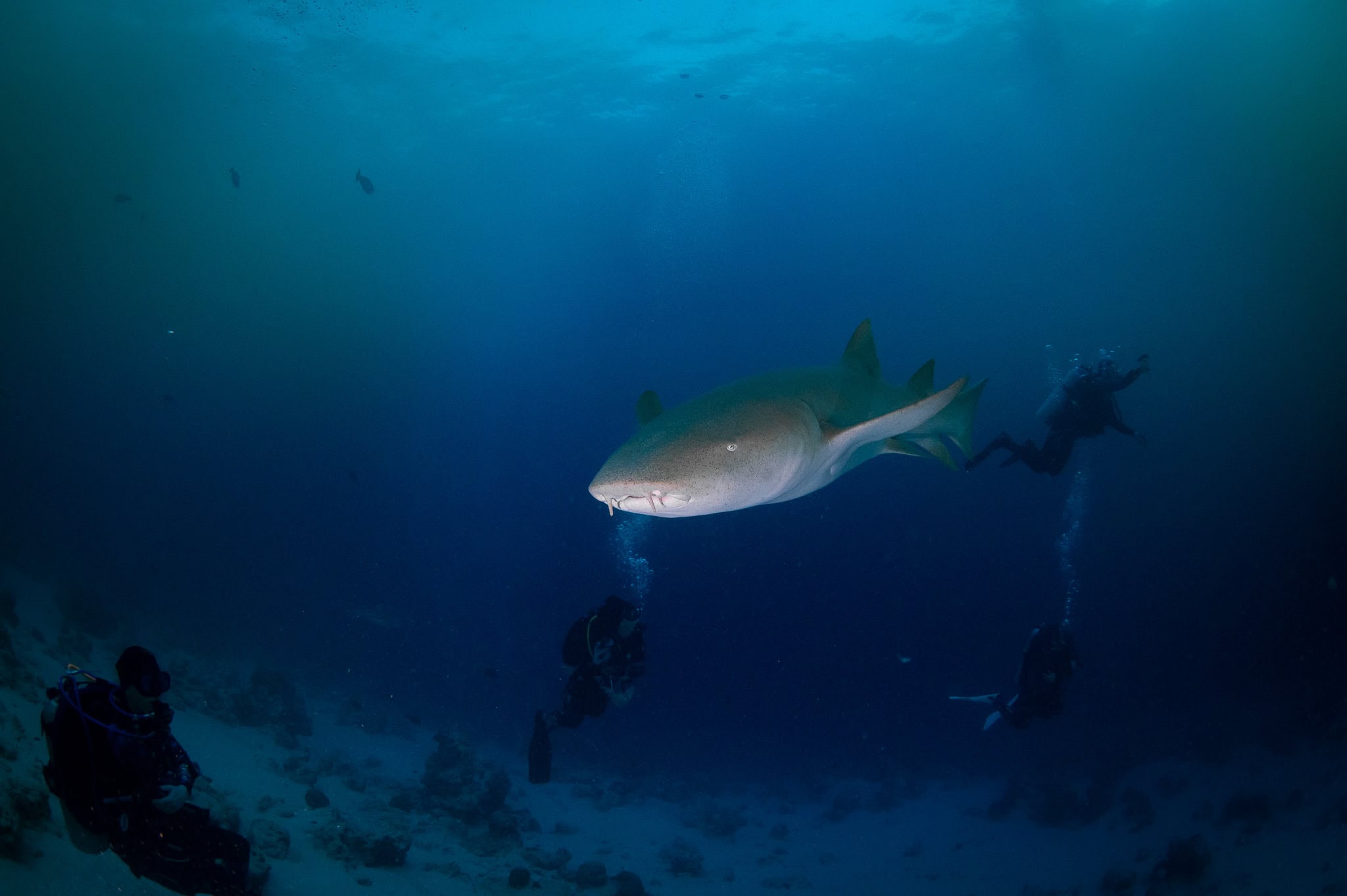
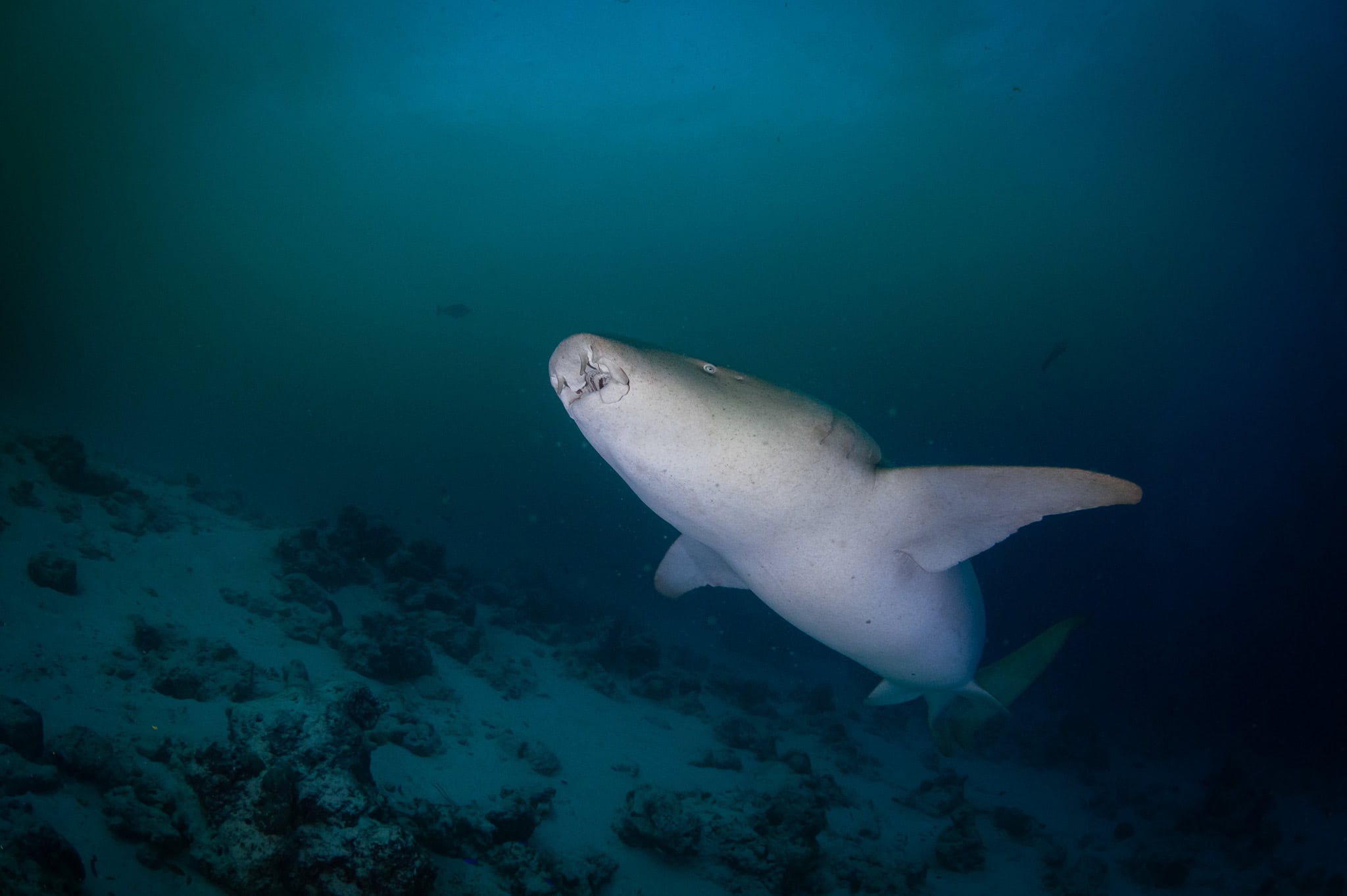
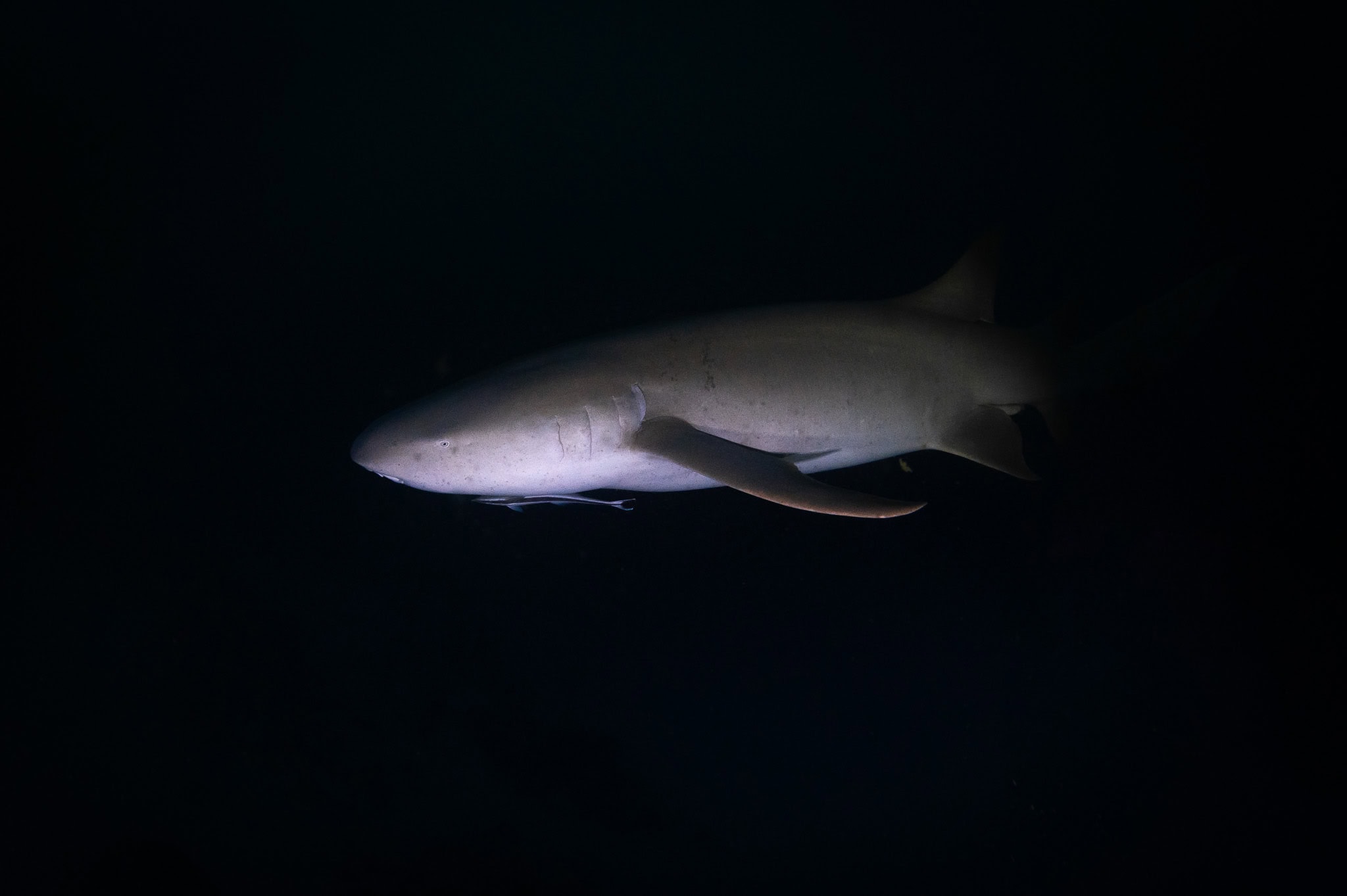
One day, we were told that another highlight was waiting for us: a twilight dive with Indo-Pacific nurse sharks (Nebrius ferrugineus). I fully recharged my dive lights and camera once more and was ready to go. We headed to a small resort island, but soon learned that we would once again be diving in wastewater. Food scraps attracted smaller fish — and with them, the nurse sharks. It was also a drift dive along the Alimatha Jetty.
We entered the water, and the current slowly carried us around the island. Suddenly, the nurse sharks appeared right in front of us and began circling us. One of them even swam straight toward my camera. They approached, circled us, and disappeared back into the darkness. This mesmerizing spectacle went on for quite some time until we finally had to surface. When I looked up, I noticed a greenish cloud hovering above us, within which Lisa was drifting in circles together with the nurse sharks — a truly surreal image.
We slowly said our goodbyes and swam back to the boat, which was already waiting for us at the end of the drift.
Night dives with sharks are always something special and thrilling. This dive, too, was spectacular — even though the animals were indirectly fed by humans.
NIGHT SNORKELING WITH WHALE SHARKS
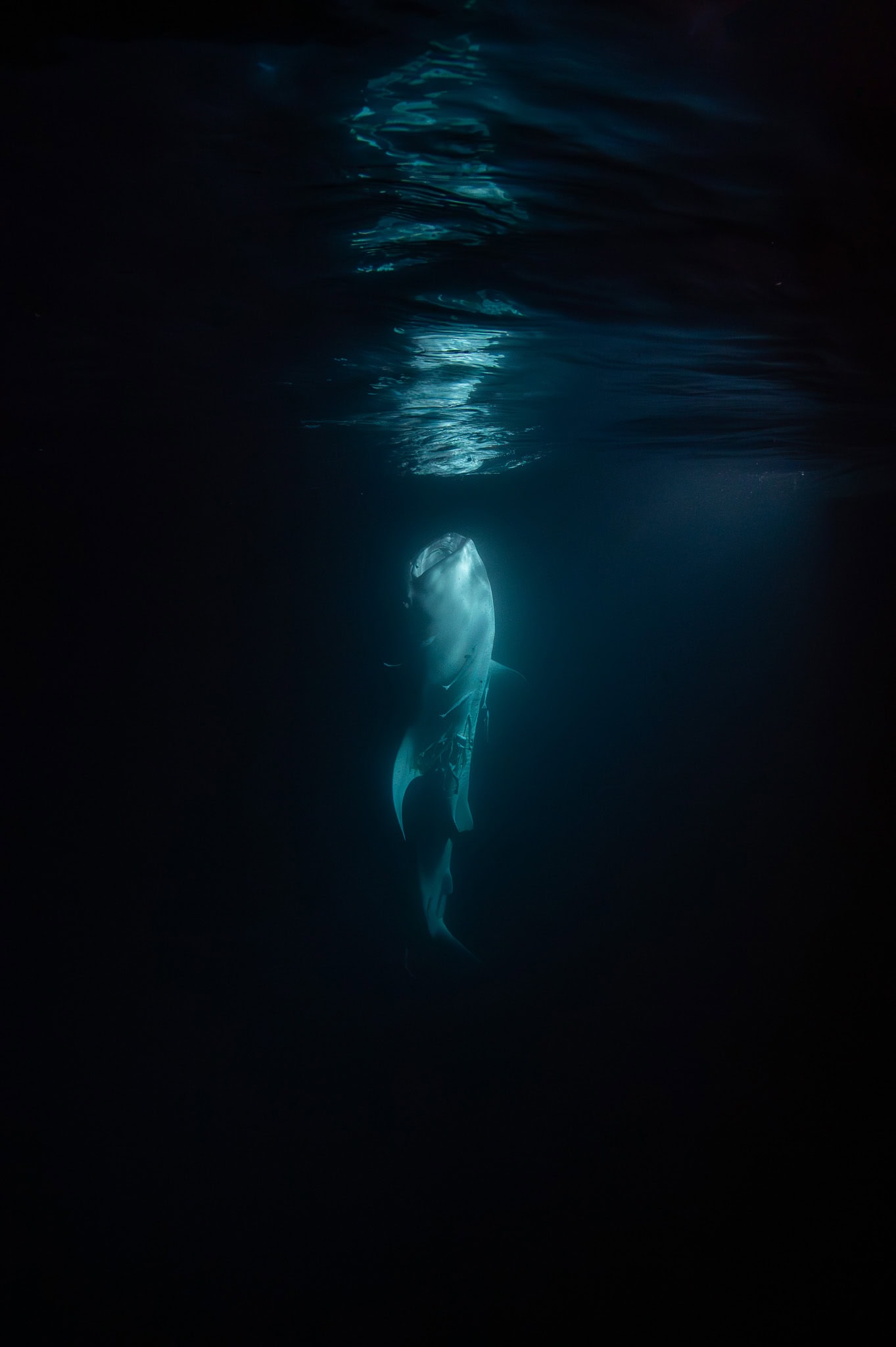
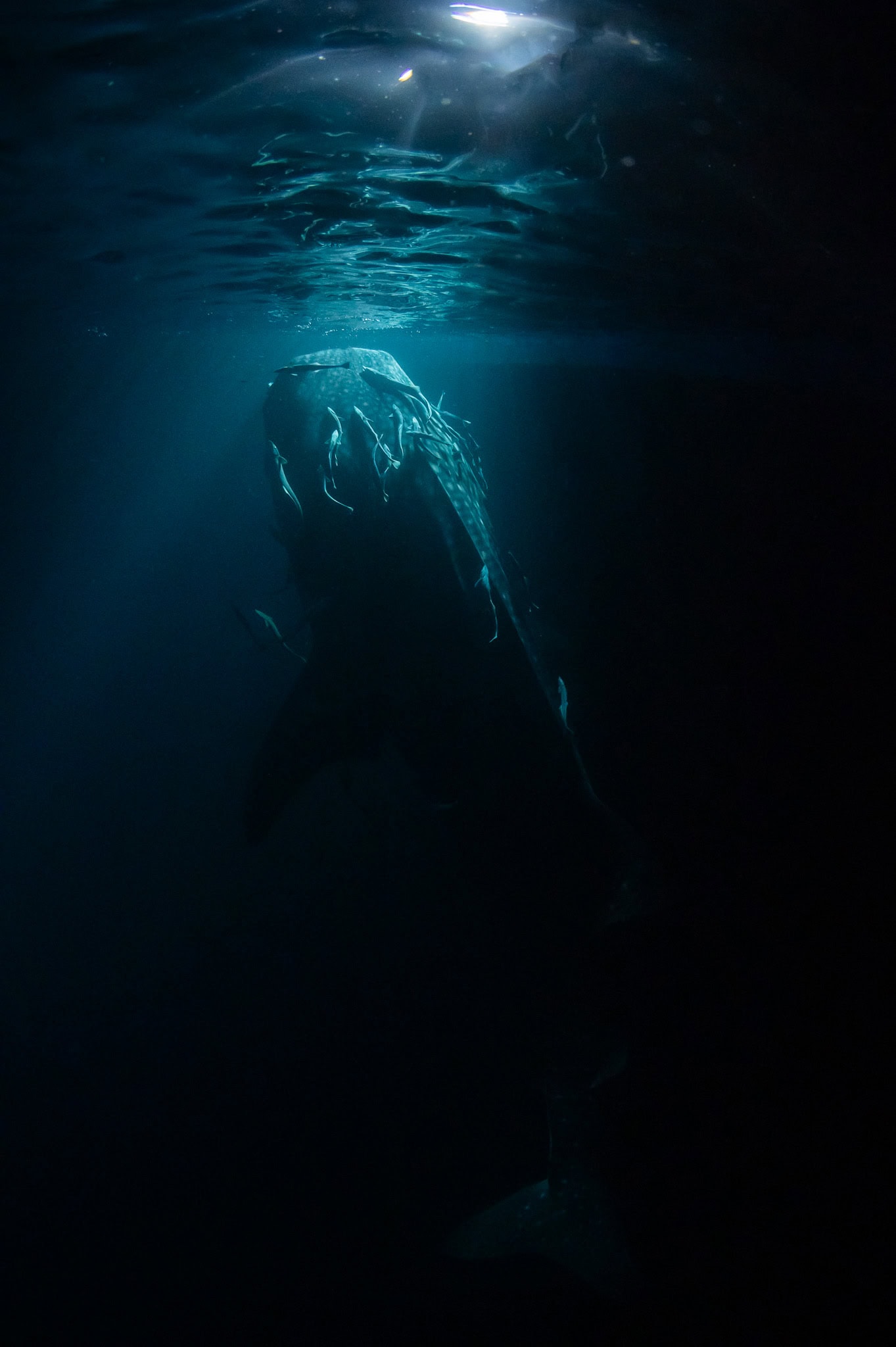
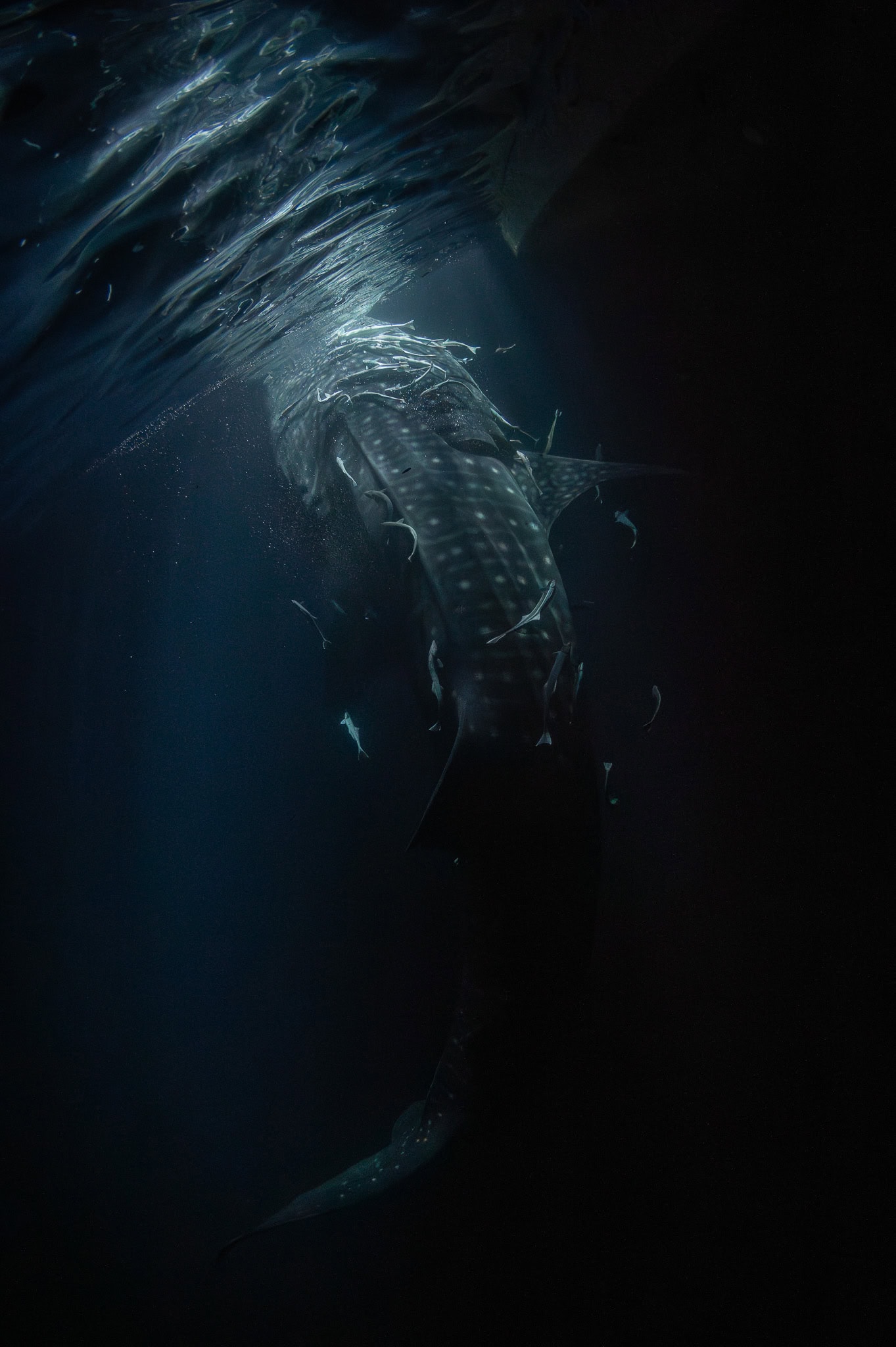
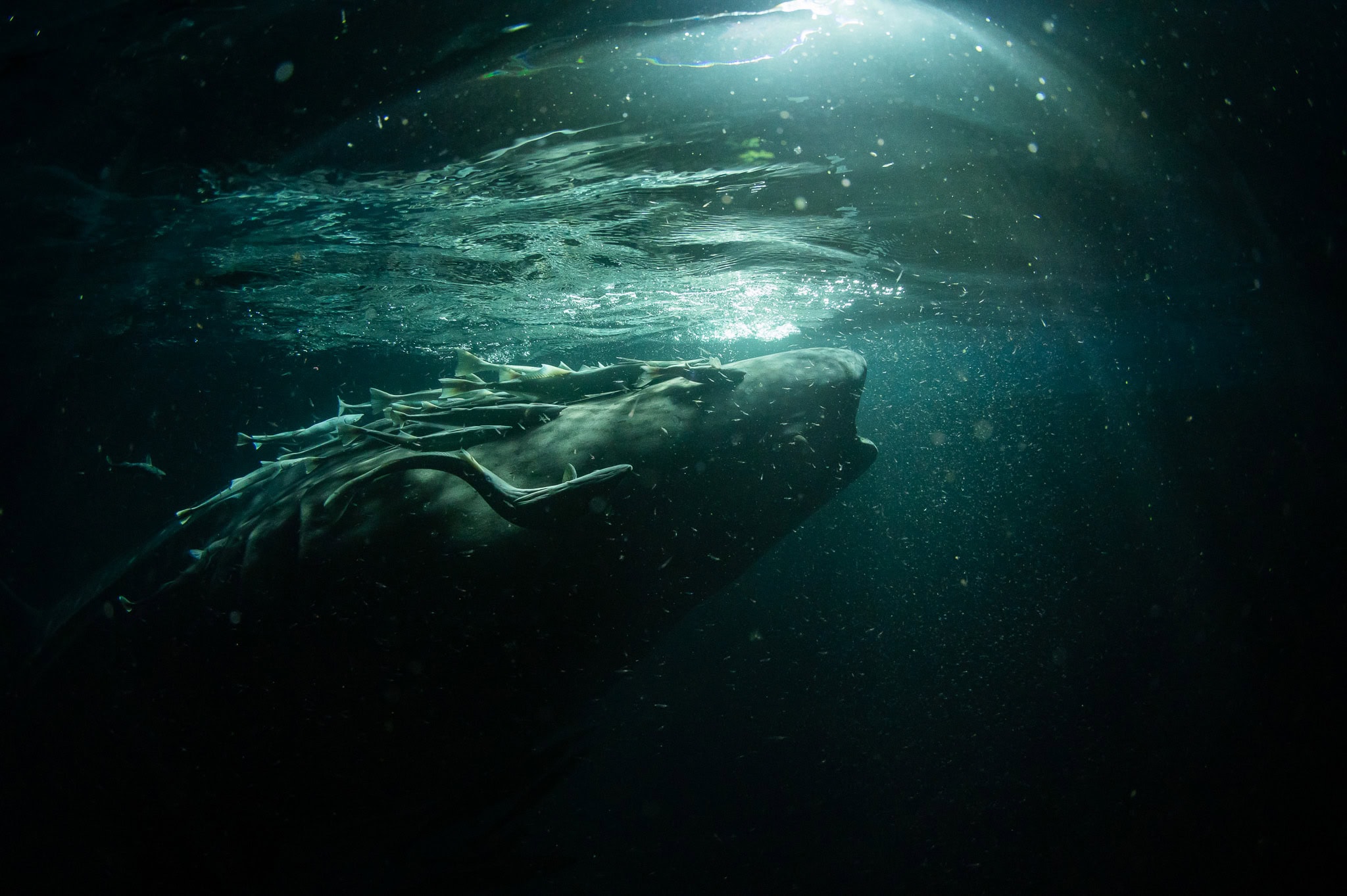
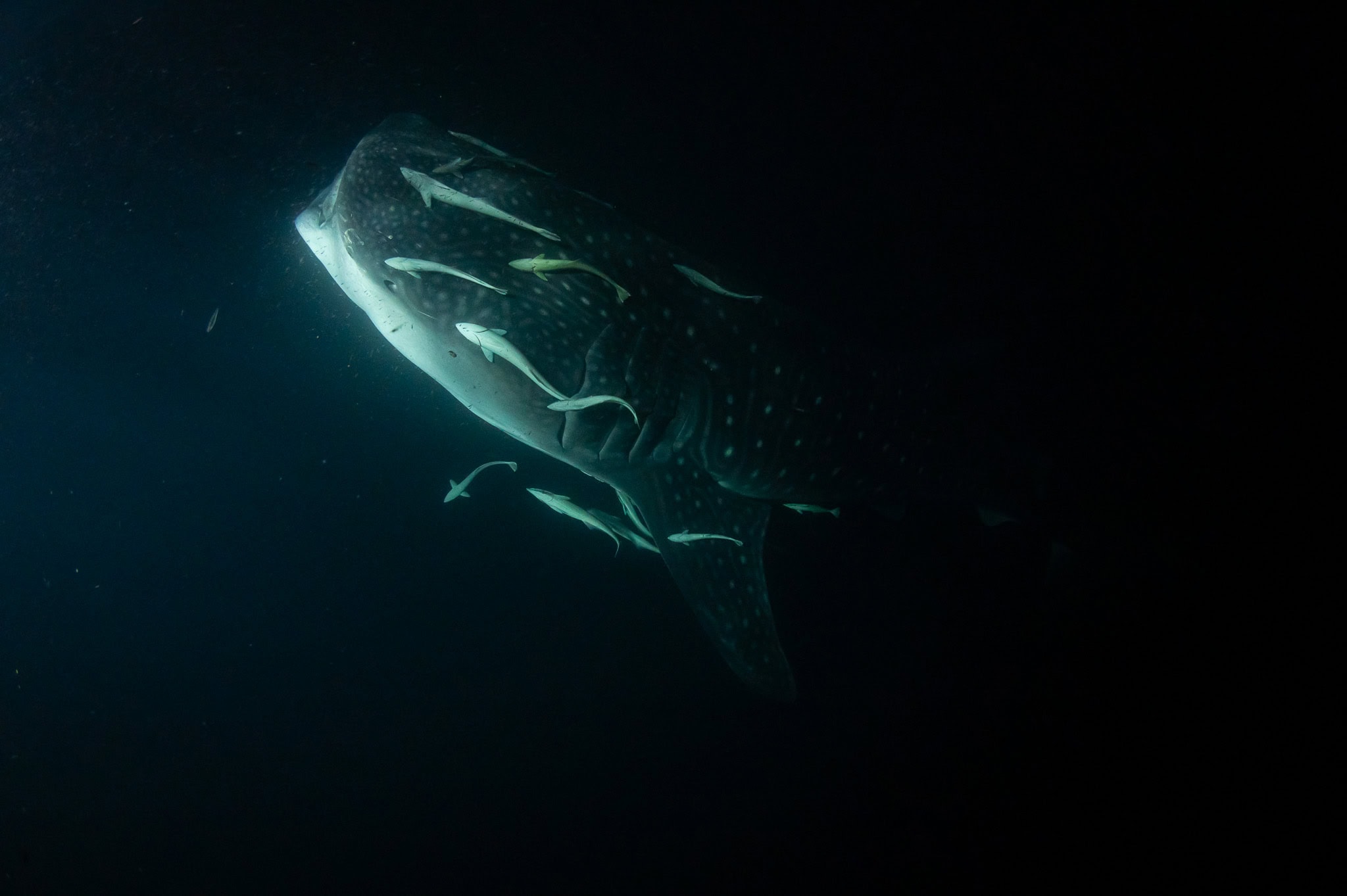
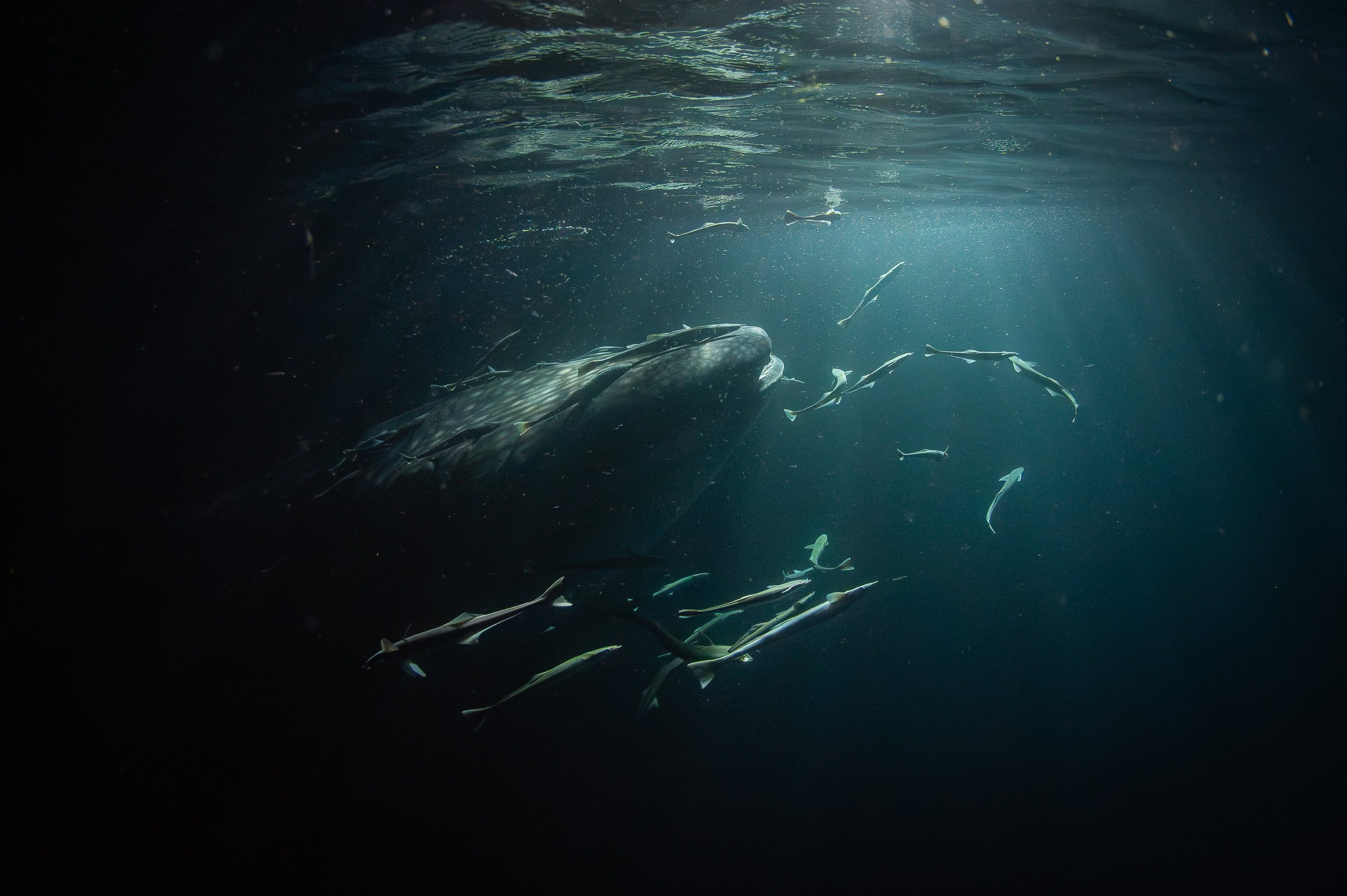
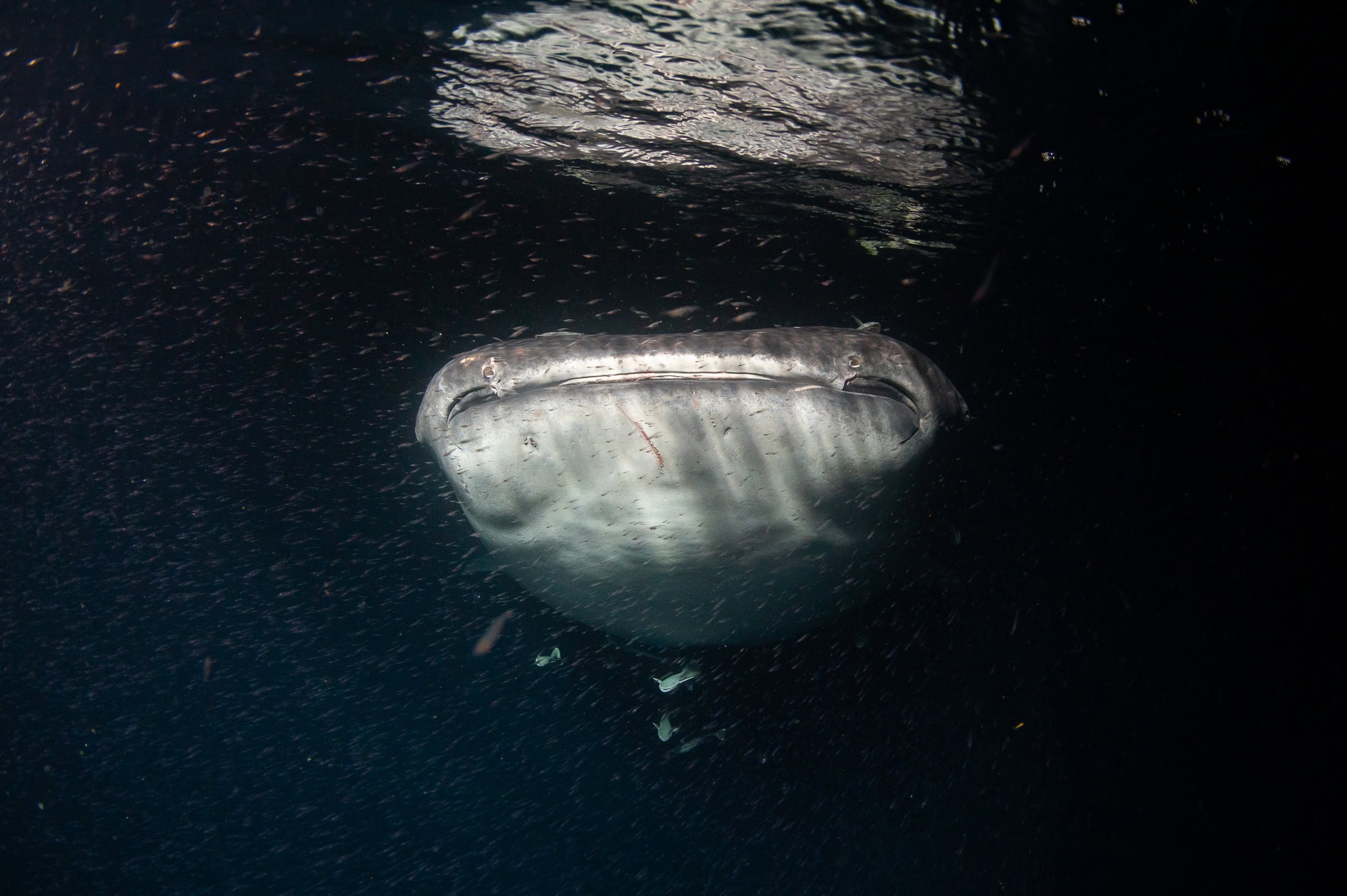
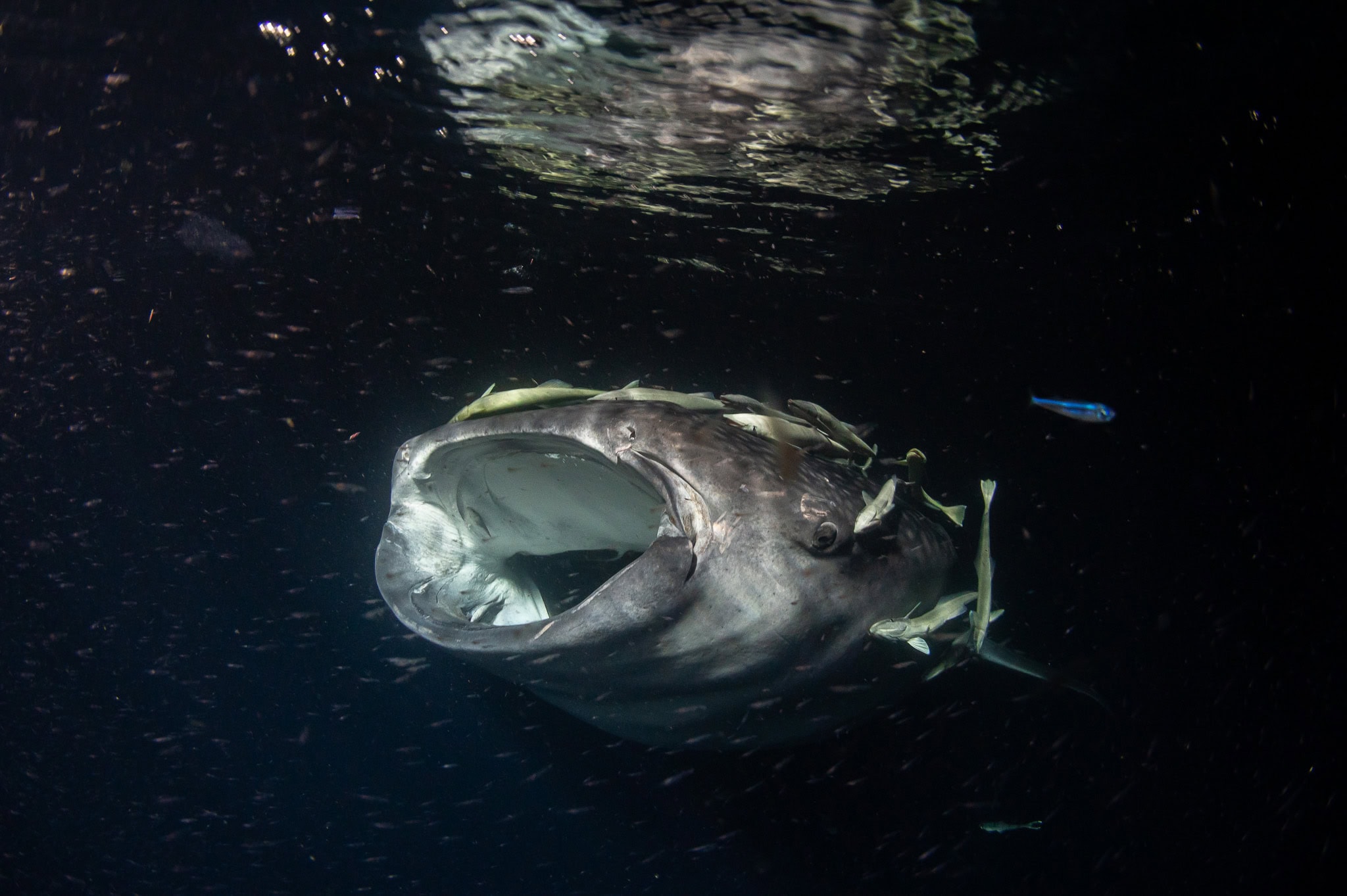
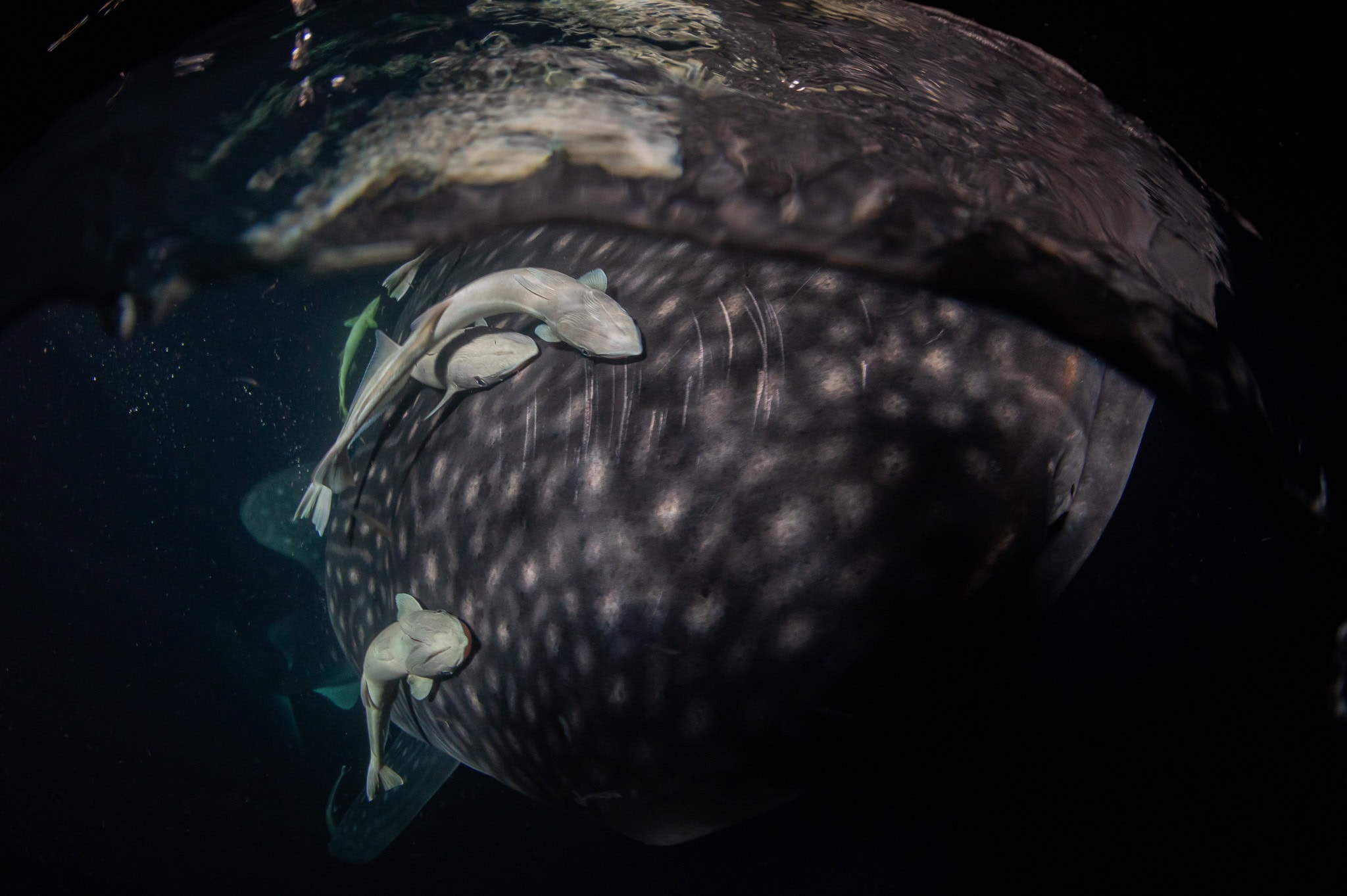
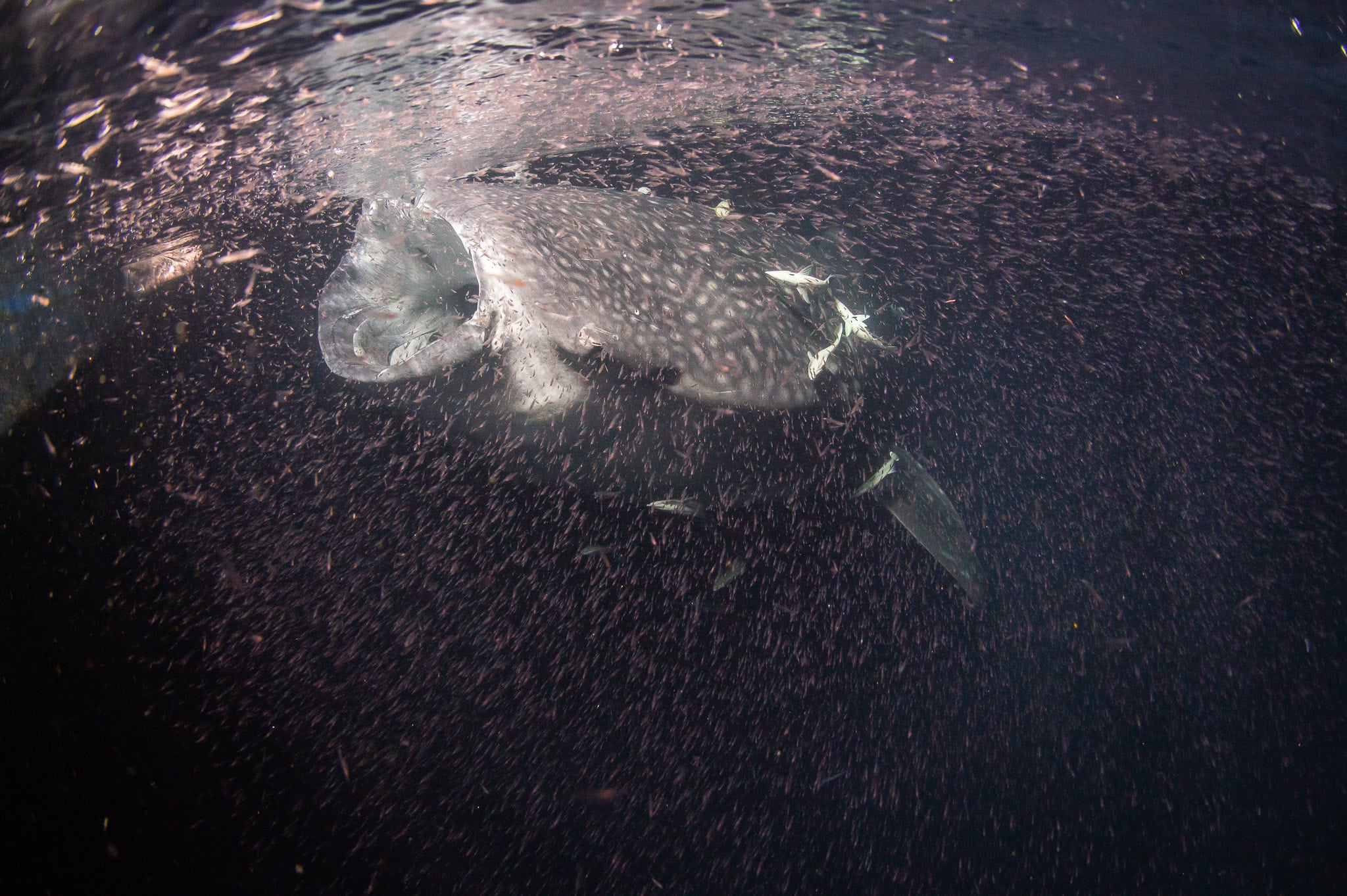
If you were on a southern liveaboard safari in the Maldives, a stop at Thaa Atoll was usually part of the itinerary. The crew set up large floodlights at the stern of the vessel and aimed them into the water. Before long, dense clouds of plankton and krill gathered, drawn in by the light.
During the briefing, we were told that we would be allowed to snorkel if a whale shark (Rhincodon typus) actually appeared. The excitement was high — seeing one of these gentle giants in the wild is anything but an everyday experience.
Shortly after dinner, the alarm suddenly sounded. We hastily grabbed our cameras, jumped onto the dive tender, and collected our gear. Without hesitation, we slipped into the water. The ocean lay pitch-black before us, with only the faint glow of the floodlights illuminating a few meters behind the boat. In the middle of this scene, alongside the swirling plankton, swam an impressive whale shark about seven meters long. Time and again, it dove into the depths, only to return to the surface moments later to feed. We stayed calm and watched the majestic animal glide effortlessly through the water.
After about an hour, the experience reached its peak: a second, slightly smaller whale shark joined in. The two swam side by side for a while before finally disappearing into the darkness. Fascinated and full of adrenaline, we returned to the ship — an encounter we would never forget.
FAREWELL TO THE MALDIVES
Unfortunately, after snorkeling with the whale sharks, I became ill and was unable to complete the remaining twelve dives. I spent hours each day on the phone with my girlfriend — we had bought a SIM card with 100 GB of data at the beginning of the trip — and watched countless movies. In short, I was pretty bored.
On the second-to-last day, I came up with the idea of leaving a day earlier, since we still had one night in Malé booked. We were able to cancel the Airbnb without much trouble, and even managed to change our flight for a relatively reasonable additional fee of 140 euros. Kindly, the crew took us to the airport ahead of schedule, while the others spent a relaxed final day on the boat.
Fortunately, I was able to convince Lisa of my plan, and so we flew back to Vienna 24 hours earlier than originally planned. In our luggage were hundreds of gigabytes of data and wonderful memories of incredible wildlife encounters. The only downside were my two illnesses and the fact that I missed out on twelve dives because of them.
EQUIPMENT USED IN THE MALDIVES
Nikon Z6II
DJI Mavic Air
Nikkor 8–15mm f/3.5–4.5 Fisheye
Nikkor Z 105mm f/2.8 Macro
Isotta Z6II Housing
Video: 4K@60fps H.264 with N-Log
You can find more information about my equipment HERE.
Daniel Kainz
Focus Puller Underwatercamera | Travel
Chasing sharp focus, deep dives and the one National Geographic picture around the world!
Imprint | Privacy Policy | Cookie Guidelines (EU) | Copyright: Daniel Kainz 2026