web analytics

blue sharks of the Azores

THE SEARCH FOR THE BLUE SHARKS OF THE AZORES BEGAN

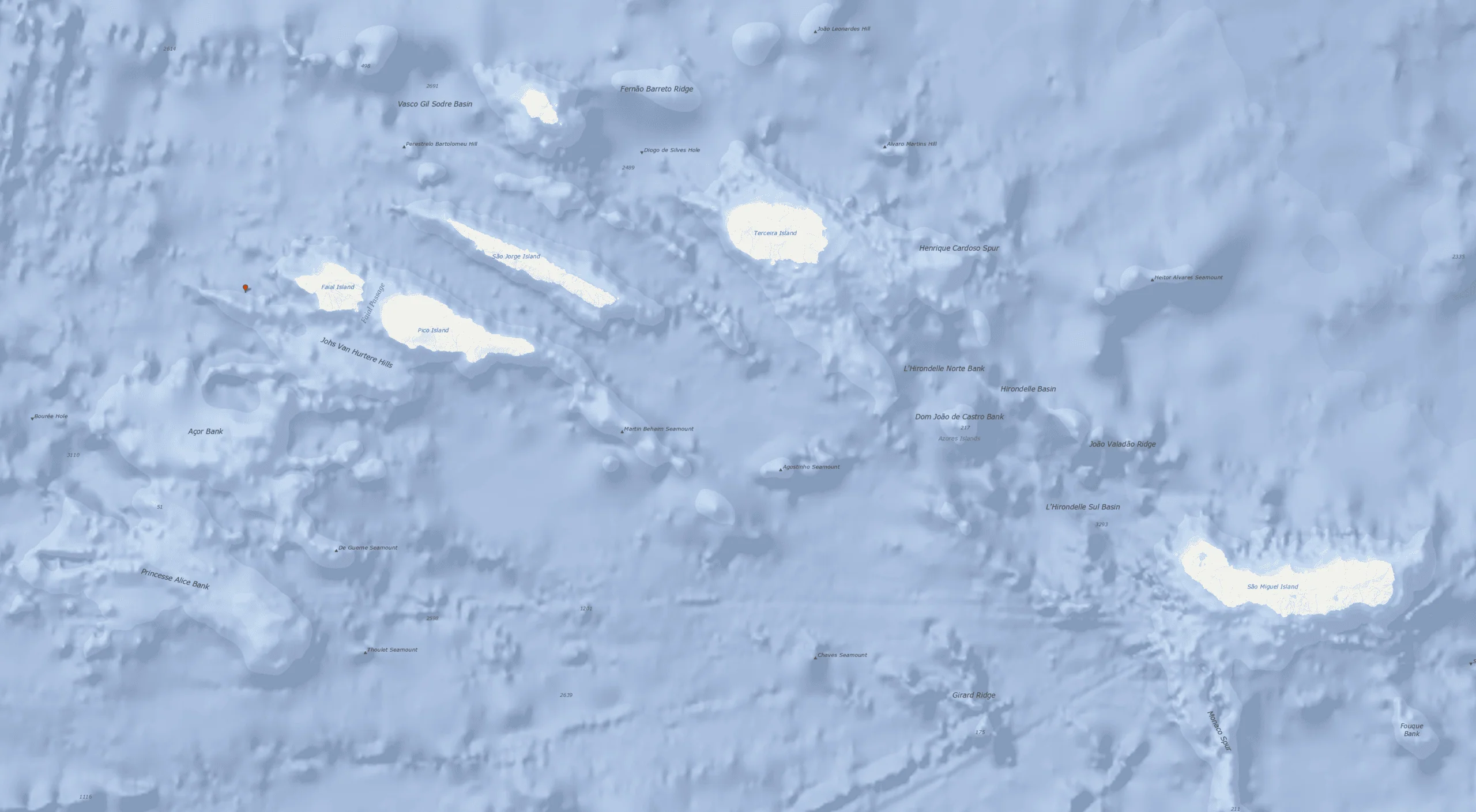
Once again, we were looking for adventure. This time, it was going to be the Azores. Another volcanic island in the middle of the ocean. After Tenerife and El Hierro, this was the third trip with Lisa and Christopher. We quickly knew that Pico was the place we wanted to go — because we wanted to dive, and as much as possible. Pico Island Adventures seemed like the perfect partner for this journey. So we booked just under two weeks for August/September of the same year. Six months still separated us from the island group in the middle of the Atlantic.


And we needed that time. Christopher still had to complete his AOWD, while Lisa and I had to test, refine, and test our new camera equipment all over again. My Nikon Z8 and Nauticam housing were already familiar with South America, but there had been several upgrades: two Keldan 4XR lights with wireless remote control, a 6-inch underwater monitor from Fotocore, and my DIY trim sled. All of it had to be thoroughly tested before the trip — in my parents’ swimming pool. After countless Amazon orders, repeated jumps into the pool, and one nearly brand-new Pelican case later, we were ready. August arrived quickly, and my 60 kg of luggage was already looking forward to a new adventure for us travelers.

HURRICANE, HIGH WAVES, AND A BROKEN BOAT

When we arrived, we quickly realized that the weather had been quite rough not long before. At the airport, we met another diver from the same dive school. During the drive, reality slowly set in. We learned that a hurricane had hit the island shortly before our arrival and had made diving impossible for the past two weeks. Although we were greeted by bright sunshine, the ocean was still very rough. At the dive center, we first took care of the essentials: equipment check, check-in, and car handover.


During the briefing for the upcoming two weeks, we received one piece of bad news after another. First, we were told that their safari boat was broken, meaning we couldn’t do the planned two-day safari to Princess Alice, an underwater plateau about 100 km offshore. We had all been really looking forward to that — but never mind, there were still plenty of other great things. The other booked dives were also uncertain due to the weather. For now, we were given a date for the check dive the next day; it would be a shore dive, so that wasn’t an issue. Everything after that was uncertain. Slightly annoyed and hungry, we left the dive center, packed our car, and were escorted to our accommodation. We unpacked, settled in, and went grocery shopping. The location was fantastic — we were right in the foothills of the volcano. It rose behind us, towering over our house. Slowly, the mood softened again, and we ended the evening by the sea, enjoying burgers from a food truck.

THE FIRST DIVES AND BETTER WEATHER

The day began — and with it, a new routine: breakfast, frantically gathering the camera gear, brushing our teeth, and rushing out the door. Our small Citroën C1 had just enough space for the three of us plus our cameras and dry bags. After that, it was full. We quickly memorized the roads and soon no longer needed the navigation system.


The two check dives were a solid start. There wasn’t much to see, but the camera demanded my full attention anyway. Saltwater behaves a little differently than you calculate it to in freshwater.


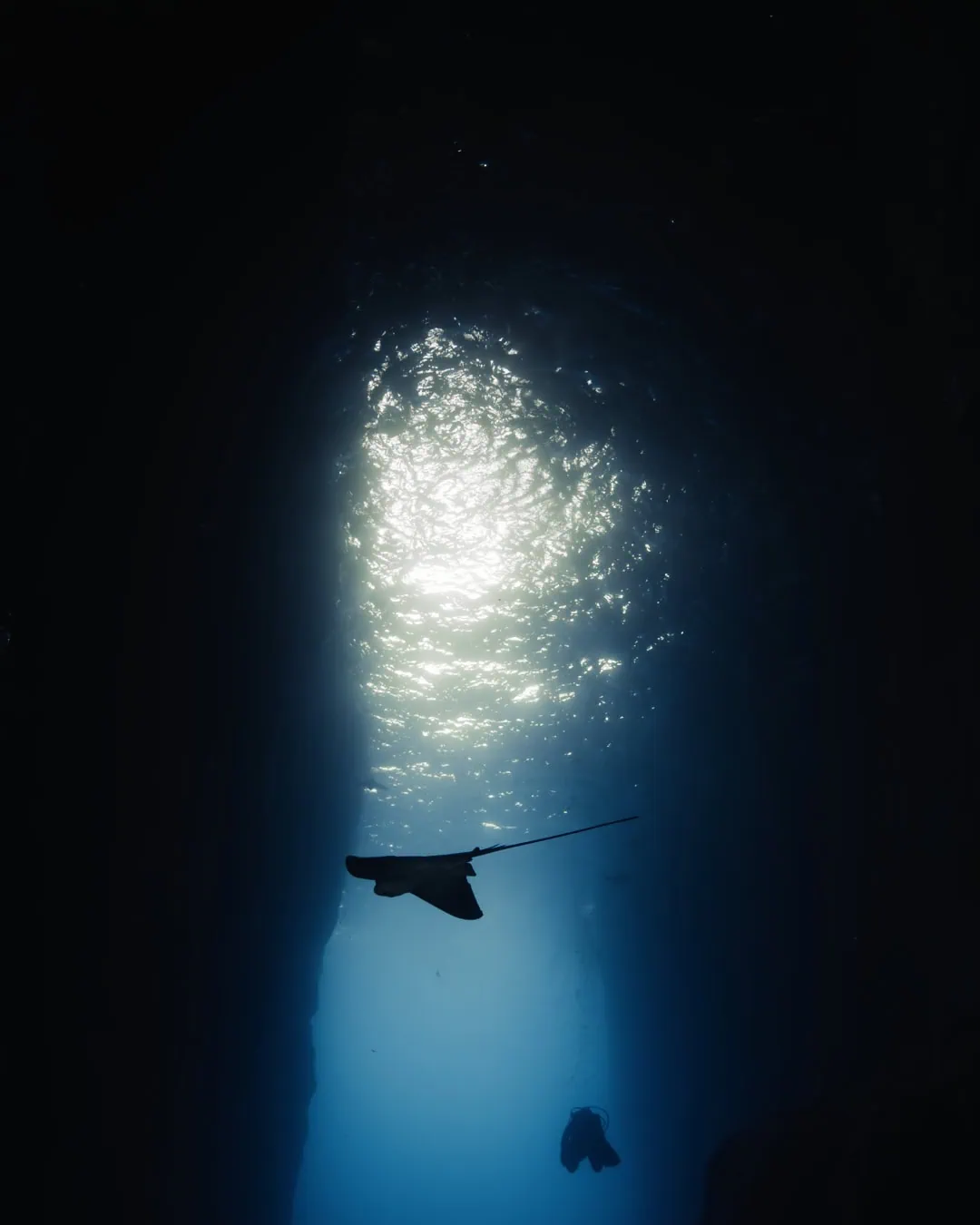
Over the next two days, we had our first boat dives. We headed to the neighboring island of Faial and dived two beautiful caves filled with young eagle rays — the first real highlight of the trip. The camera and I slowly became a good team, and the footage started to look quite decent. After diving, we went grocery shopping, reviewed the footage, and slept for an hour. It was more exhausting here than usual; everything felt wilder, and our bodies needed time to adjust.

THE BLUE SHARKS OF THE AZORES MADE THEIR FIRST APPEARANCE

On the fourth day, the moment had finally arrived: our first shark dive was on the schedule. The weather had become consistently better, and with it came the promise of great dives in the days ahead. Once we arrived at the base, we were given our mandatory shark briefing. It was essential, as we would be entering the water directly with the sharks — and no one wanted to lose a finger. We headed to an older site because the waves were still too high for the newer one. Still, our chances were excellent: we had a skilled and experienced crew on board. What could possibly go wrong?


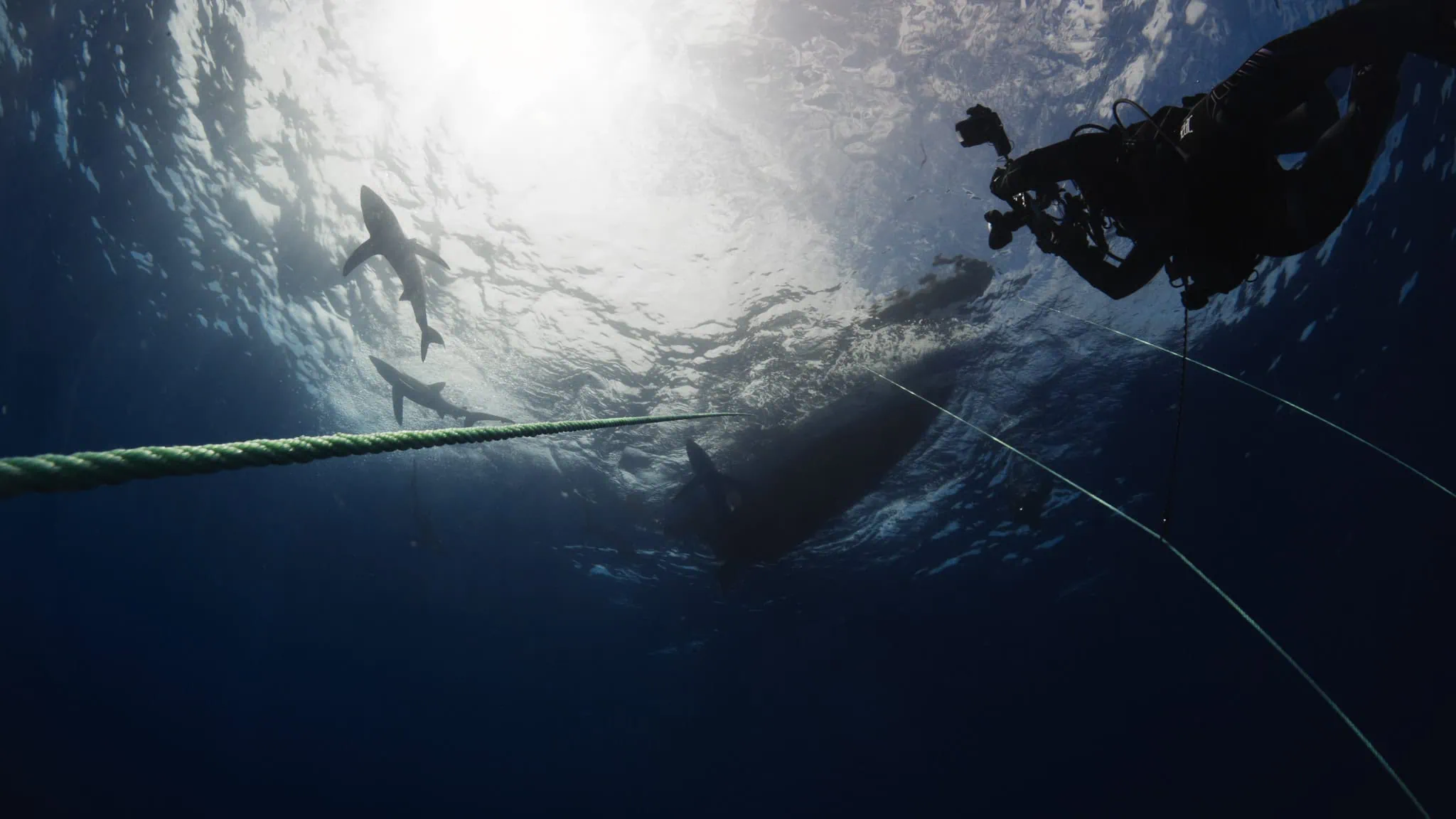
The boat ride was very rough, and we all started feeling seasick quite quickly. Once we reached the site, we had to wait for sharks to approach the boat. That could take anywhere from a few minutes to several hours. We were lucky. Our chum (blood and fish scraps) attracted the first shark within just five minutes. We waited until the shark settled in — meaning it didn’t immediately disappear again — and then began to gear up. One by one, we slipped almost silently into the water, swam to our lines, and descended. One person after another.


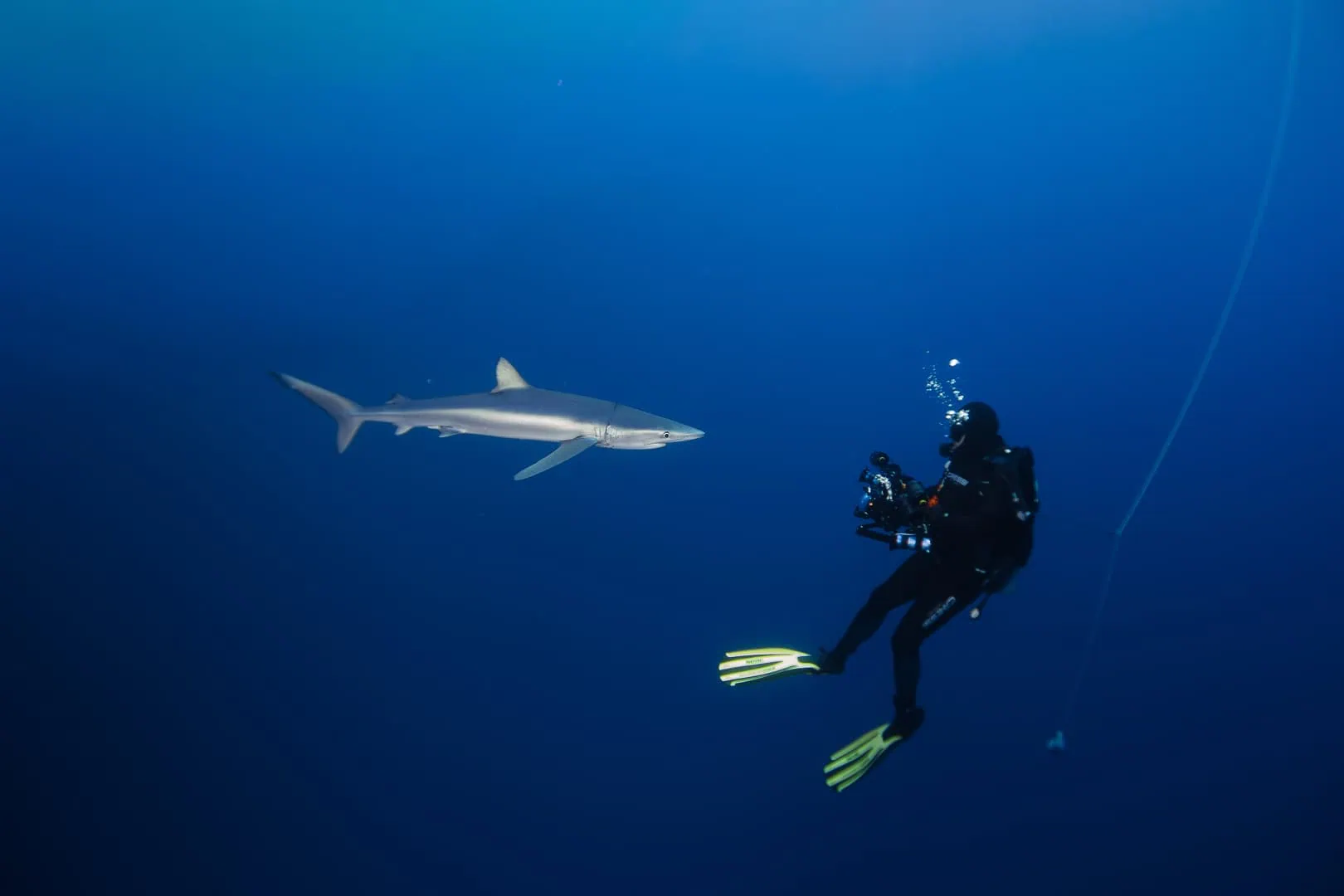
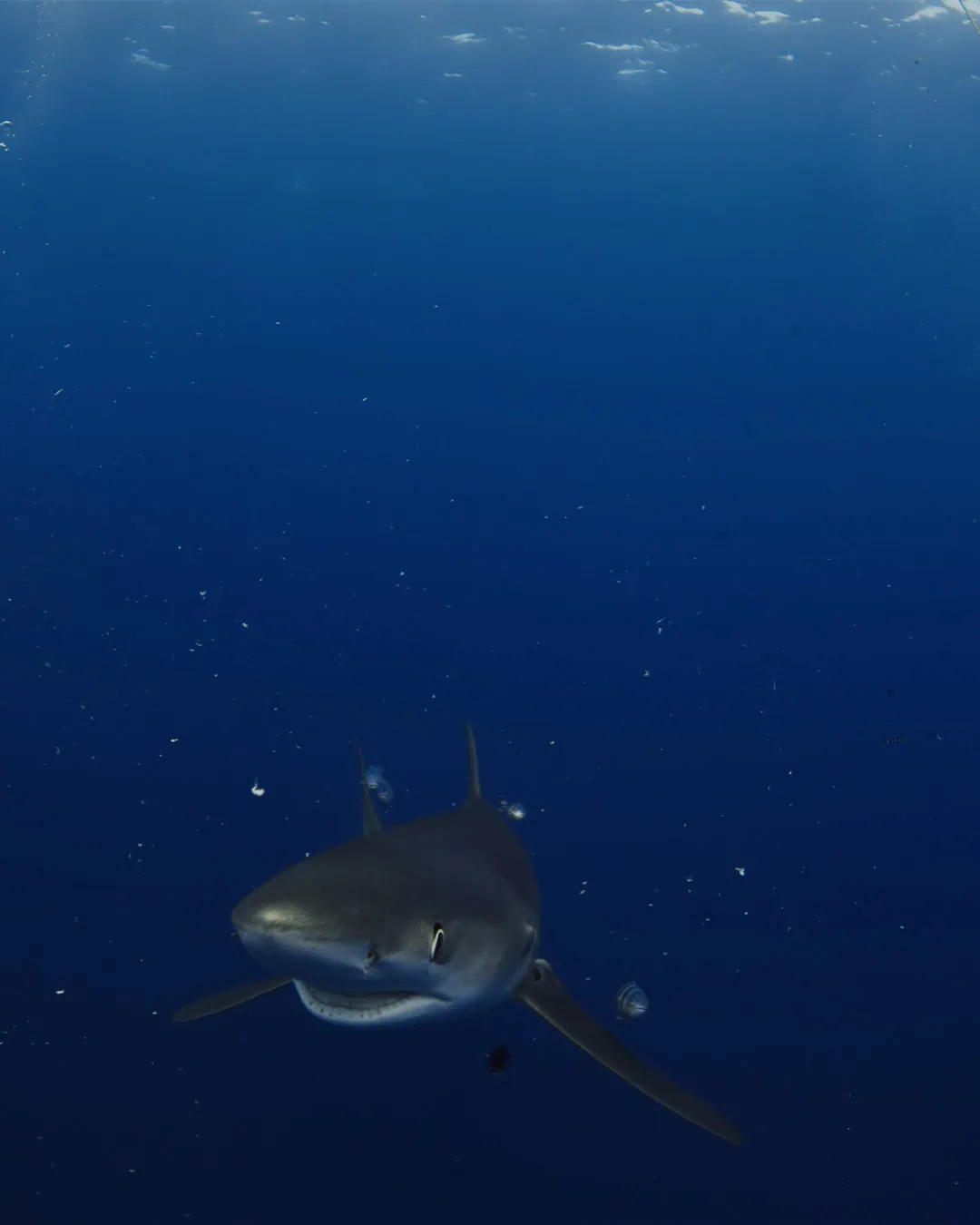
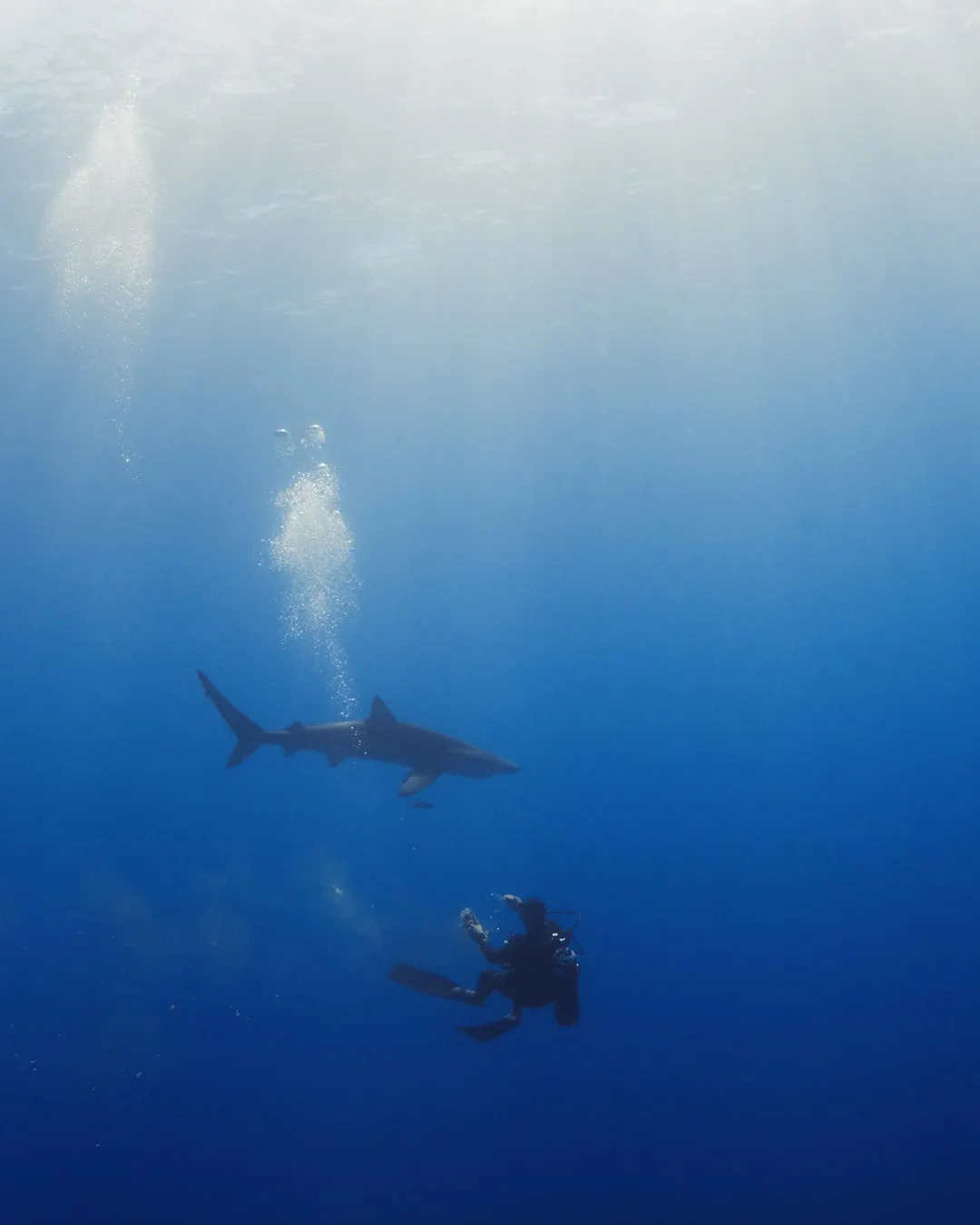
Everything was incredibly intense at first. You had to clip onto the line and get your bearings. After a few seconds, I finally had a moment to look around. There was no shark in sight. Had we scared it away after all? Then I saw a shadow ahead of me. It grew larger, unmistakably shark-shaped. Gracefully, the shark swam toward me and then turned away at a safe distance. As the scent spread through the water, more and more sharks appeared. In the end, there were three or four of them, observing us from a safe distance. Our guide took this as the cue to retrieve a tuna head from the bait box hanging at five meters and cut it up between us. The sharks grew more curious and came closer — much closer. It felt as if they had lost any sense of caution around us. They bit the lead weights at the ends of the lines, bumped into us, and swam straight toward the camera. Twice, our guide had to redirect a shark, but apart from that, there were no incidents, and we enjoyed an extraordinary encounter.


After the first dive, our chum master had to keep the sharks interested. Christopher even helped him out after the rough seas finally proved too much for his stomach. Fortunately, it didn’t take long before we were back in the water. Once again, several sharks circled us, came very close, and examined us carefully. It was exactly the experience we had traveled to the Azores for. We were able to experience blue sharks (Carcharhinus glaucus) up close, in their natural habitat.

CALM SEAS AND MANY SHARKS

The following two days were a bit calmer again. A night dive (which, to be fair, had been promised to be something else beforehand) and two smaller underwater rock formations were on the schedule. The weather was still not ideal, but there were clear signs of a drastic improvement in the days ahead. And that was a good thing, because two major highlights were still waiting for us: a second shark dive and the day trip to Princess Alice.


The second shark dive started under an unlucky star as soon as we arrived at the dive center. One of the two captains ran over a rope with his Zodiac while heading to the gas station. The boat had to be lifted out of the water and repaired on land. None of us knew whether we would have to head out on a fully packed Zodiac — there were nine divers — or if we could comfortably split into two boats. After the briefing and a delay of one and a half hours, the long-awaited news finally came: the Zodiac was fixed, and we could go. This time, the sea was perfectly calm, and we headed to the standard spot: Condor Banks. Similar to Princess Alice, this site is an underwater plateau — except that its highest point lies at 400 meters, not at 29 meters like Princess Alice. All around it, the Atlantic drops down to 1,200 meters. A lot of water to find sharks in. Luckily, we had the best chum master on the island with us, so nothing could go wrong. The ride to Condor Banks was fantastic. Spray hit our faces (we were already fully suited up in our wetsuits for every Zodiac ride), and the sea was almost mirror-smooth. The journey took about 1.5 hours and passed in no time at all. The weather was beautiful, and the anticipation was huge.


Once we arrived at the site, we noticed a strong drift that kept pushing us farther into the open ocean, making it harder for the sharks to find us. The other Zodiac was soon drifting out of sight. After what felt like an eternity — and two whole fish — the first sharks finally appeared. And they had come to stay. In the distance, we spotted a fishing boat. Our captain told us they were tourists trying to catch sharks “by accident.” That’s why they circled the dive boats, knowing that sooner or later sharks would be nearby. After several unsuccessful passes, they thankfully gave up and moved on.


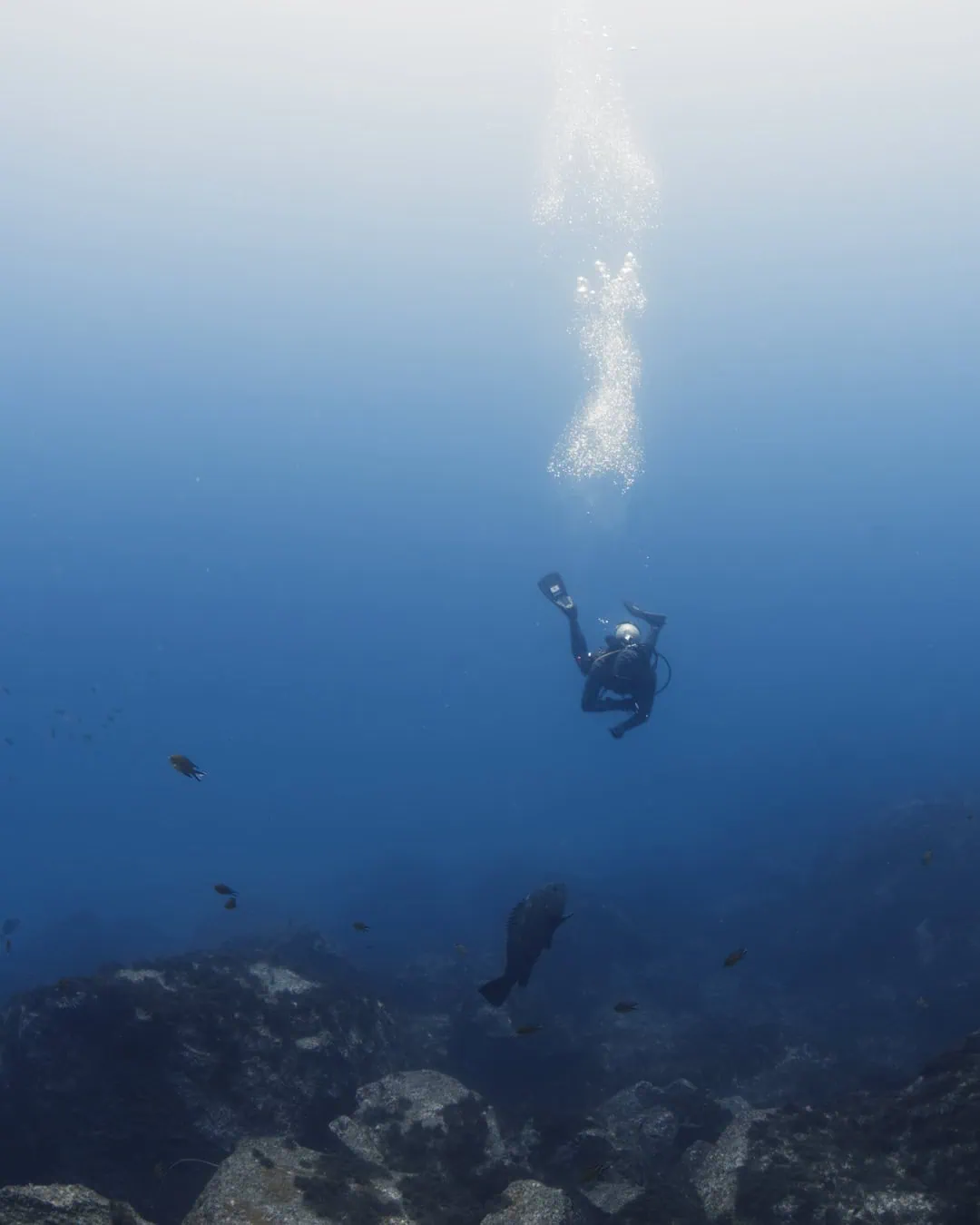
We, on the other hand, geared up as usual and slipped silently into the water, one after another. This time, I was alone on a line, which meant I could move freely in the vertical. The sharks were very active and curious right from the start. Once again, they came very, very close, and we managed to capture some truly cinematic footage. The two hours passed in a flash, and I felt both sad and happy when the guide finally brought me up last and I had to return to the Zodiac.

At no point did we feel unsafe or in danger. It felt as if we could read the sharks. They showed us their world, and we were allowed to observe it. Even today, I look back on those four dives with great fondness. Just from the sharks alone, 1.2 TB of data was created. A total of 144 clips were waiting to be reviewed and edited. In this report, you’ll find some of them. I hope you can understand why diving with sharks fascinates me so deeply.

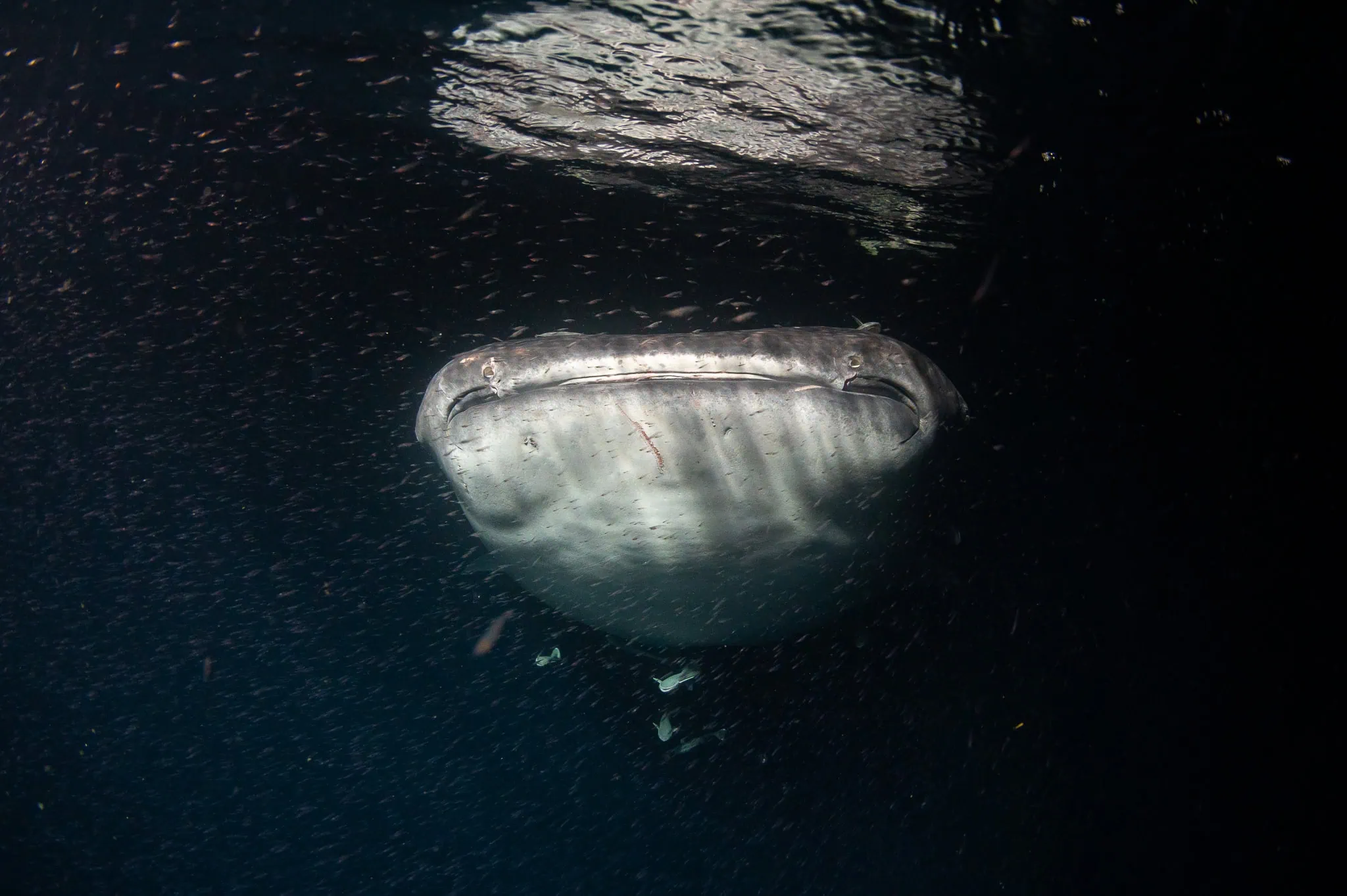
BLUE SHARKS OF THE AZORES – VIDEO

USED EQUIPMENT

Nikon Z8

Nikkor 8-15mm f/3,5-4,5 Fisheye

Nauticam Z8 Housing

Keldan 4XR with 6m Ambient Filter

Fotocore MR6 Monitor

Video: 8K@60fps N-Raw with N-Log


You can find more information about my equipment HERE.

Imprint | Privacy Policy | Cookie Guidelines (EU) | Copyright: Daniel Kainz 2026