web analytics

ECUADOR

OVERVIEW – ECUADOR

Ecuador was the third country on our three-month South America journey in 2024. From the very beginning, I had my heart set on the Galápagos Islands. While planning the trip, we realized that traveling there meant going through Ecuador. Since Colombia was our fourth destination, it fit perfectly into our route. We had budgeted a total of twelve days — not much, but enough for the Galápagos Islands and three days in Quito.

With our farewell to Costa Rica, the second half of our journey began, and we had no idea that the twelve days ahead would change our lives just a little.
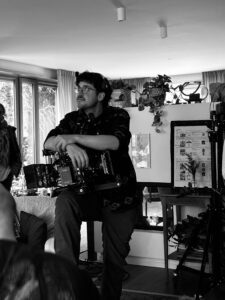
IN THE FOOTSTEPS OF A. VON HUMBOLDT – QUITO

We landed in Quito at night. A curfew was still in place, and we weren’t quite sure what to expect. But we quickly noticed that the general atmosphere was calm and positive, and we hardly saw any police or military presence. Our Fast & Furious-style Uber driver took us to the hotel — quite literally right up to the front door. Because of the security situation, you had to knock and wait to be let in. The same applied to a restaurant just 200 meters away. It was an exciting experience that definitely made us a bit more cautious.

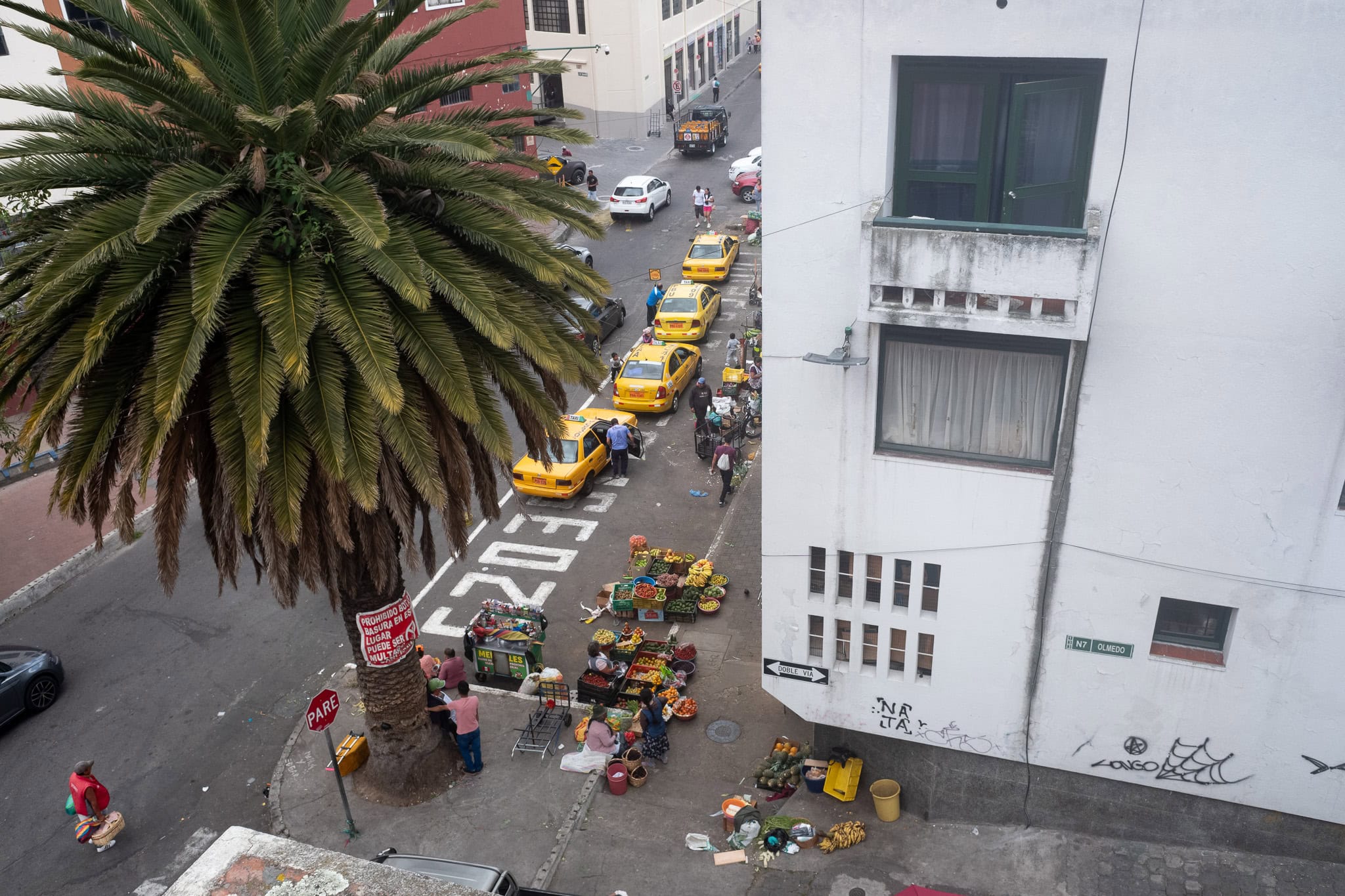
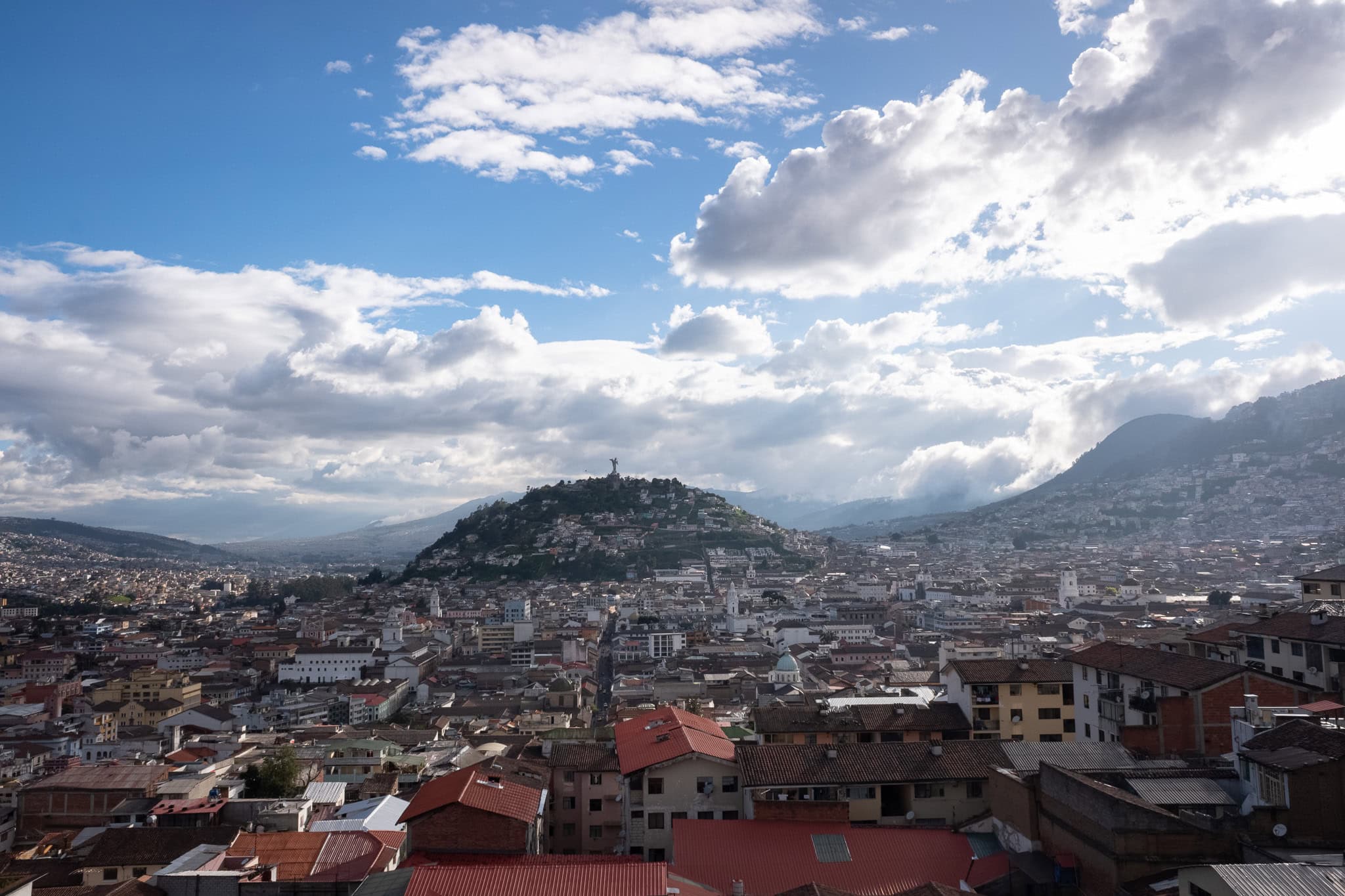
Over the next two days, we explored Quito and everything the city had to offer. A free walking tour introduced us to the country’s exotic fruits, local soup specialties, and the city’s most important sights — oh, and handmade chocolate, including a tasting!

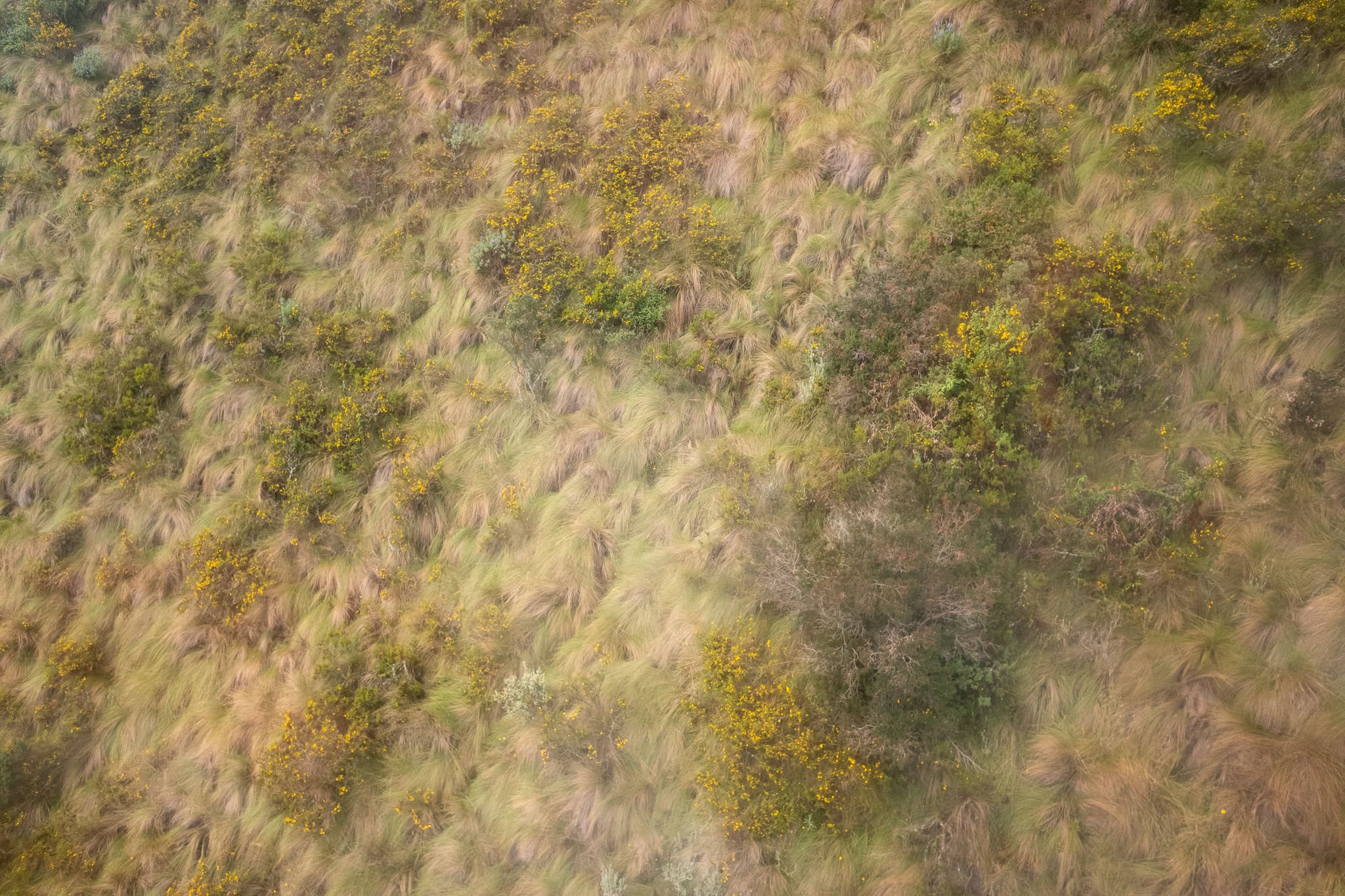
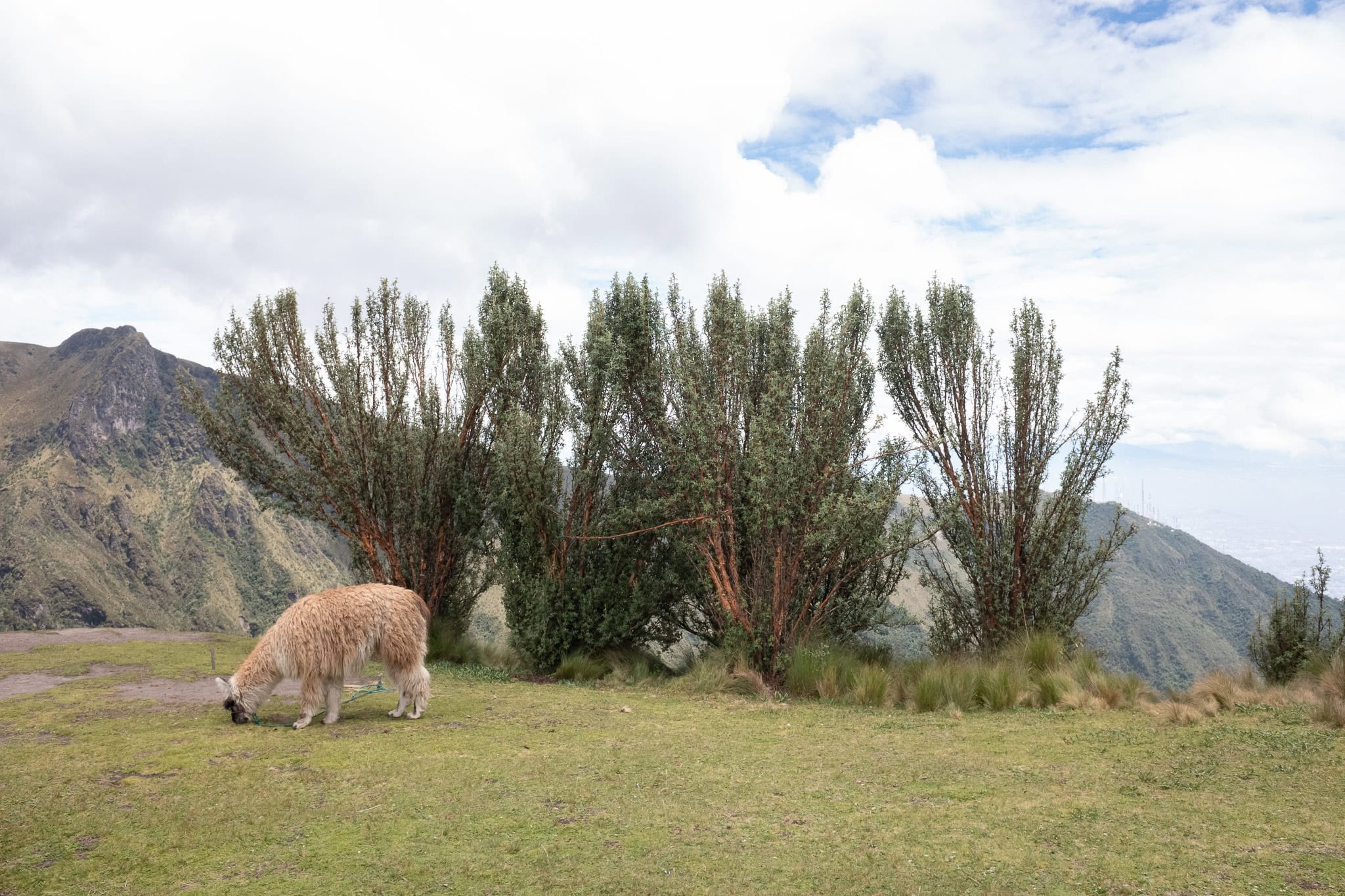
Following in the footsteps of Alexander von Humboldt, we set out to climb a volcano near Quito. We chose the local volcano, Pichincha. In reality, we didn’t have to do much — except pay eight dollars per person and hop into a cable car. Still, within minutes, we found ourselves at an altitude of 4,000 meters above sea level.

THE MIDDLE OF THE EARTH & ECUADOR

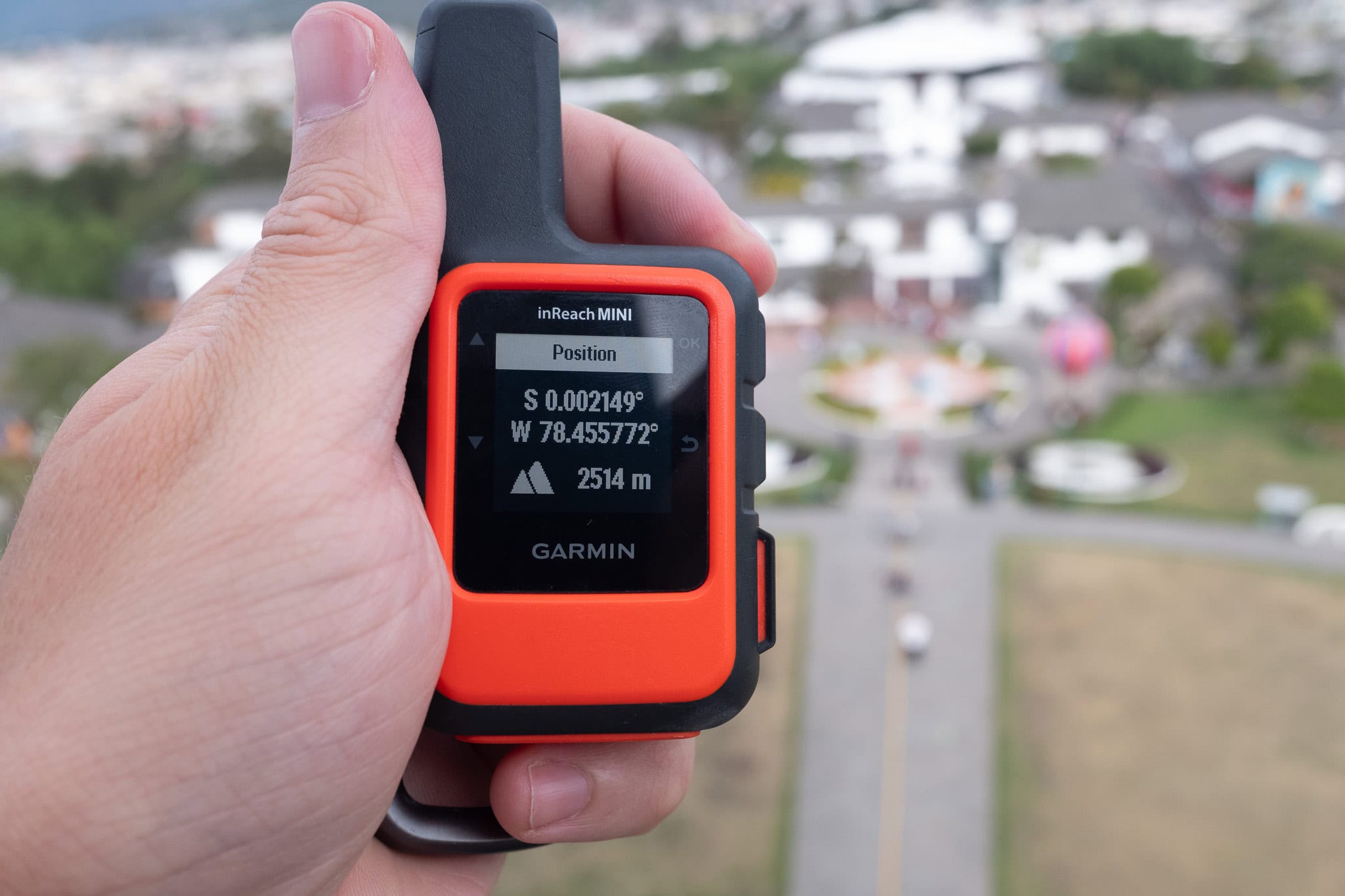
Since we were already there, we had to visit the equator as well. Just a 50-minute taxi ride from our hotel was the “Mitad del Mundo” monument. It was supposedly built exactly on the equator, and many guides tried to prove this with all kinds of experiments. In reality, however, the monument lies about 240 meters too far south — something that wasn’t known at the time because it couldn’t be measured accurately. So technically, we were still standing with both feet in the Southern Hemisphere.

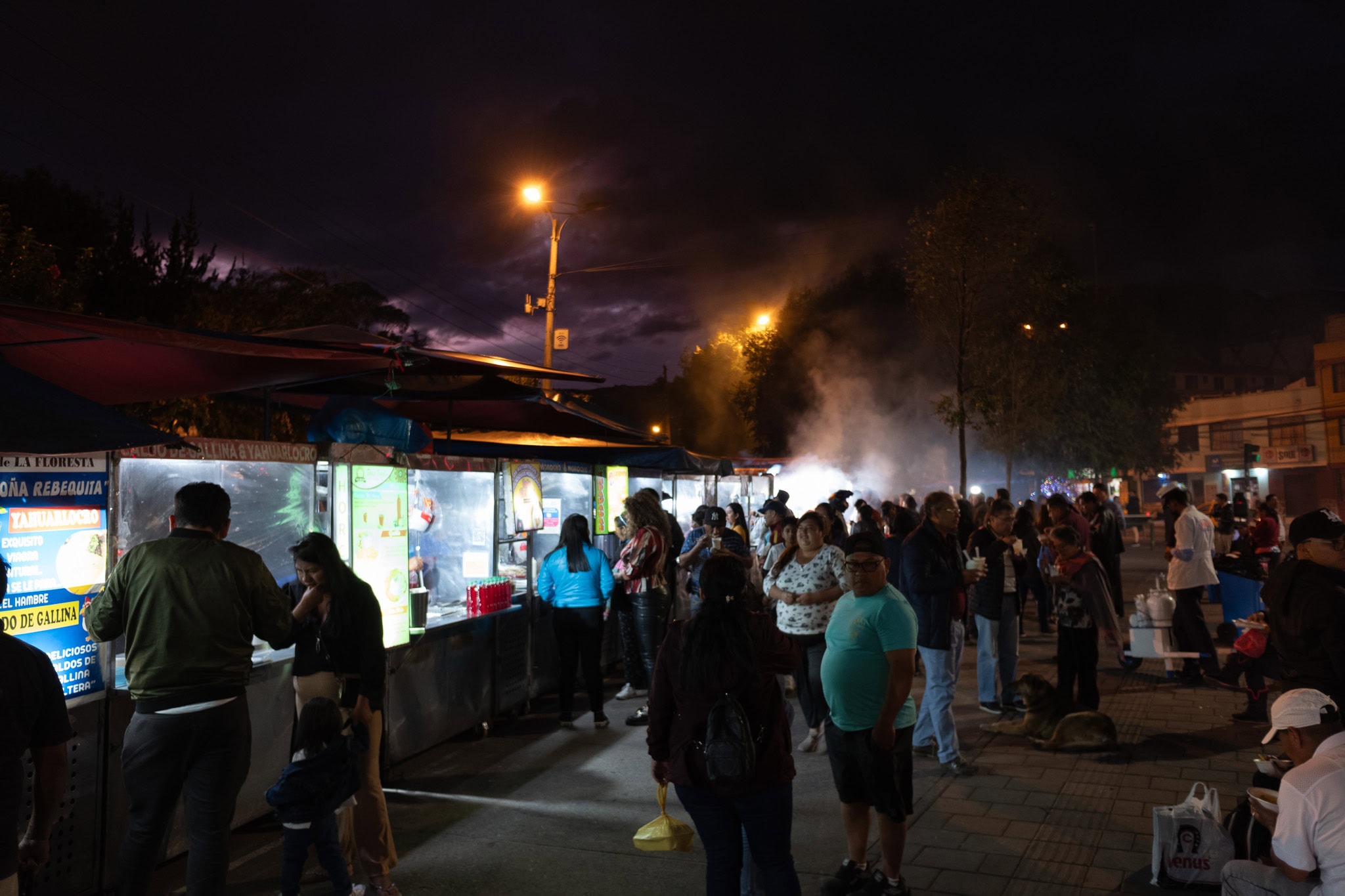
The street food there was excellent, too. We tried as much as possible in the short time we had, and so far it was the best we’d had — especially for vegetarians. It was almost a shame that we had so little time in Quito. But now we know for next time.

First, though, it was off to the Galápagos Islands.

A DREAM COMES TRUE – THE GALÁPAGOS ISLANDS

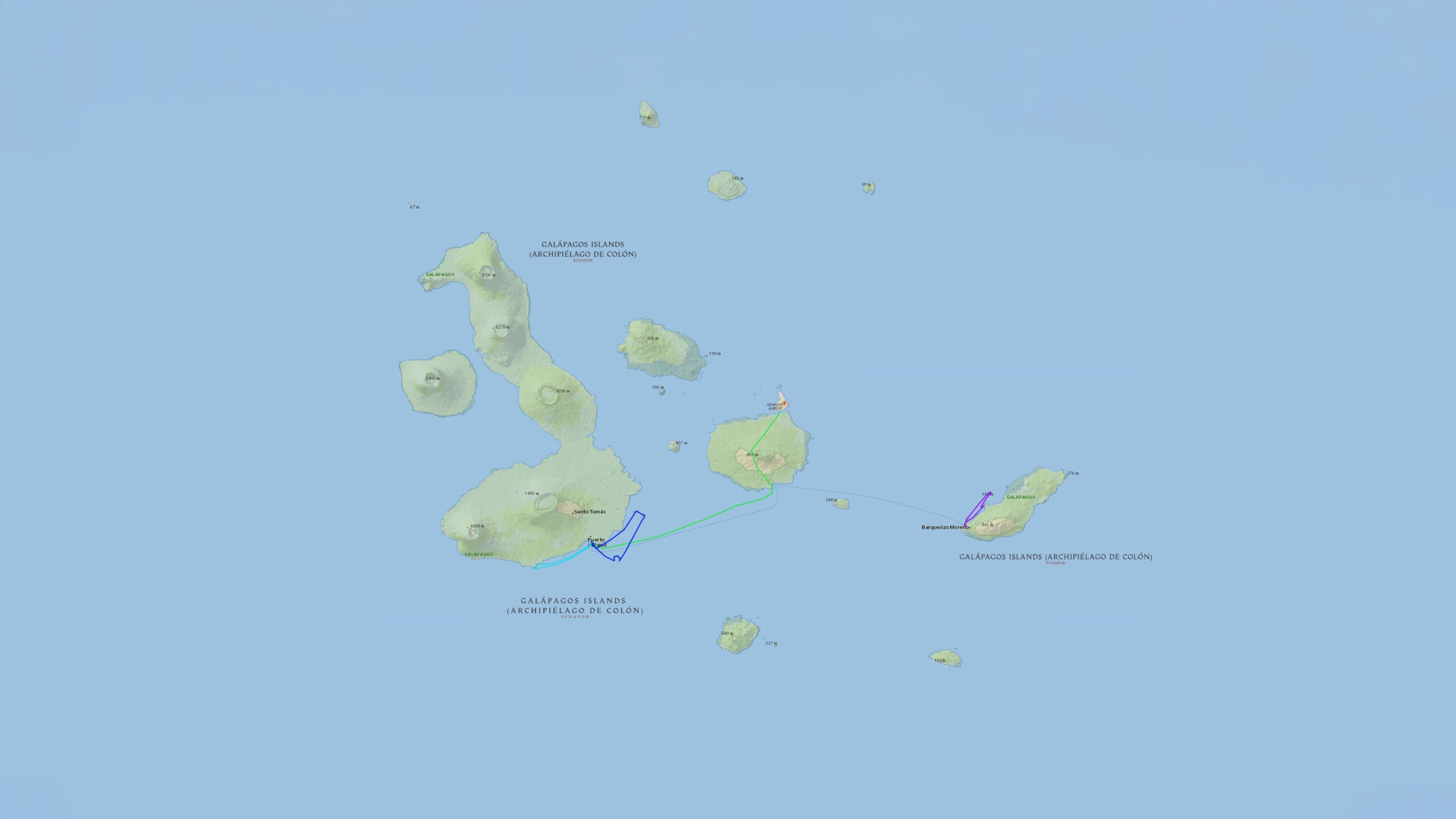
After landing, two things awaited us: intense heat (thanks to El Niño) and overwhelming excitement. For me as a diver, visiting the islands had always been a big and distant dream. The feeling of suddenly being there was indescribable. But that feeling quickly gave way to stress as we rushed to catch our ferry. Immigration took forever, and we still had two bus rides and a small ferry ahead of us before finally boarding the ferry to Isabela Island.

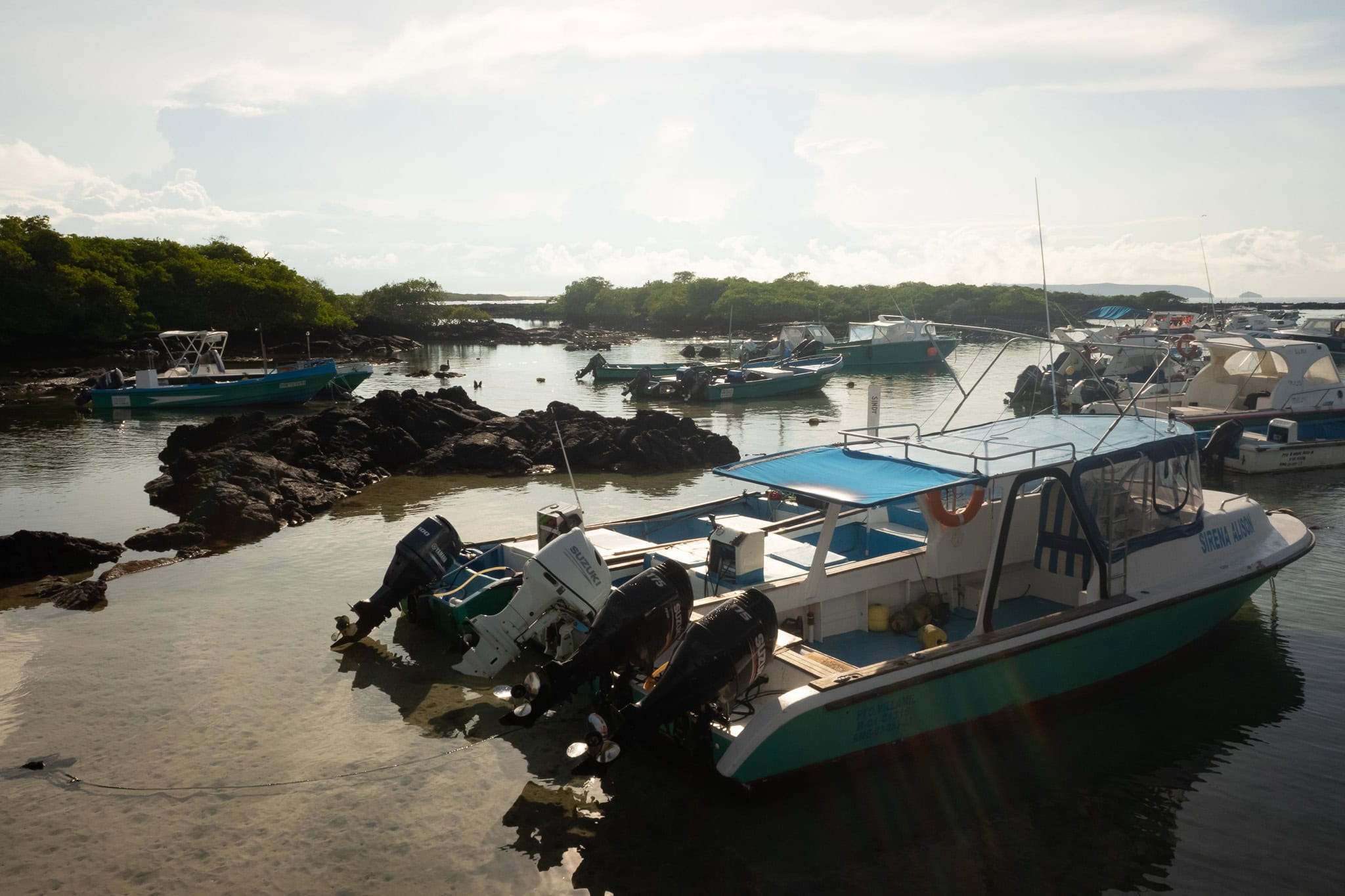
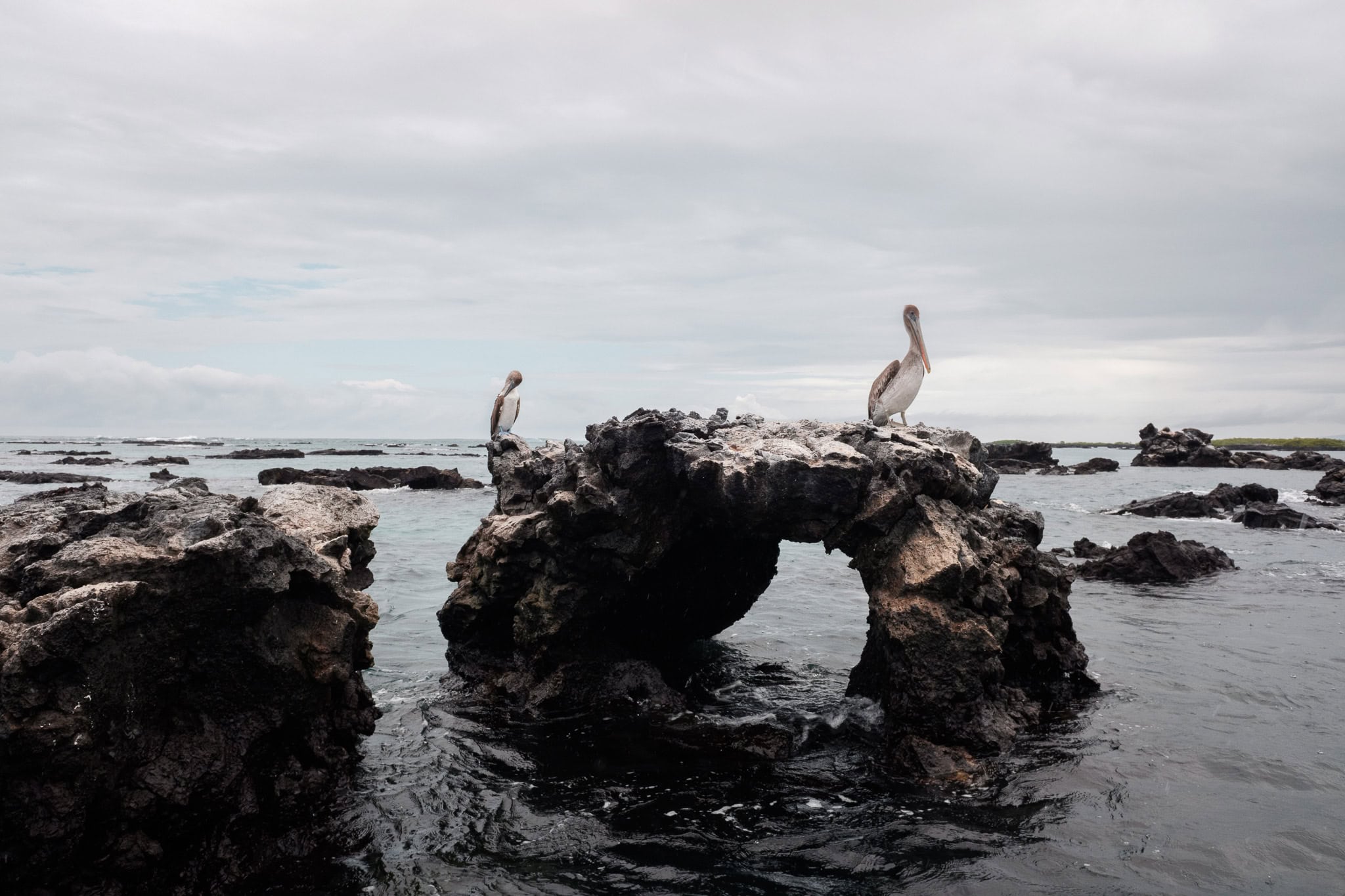
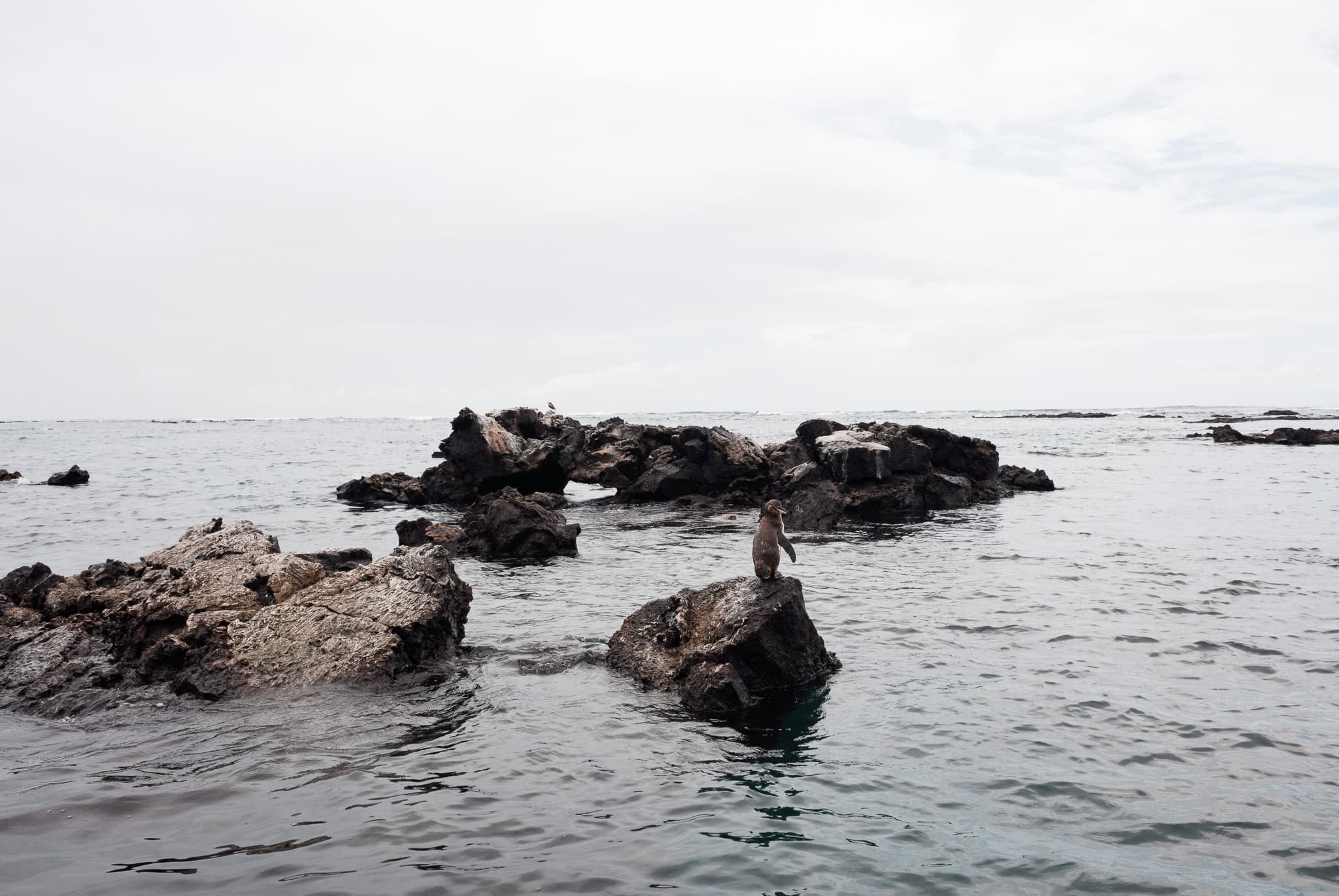
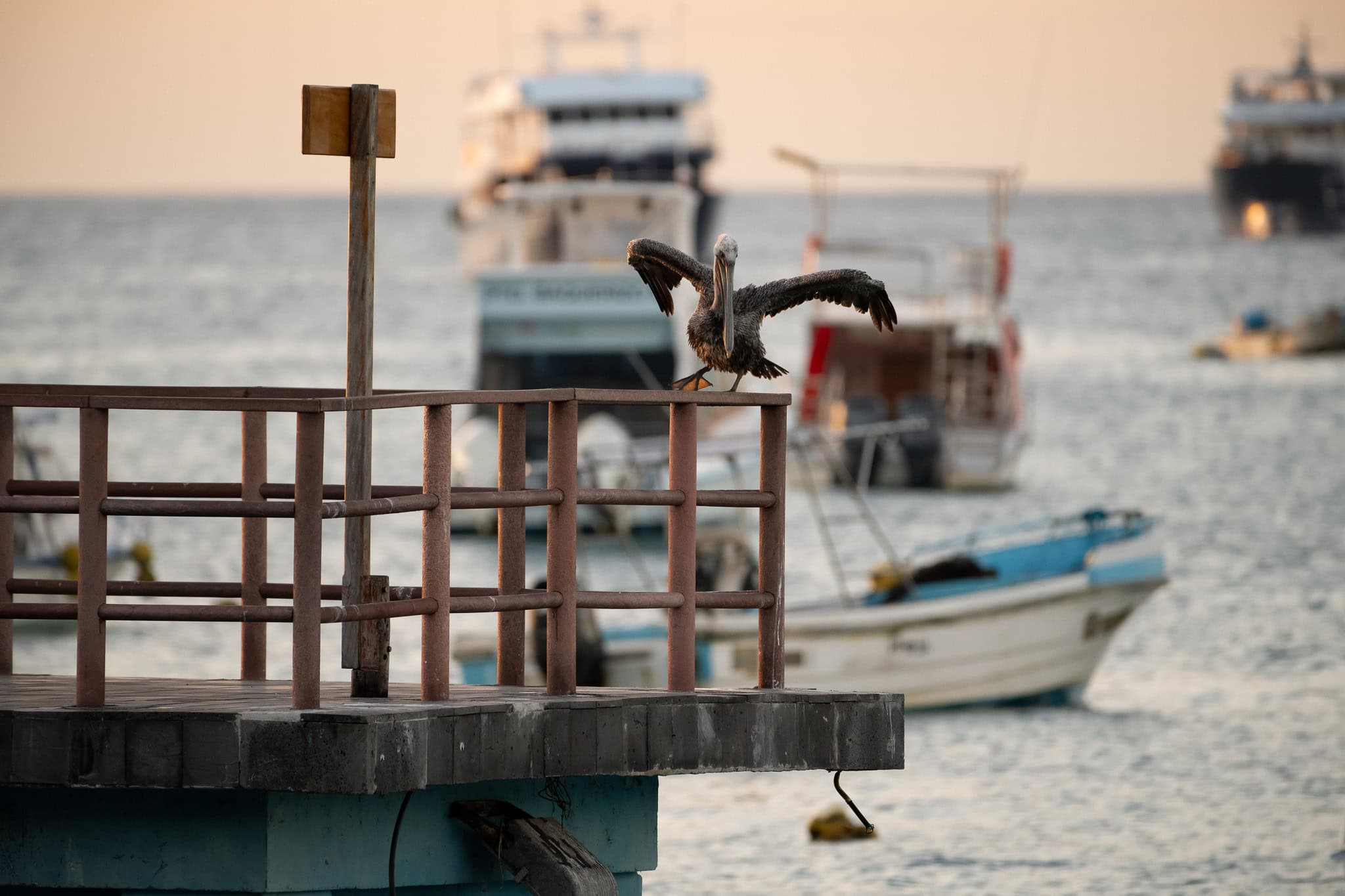
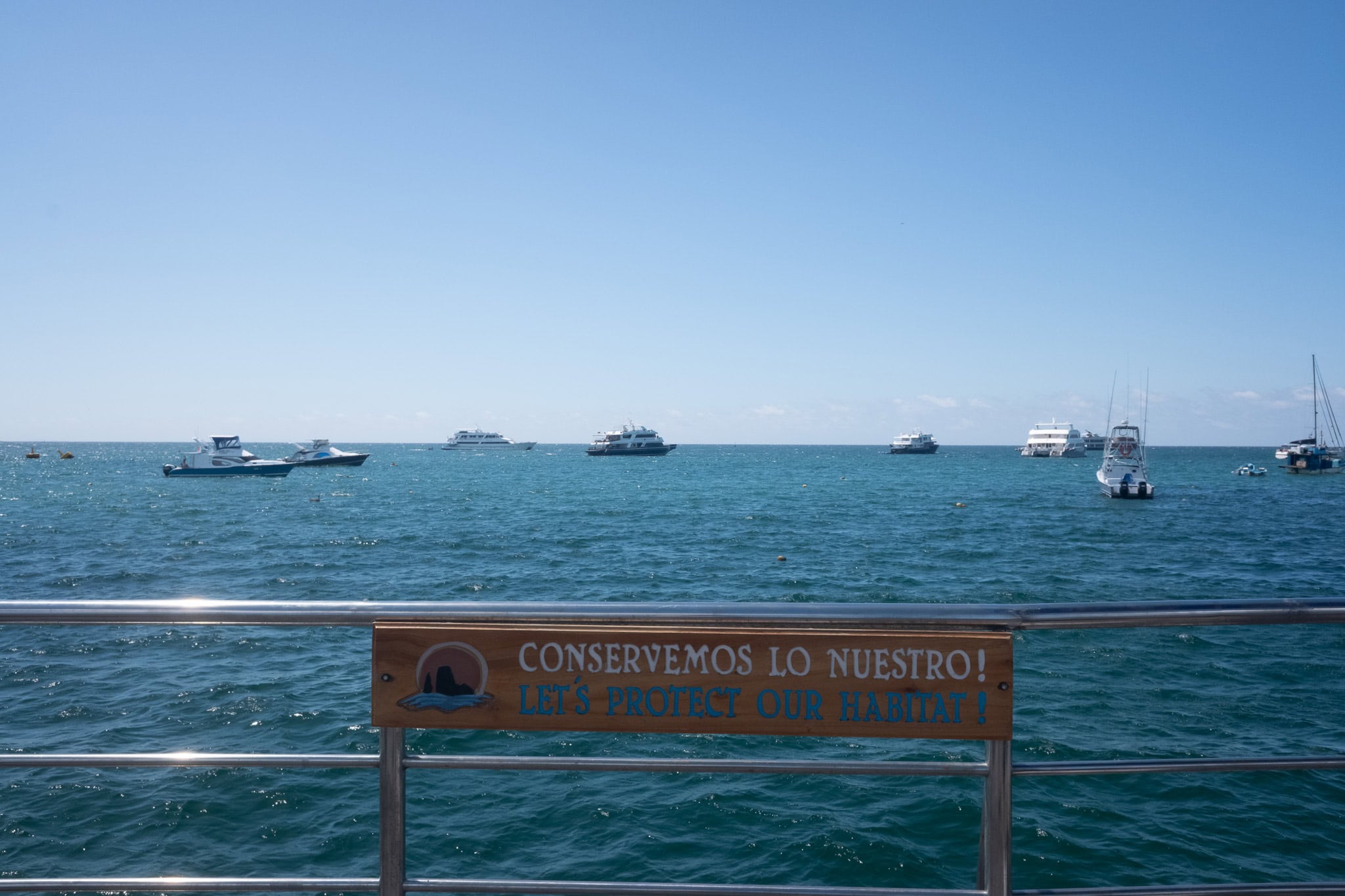
After nearly six hours, a lot of (anxiety-induced) sweat, and dolphins during the 2.5-hour ferry crossing, we arrived in Puerto Villamil. The biodiversity almost knocked us off our feet. A water taxi took us from the ferry to the pier — and in those five minutes alone, we saw penguins, sea lions, pelicans, and blue-footed boobies. It felt magical, and the anticipation for the days ahead was immense.

At that moment, we had no idea just how magical it would truly become.

ISLA ISABELA

We felt like the countless researchers and expeditions that had come before us. We couldn’t take it all in at once. Everywhere we looked, life was thriving.

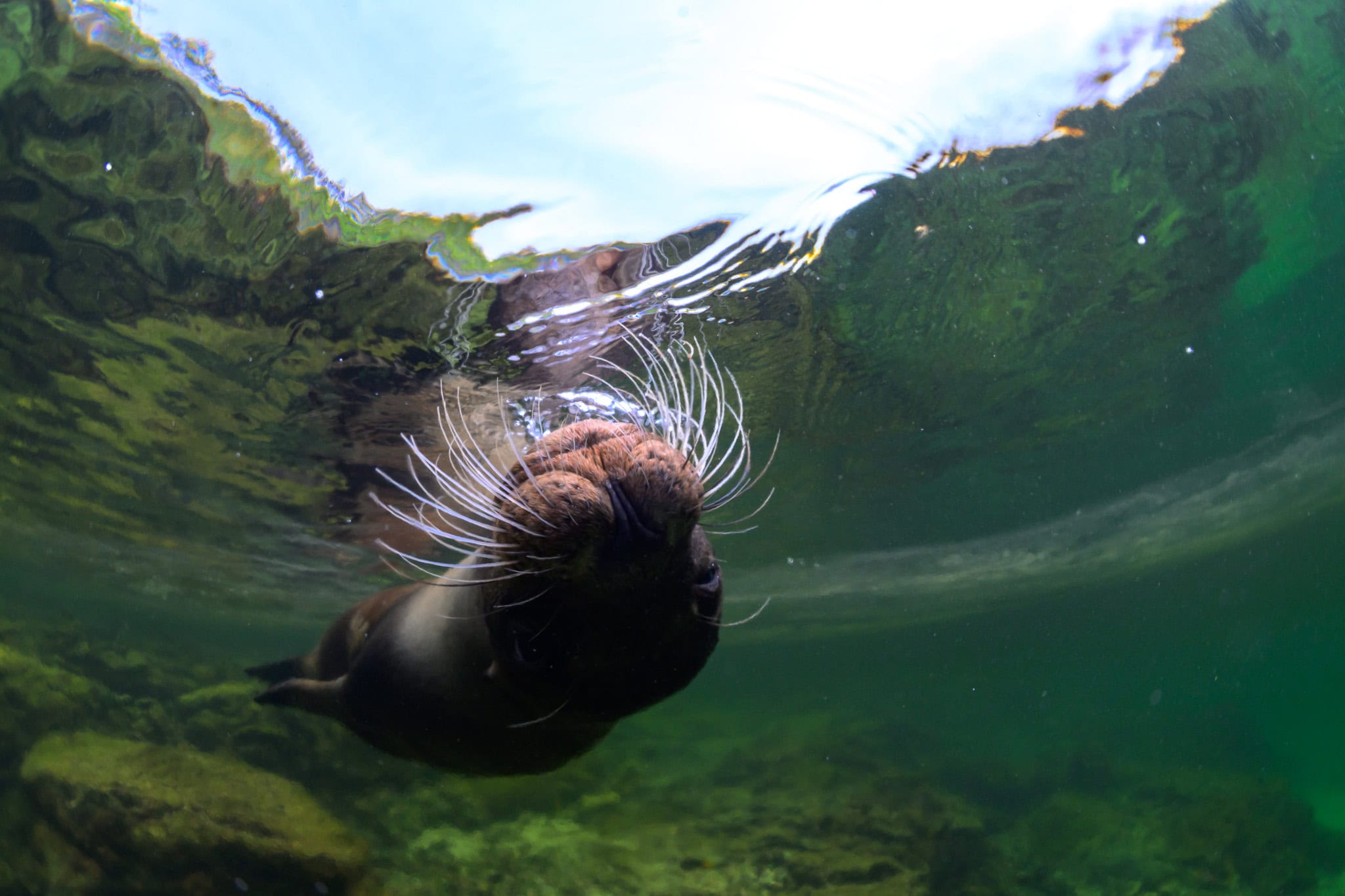
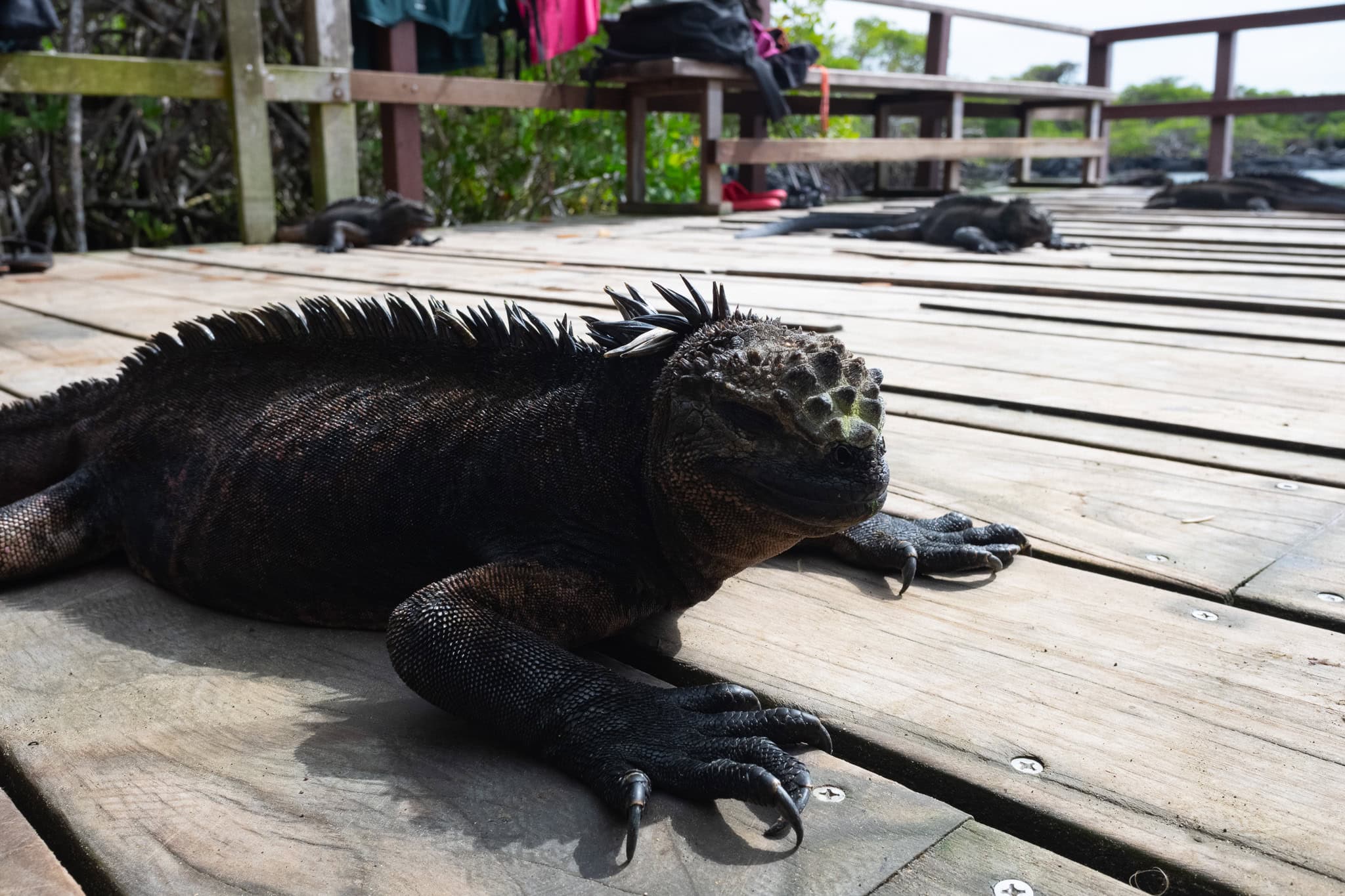
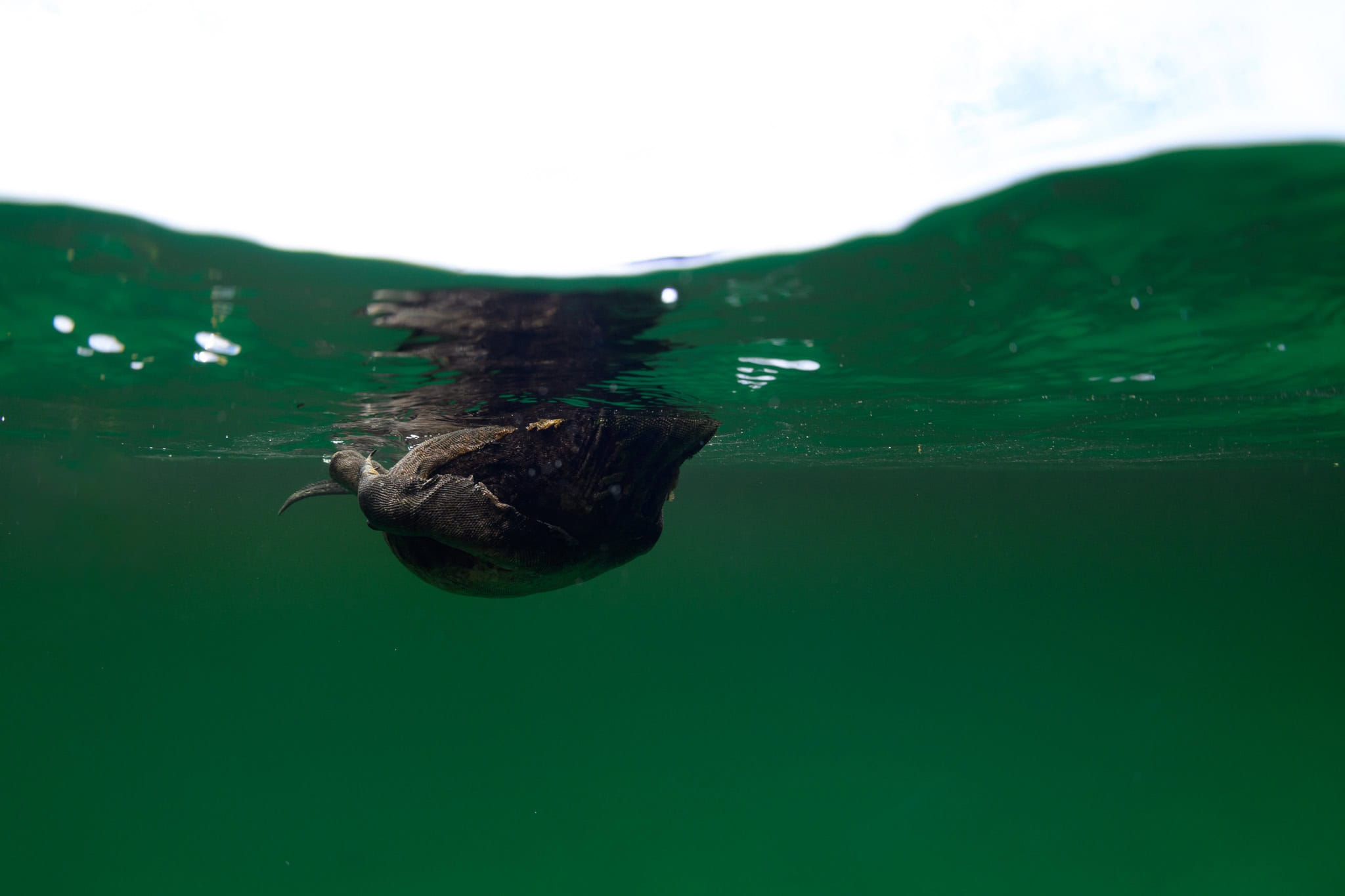
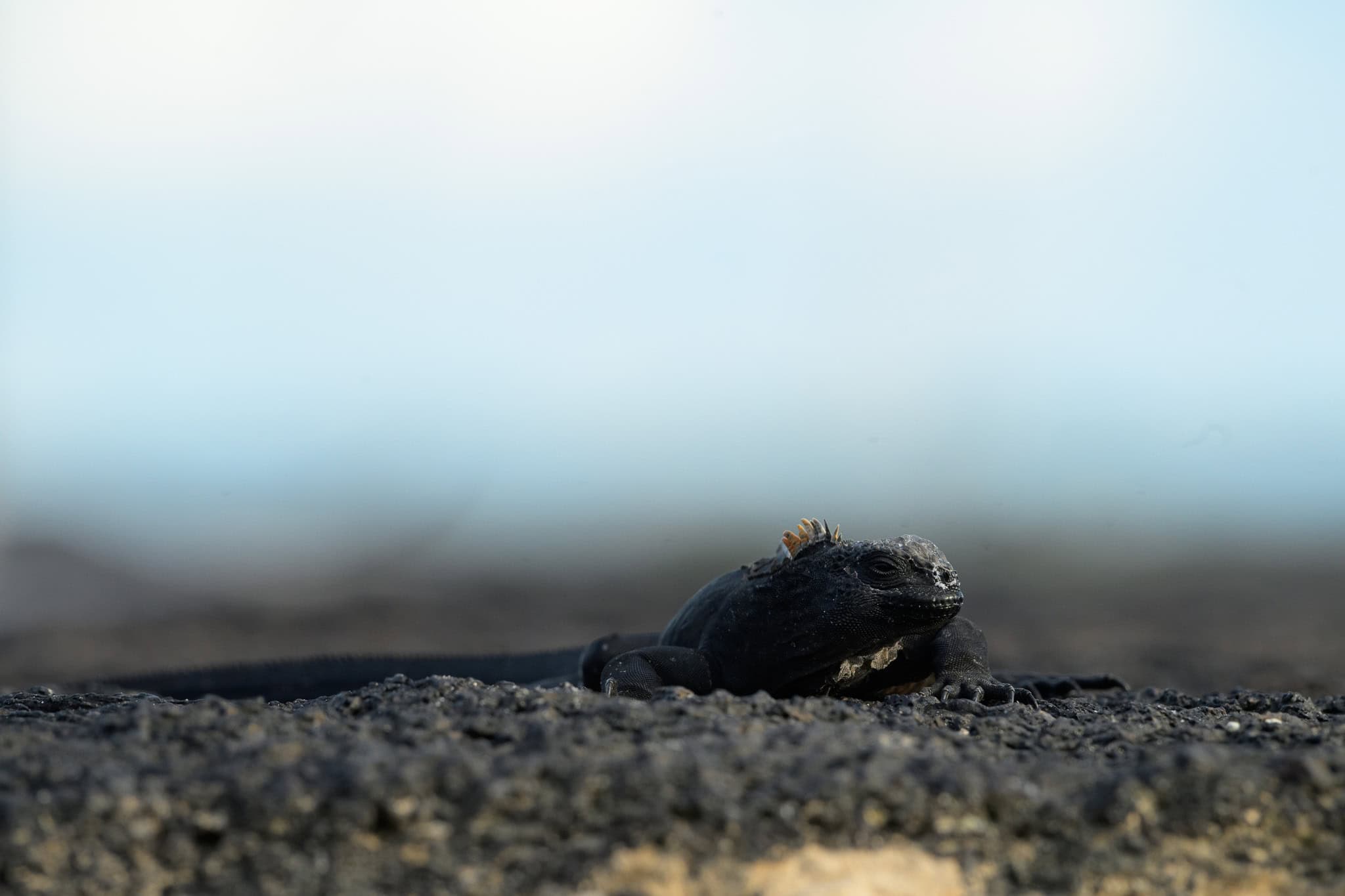
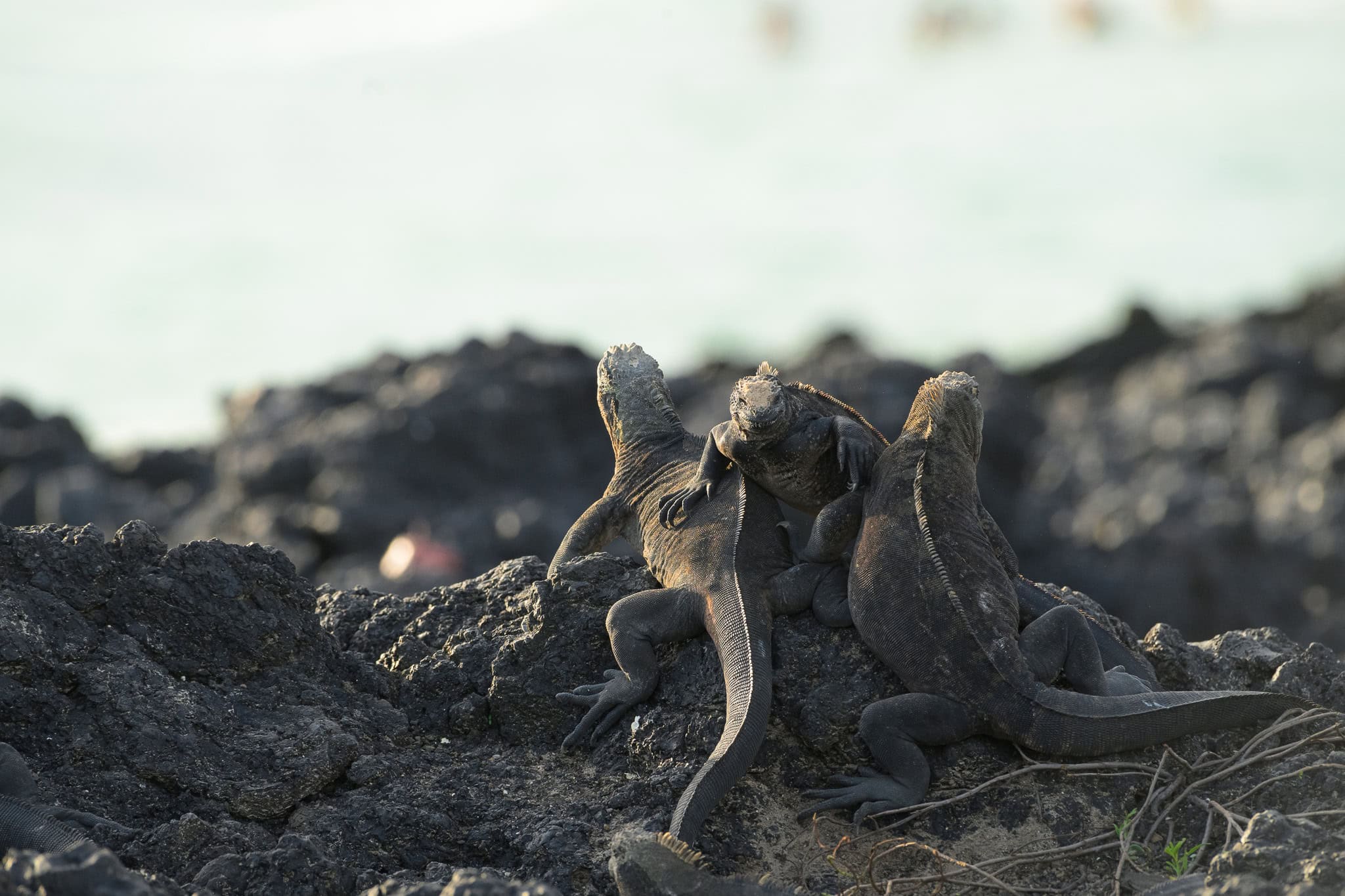
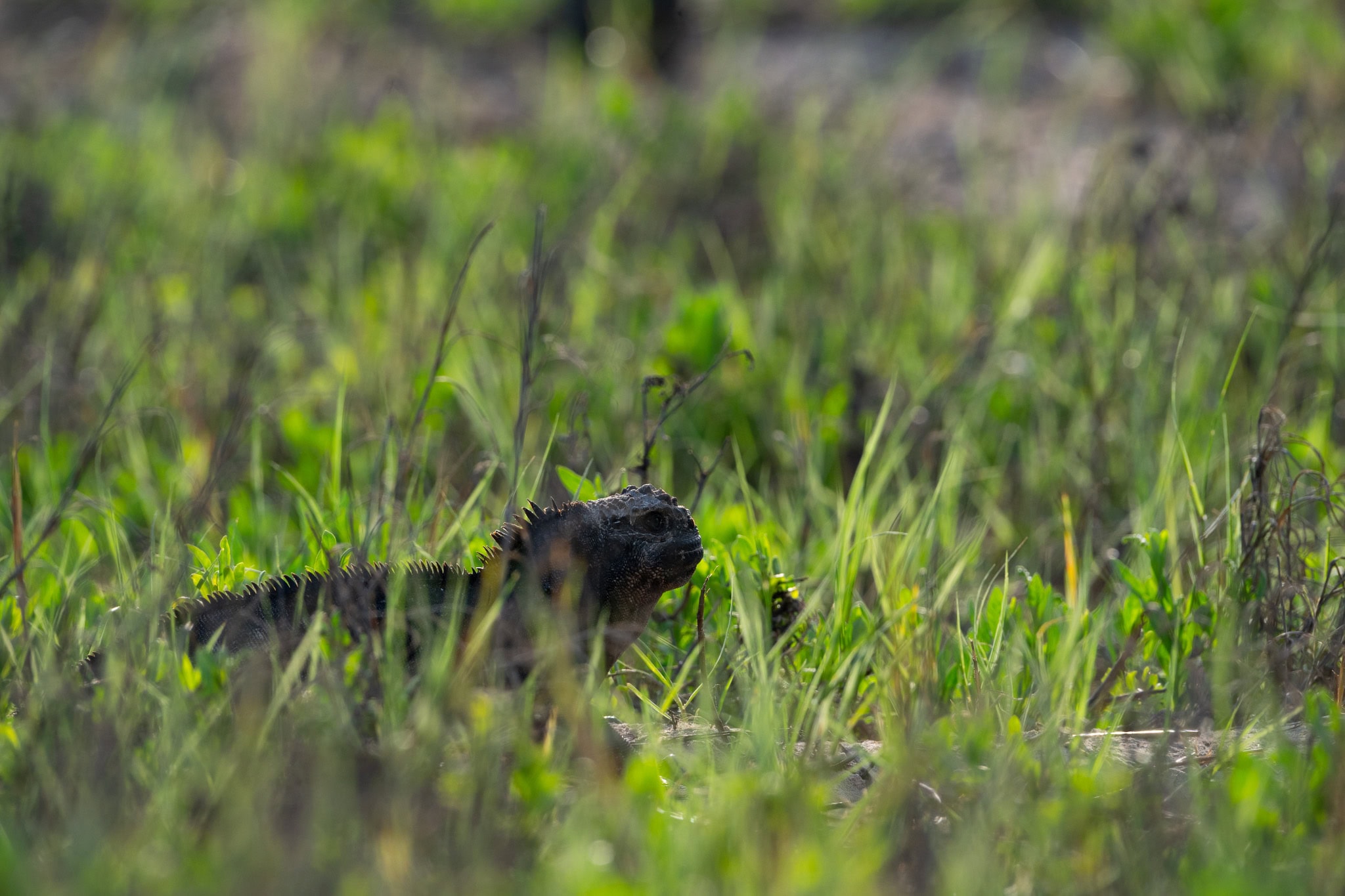
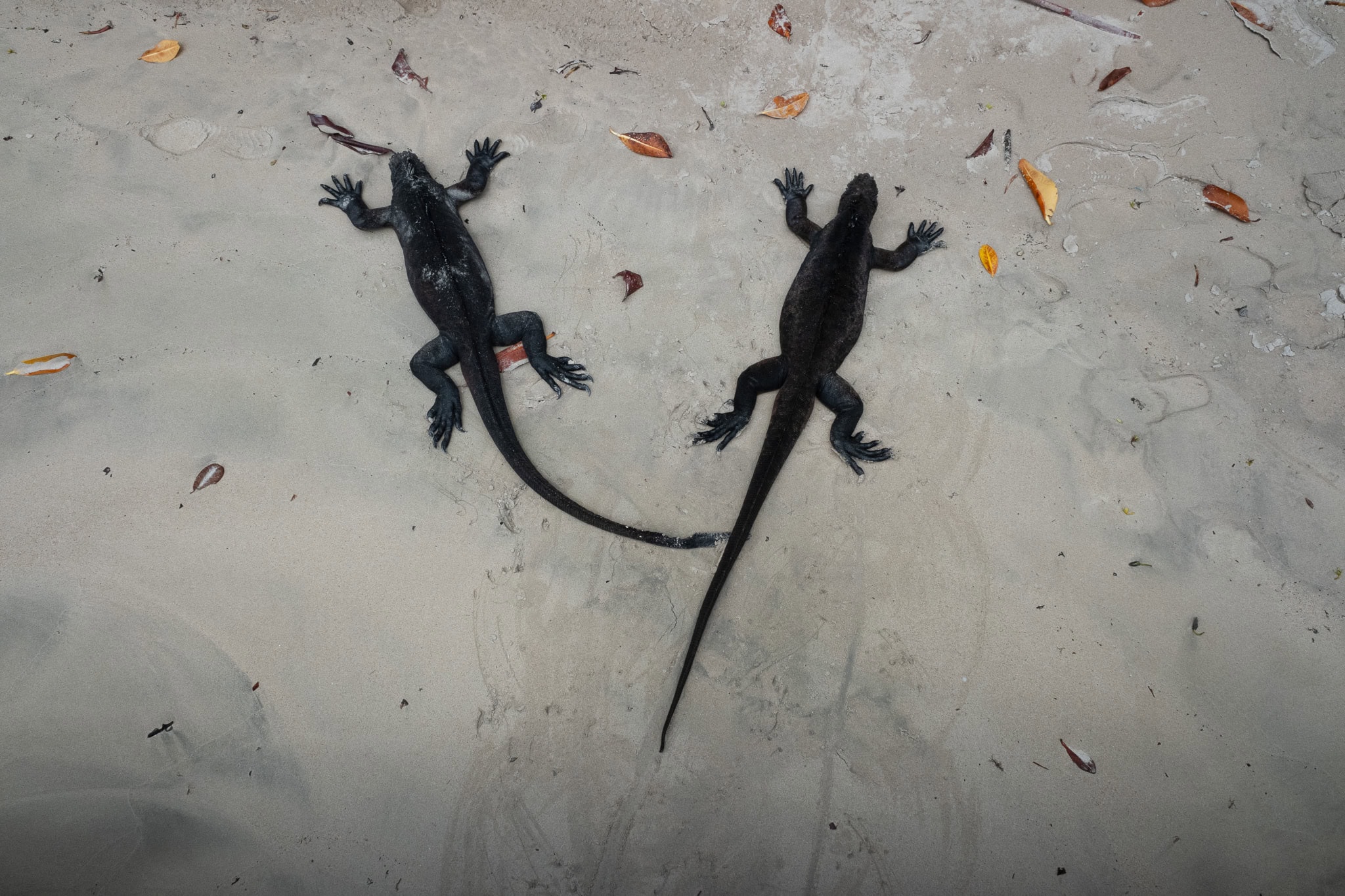
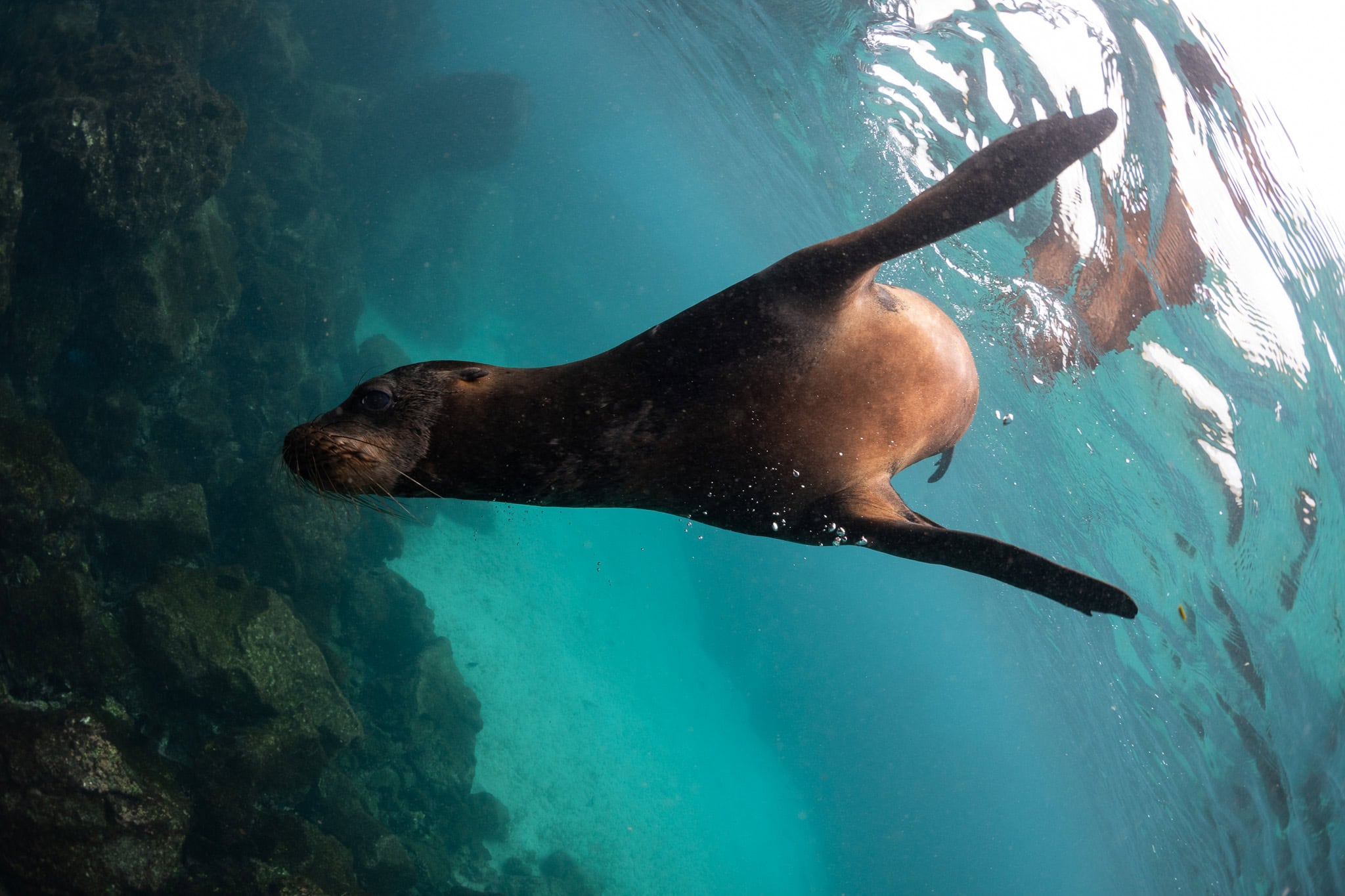
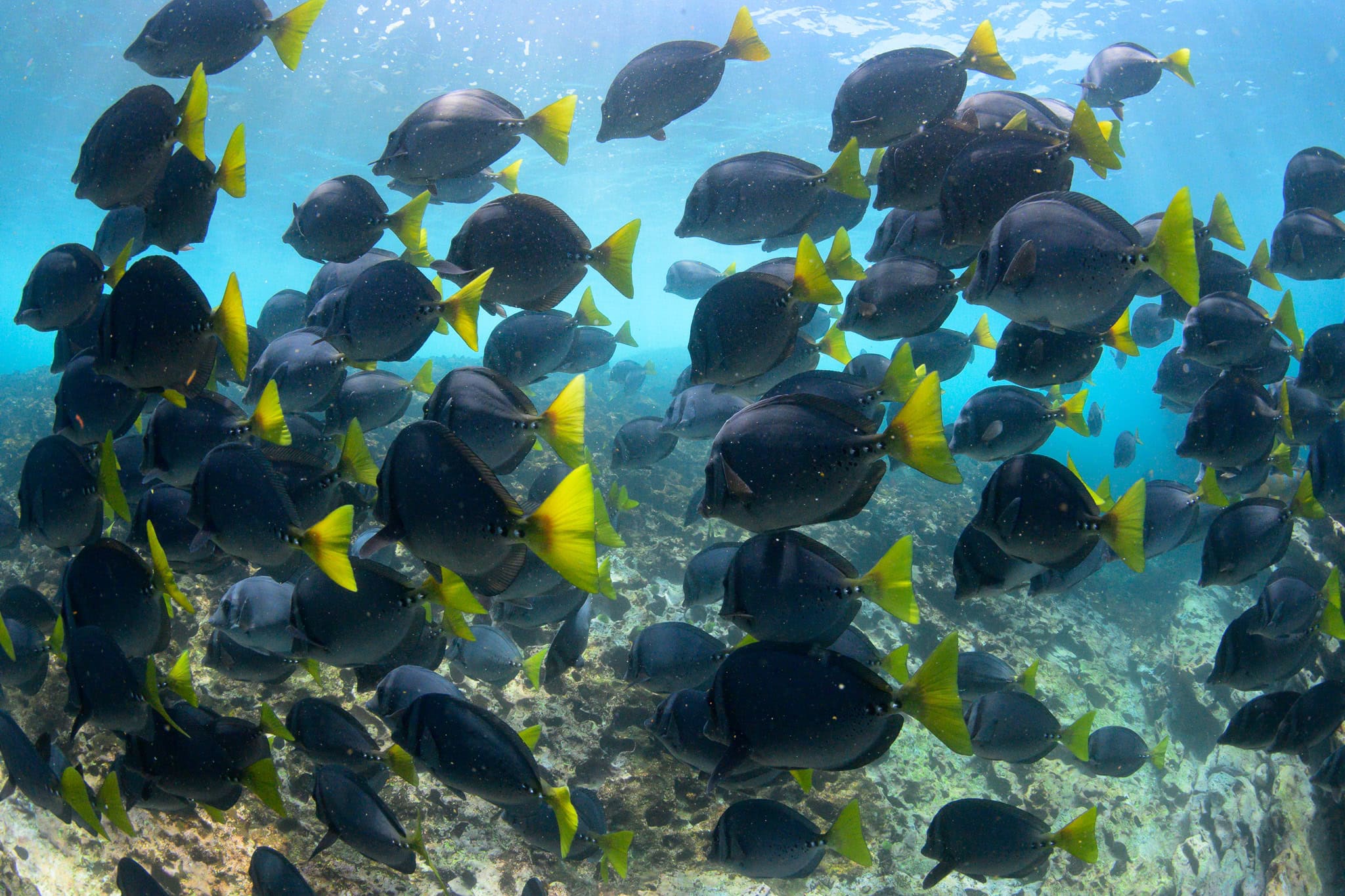
On our very first day, we were drawn out at 6:00 a.m. to a freely accessible snorkeling spot called Concha de Perla. Within an hour, I had already photographed swimming marine iguanas (Amblyrhynchus cristatus) and two Galápagos sea lions (Zalophus wollebaeki). We knew we had to see and explore more of the marine life, so we booked two snorkeling tours.

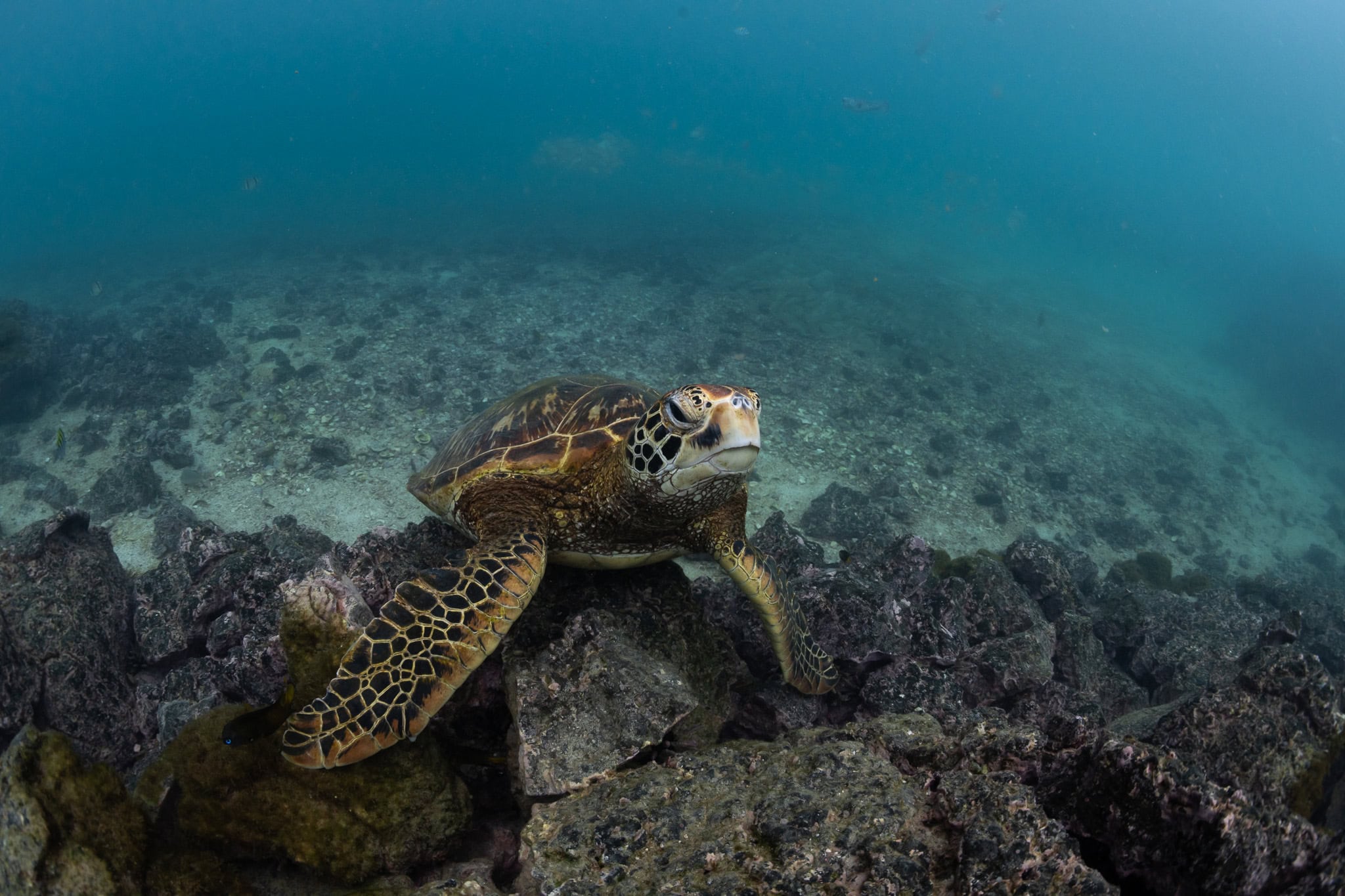
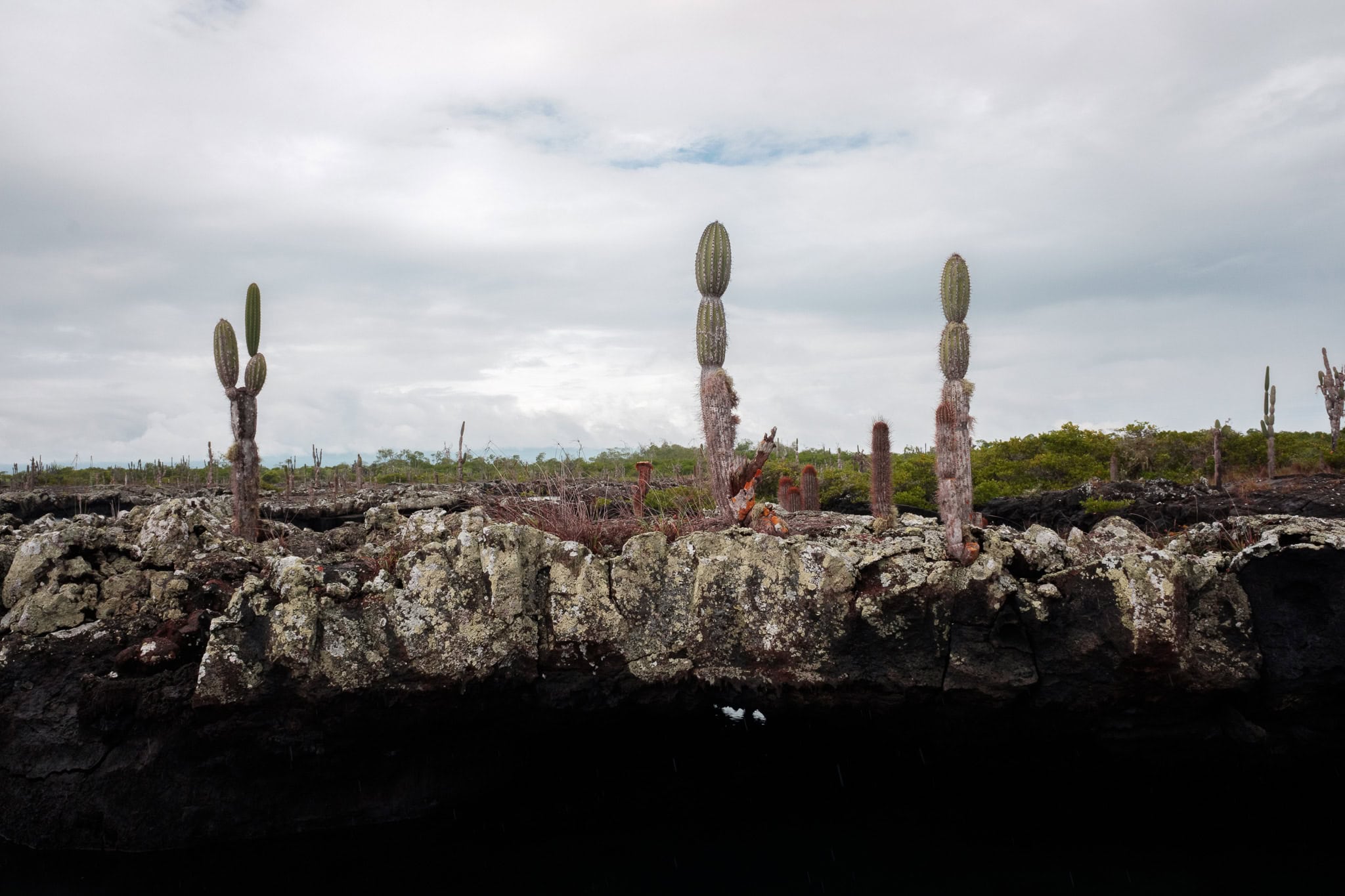
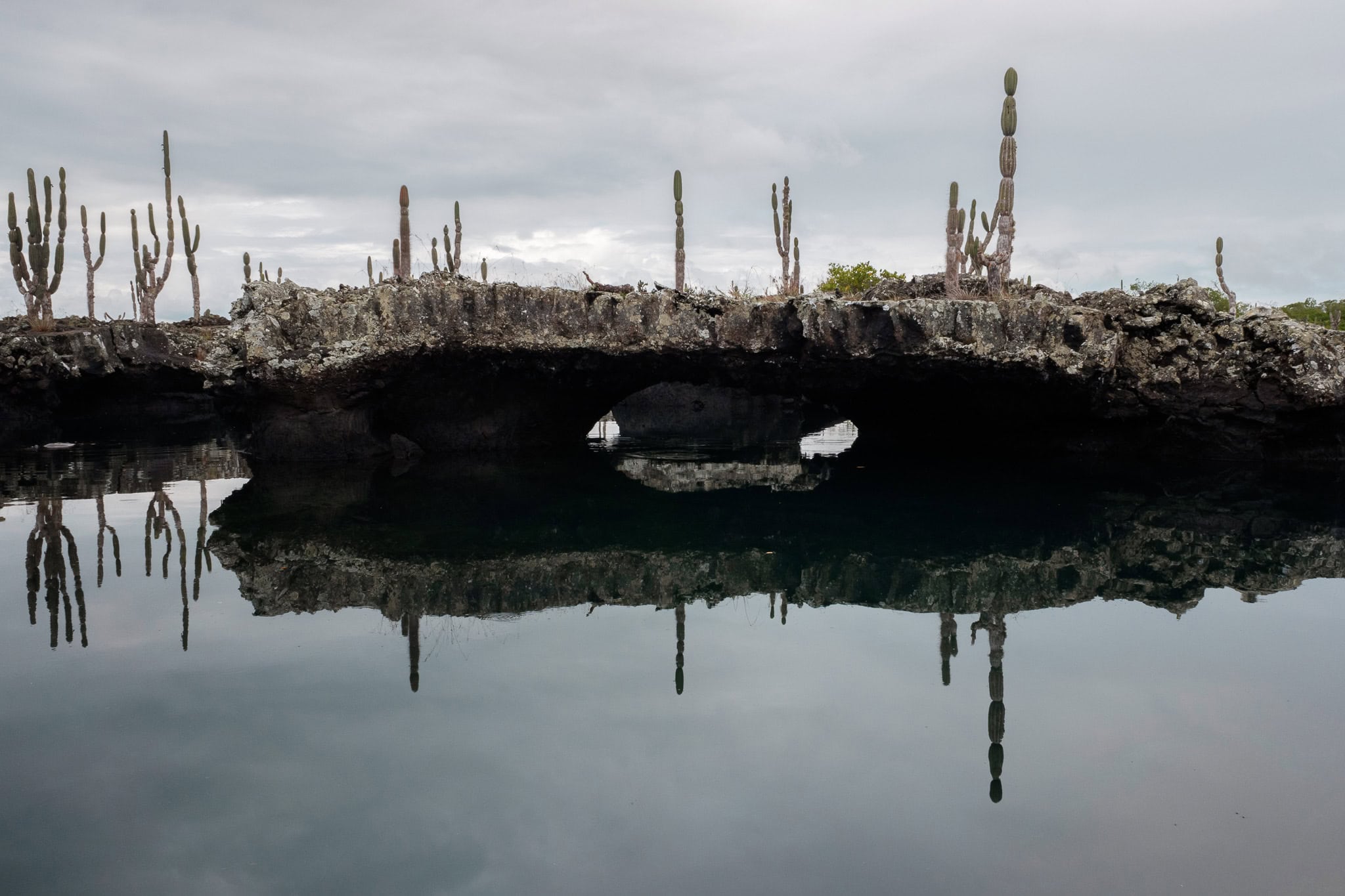
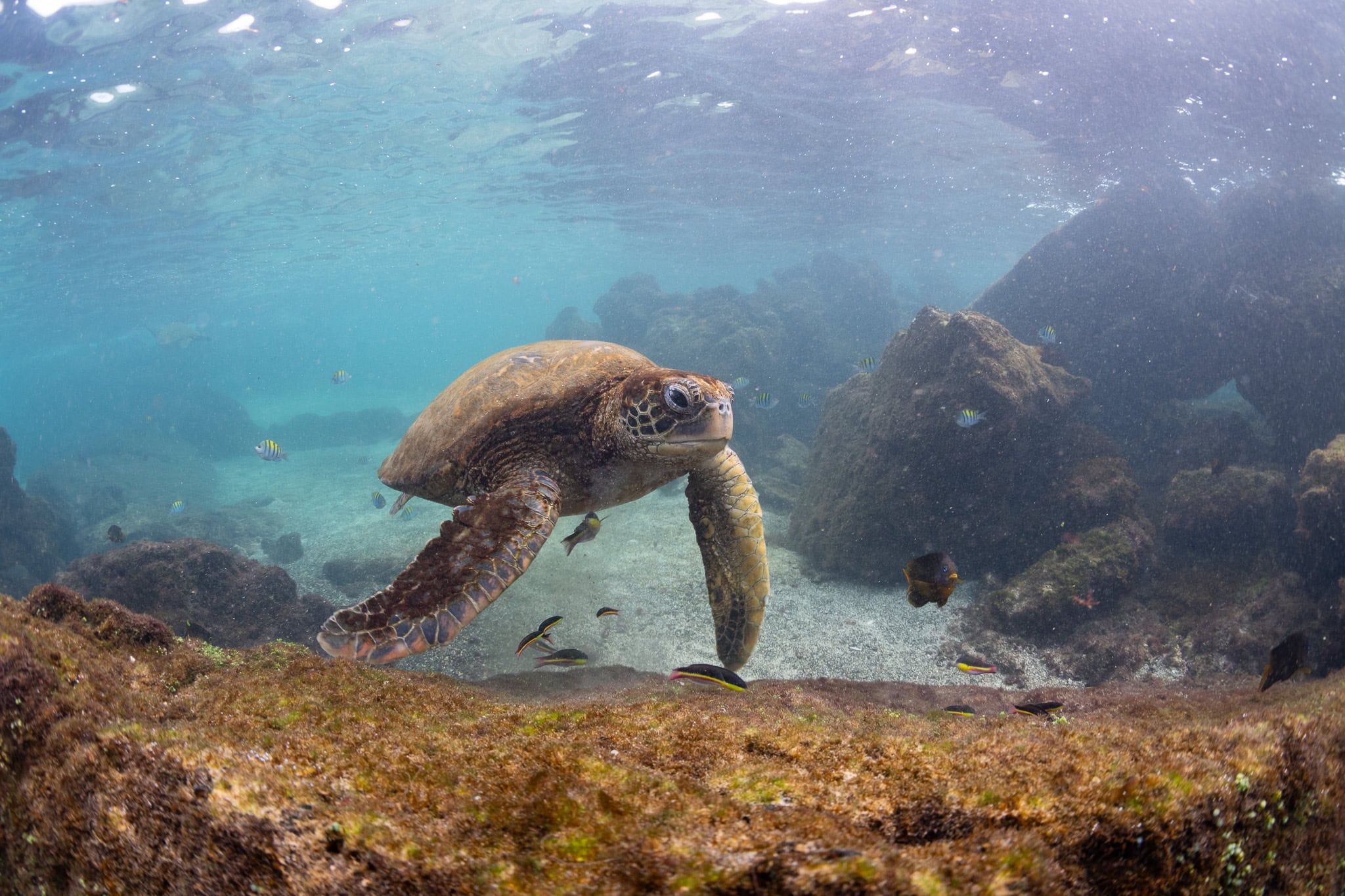
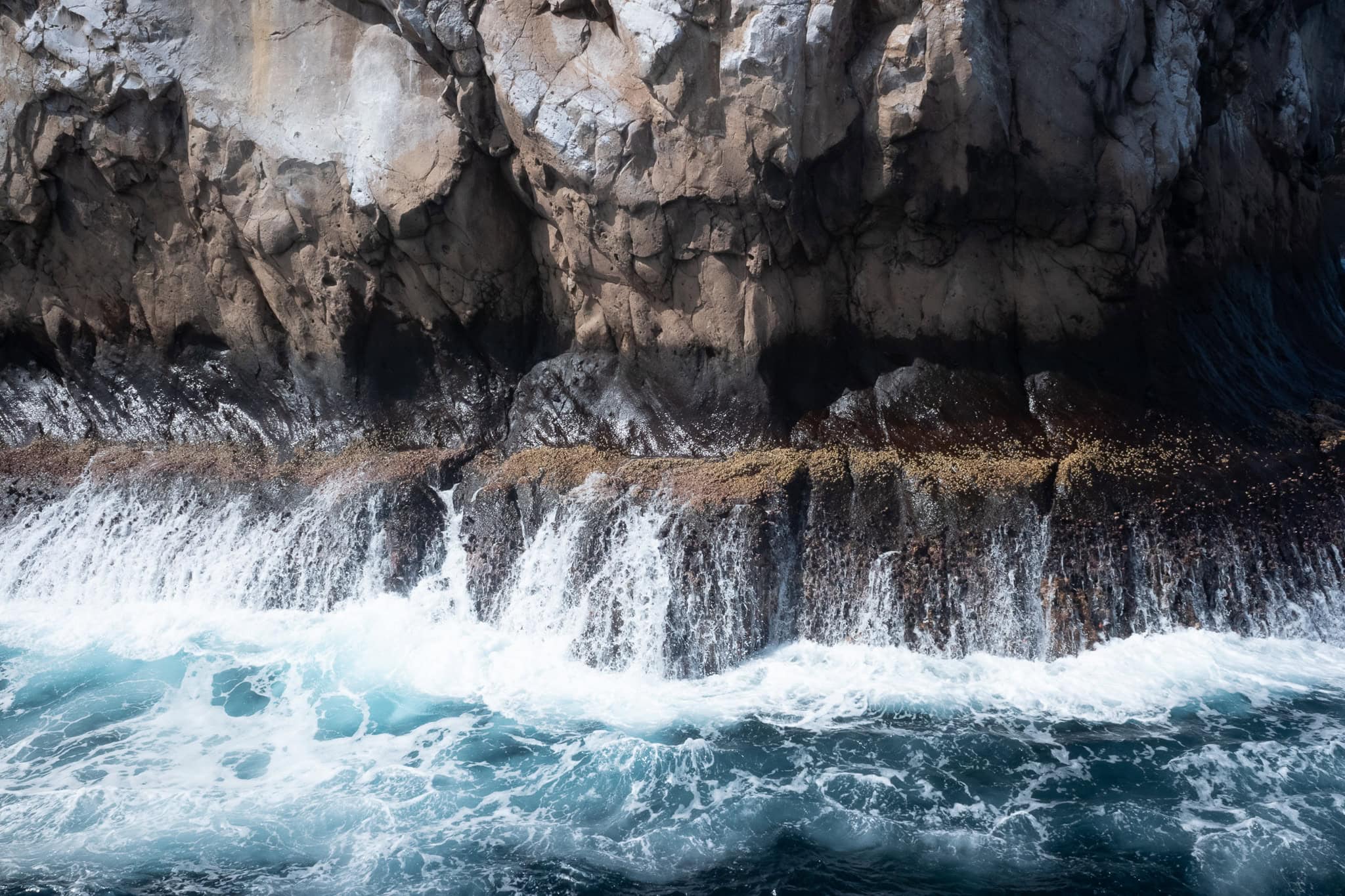
The first tour took us to a place called Los Túneles — breathtaking lava formations (all the islands are of volcanic origin) carved through by the sea. Here too, life seemed to explode all around us. In the water, massive green sea turtles (Chelonia mydas) drifted by, groups of whitetip reef sharks (Triaenodon obesus) cruised past, and we even spotted a seahorse. Thankfully, my Nauticam housing lived up to its promise, and my Nikon Z8 paired with an 8–15 mm fisheye lens did exactly what it was supposed to do. I alternated between shooting and simply staring in awe, while Paula and I crossed species after species off our bucket list.

ISLA TORTUGA & ISLOTES CUATRO HERMANOS

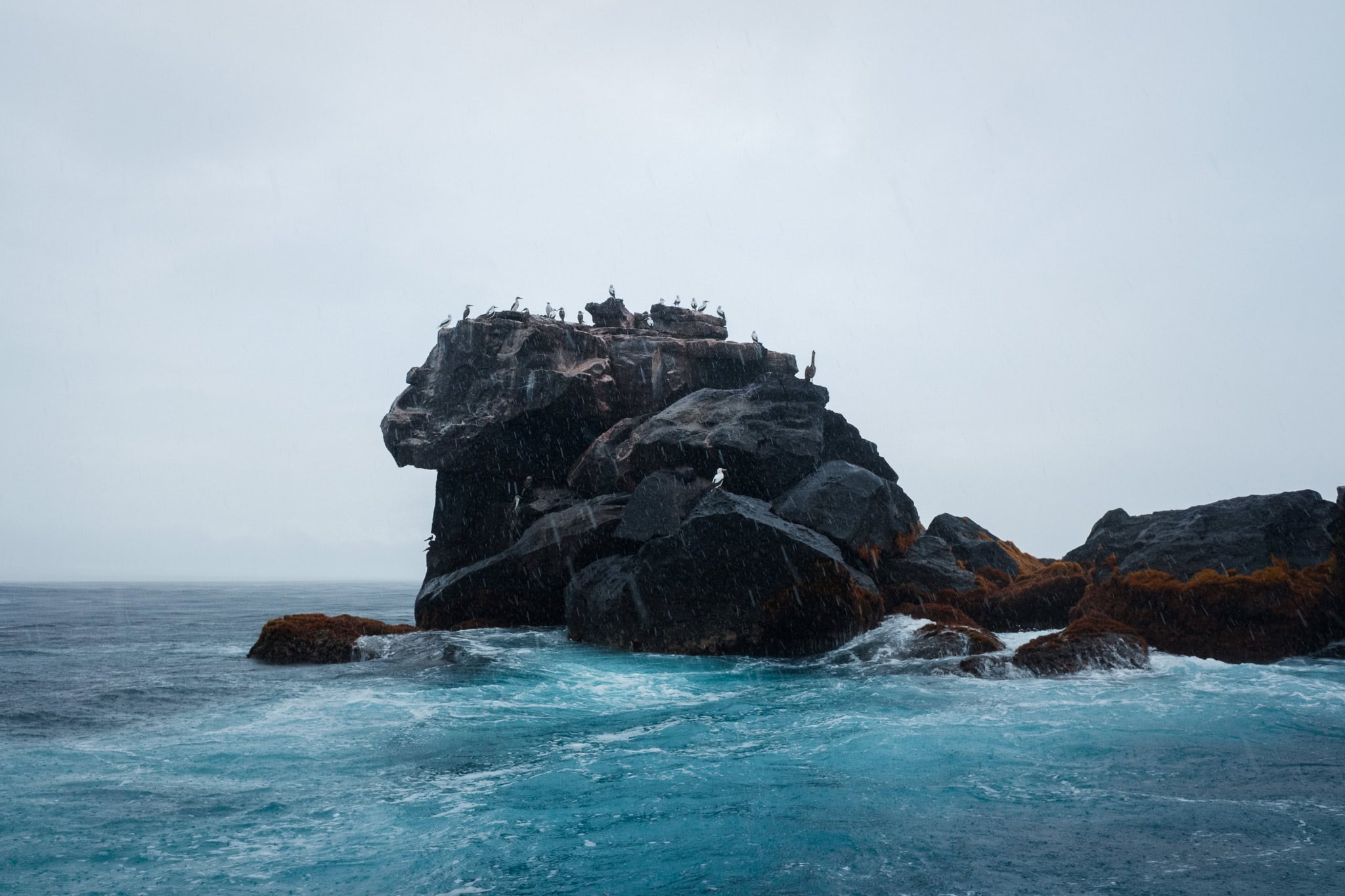
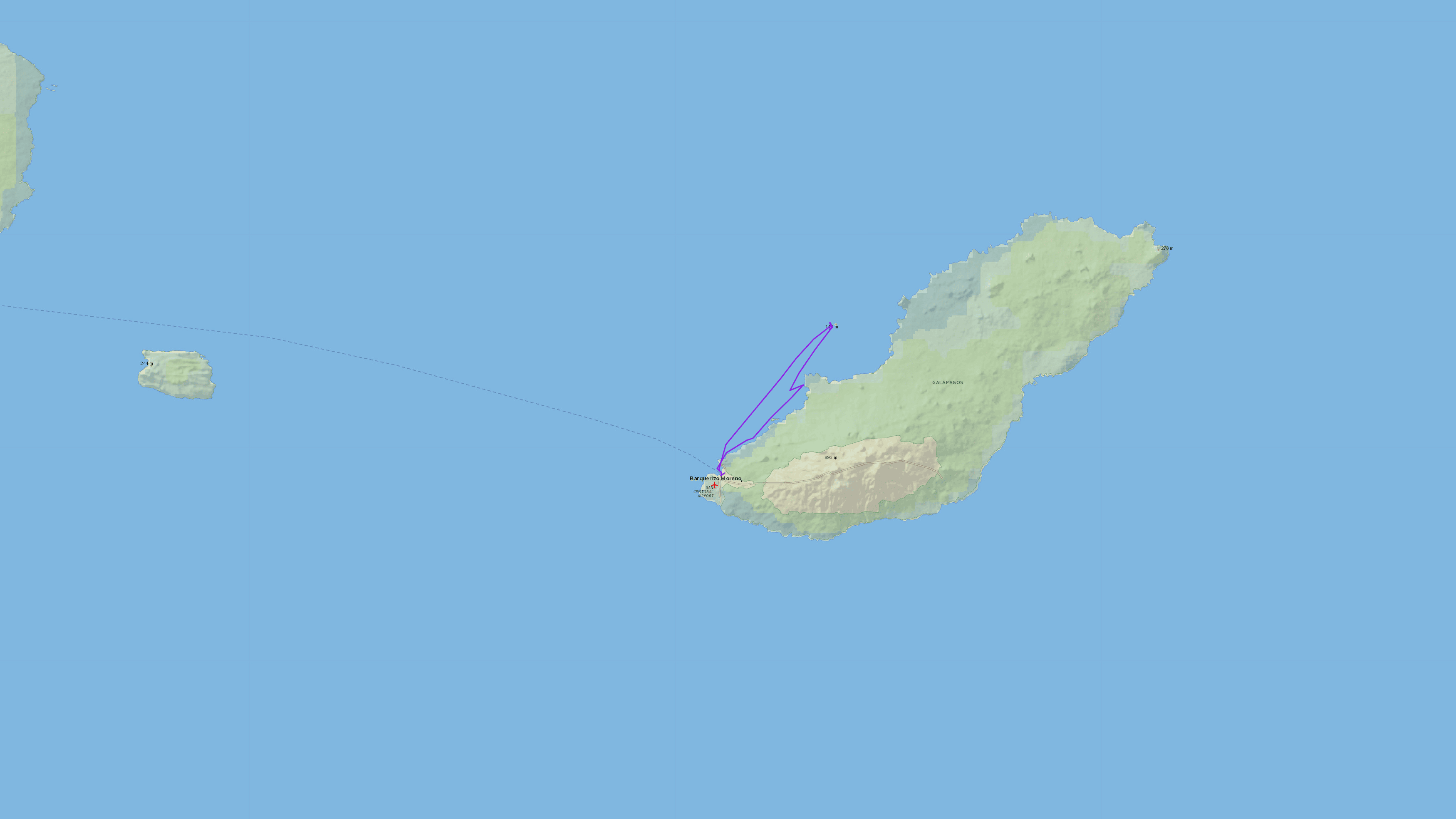
The next day, a tour awaited us that was going to be something special — we were heading to Isla Tortuga and the Islotes Cuatro Hermanos. At the time (February 2024), there was very little information available online about these two spots. We knew they were collapsed volcanoes located several miles offshore in open water. Finding an operator for this tour was extremely difficult. Back then, there was only one on the entire island — Whale Shark Diving Galápagos.

The day of the tour felt different. There was something in the air. The weather was perfect (it had rained the day before), the guide was highly motivated, and the group worked wonderfully together. What exactly happened on that tour, however, you can read about on this PAGE.

THE “CHARLES DARWIN RESEARCH CENTER”

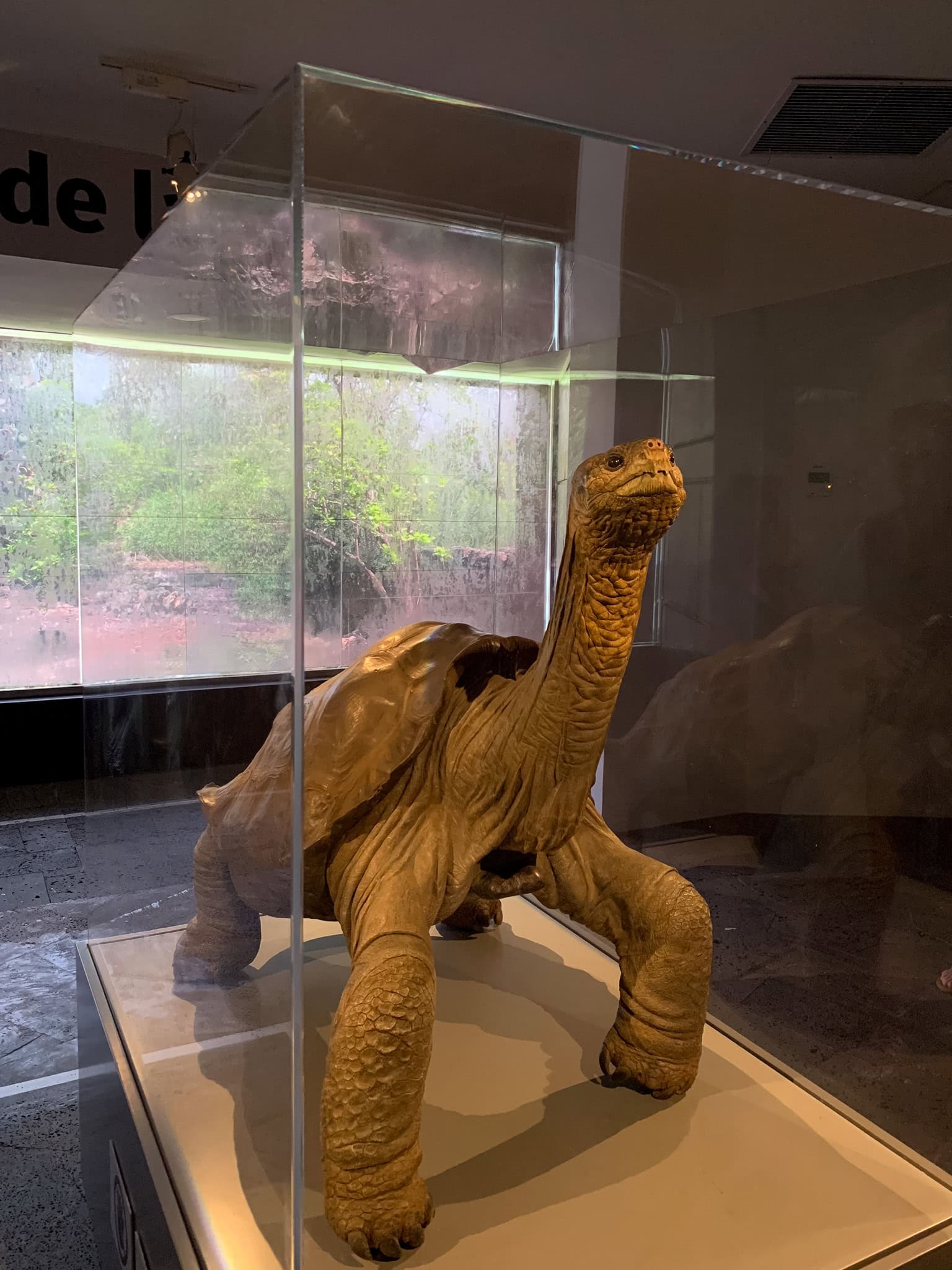
After these two tours, we returned to Santa Cruz, only to catch the ferry to Isla San Cristóbal five hours later. To pass the time, we visited the Charles Darwin Research Center. We joined a guided tour of the grounds and were able to see the preserved “Lonesome George,” the last Galápagos giant tortoise of the Pinta Island subspecies (Chelonoidis nigra abingdonii).

After that, it was another 2.5-hour ferry ride to the next island.

ISLA SAN CRISTÓBAL

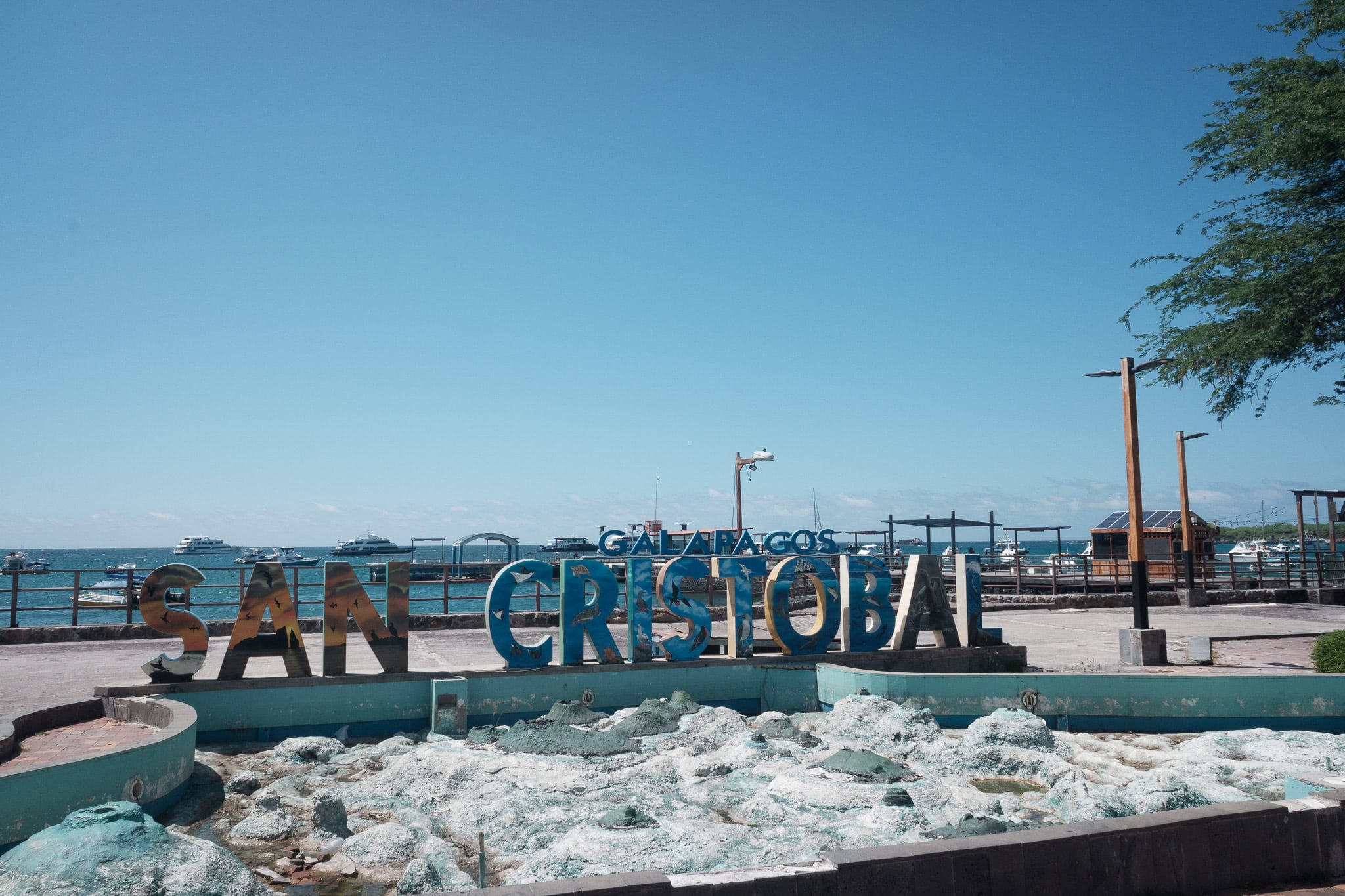
Exhausted, we arrived on the island and immediately noticed that things felt different here. There was much more hustle and bustle. People everywhere. Puerto Baquerizo Moreno was a proper small town. No more sandy roads — instead, paved streets with cars.
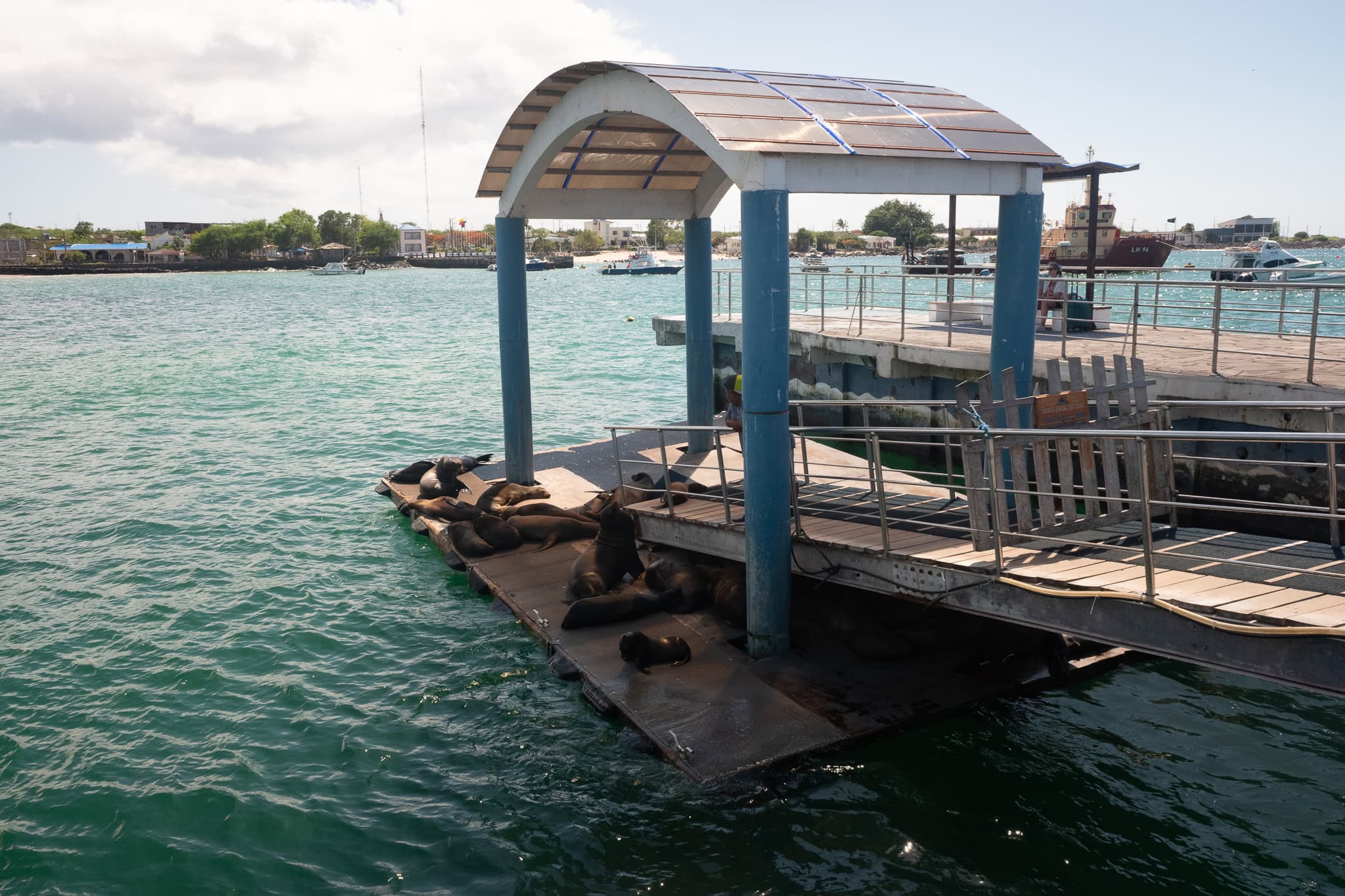
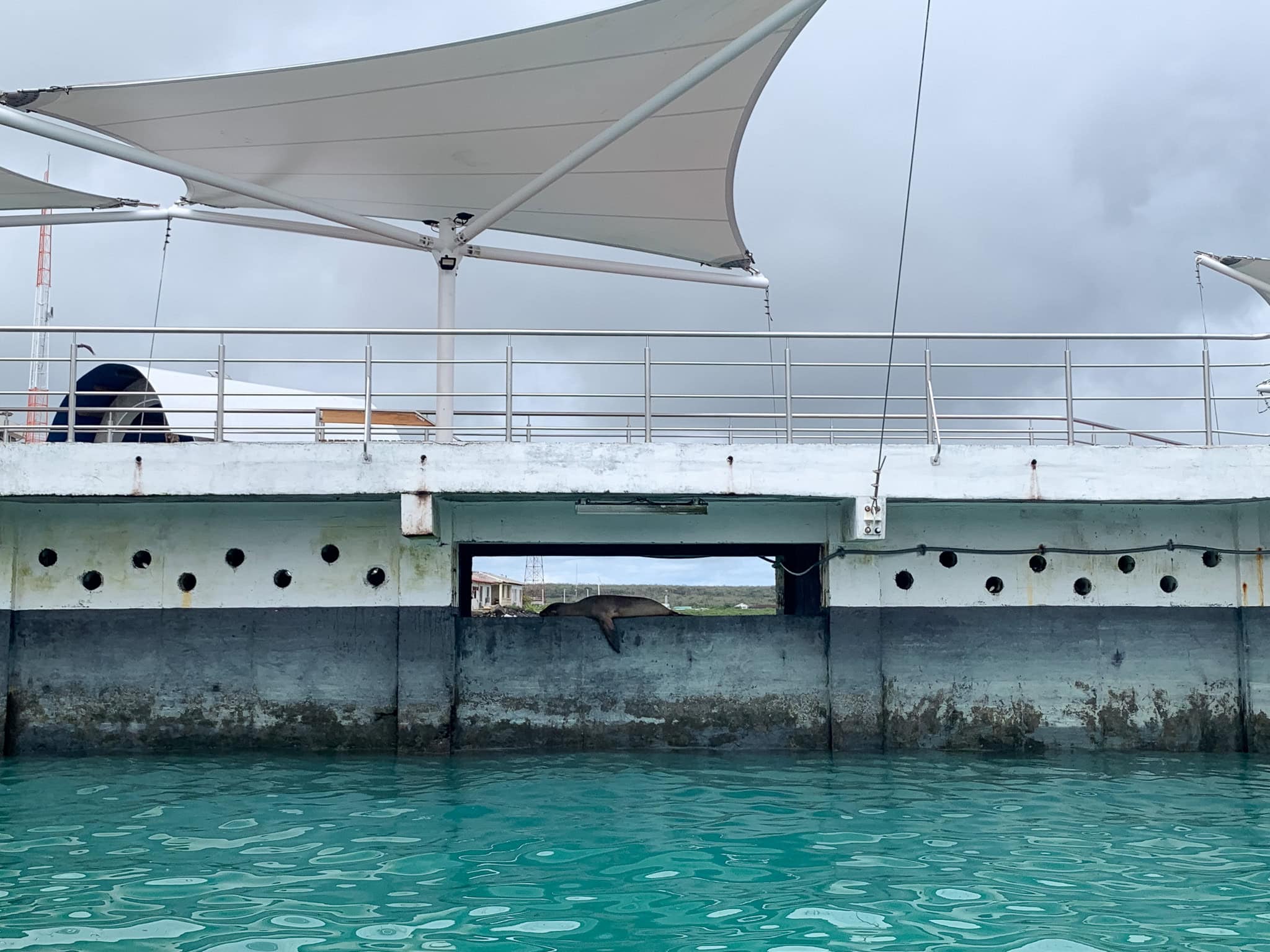
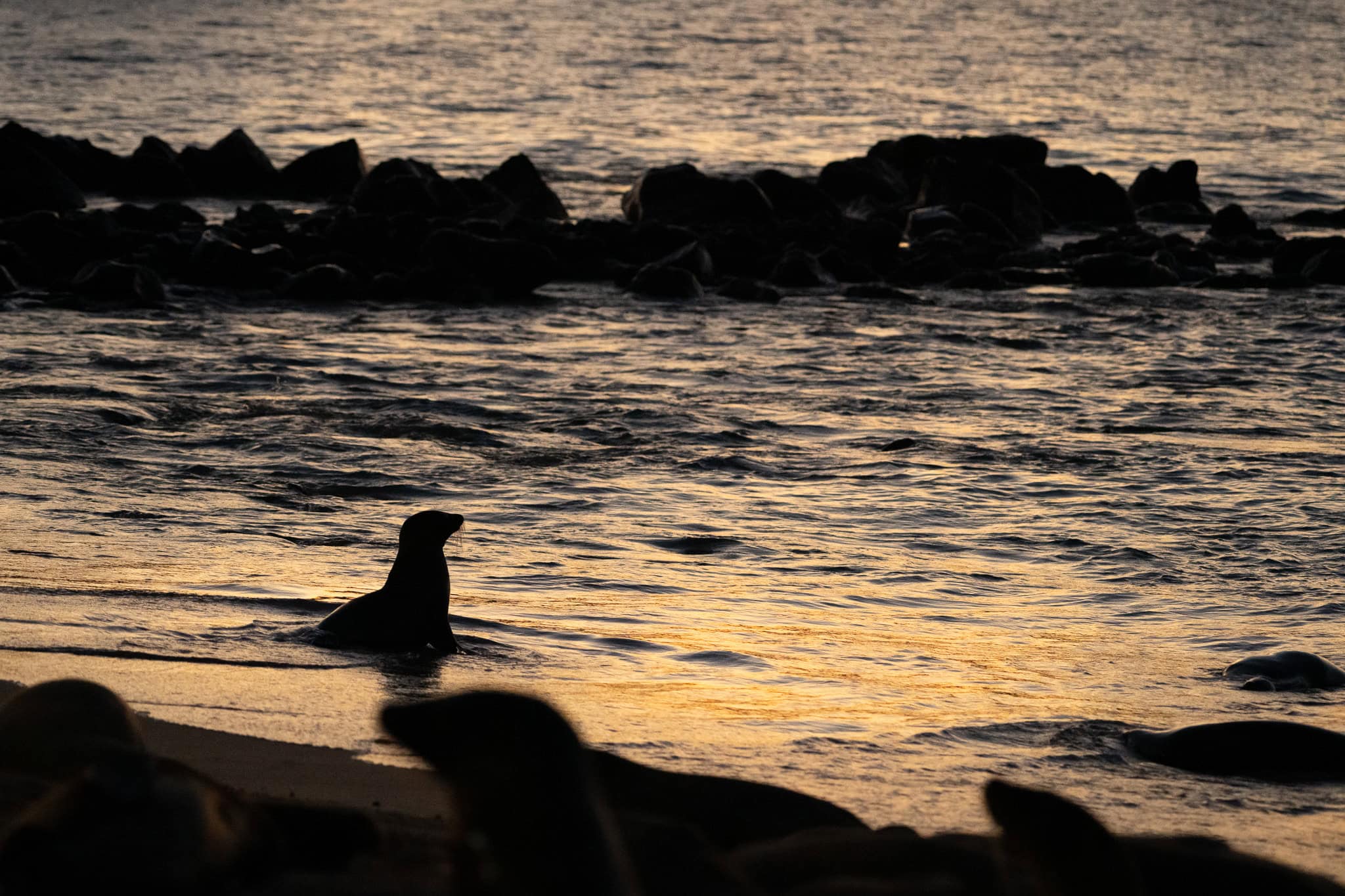
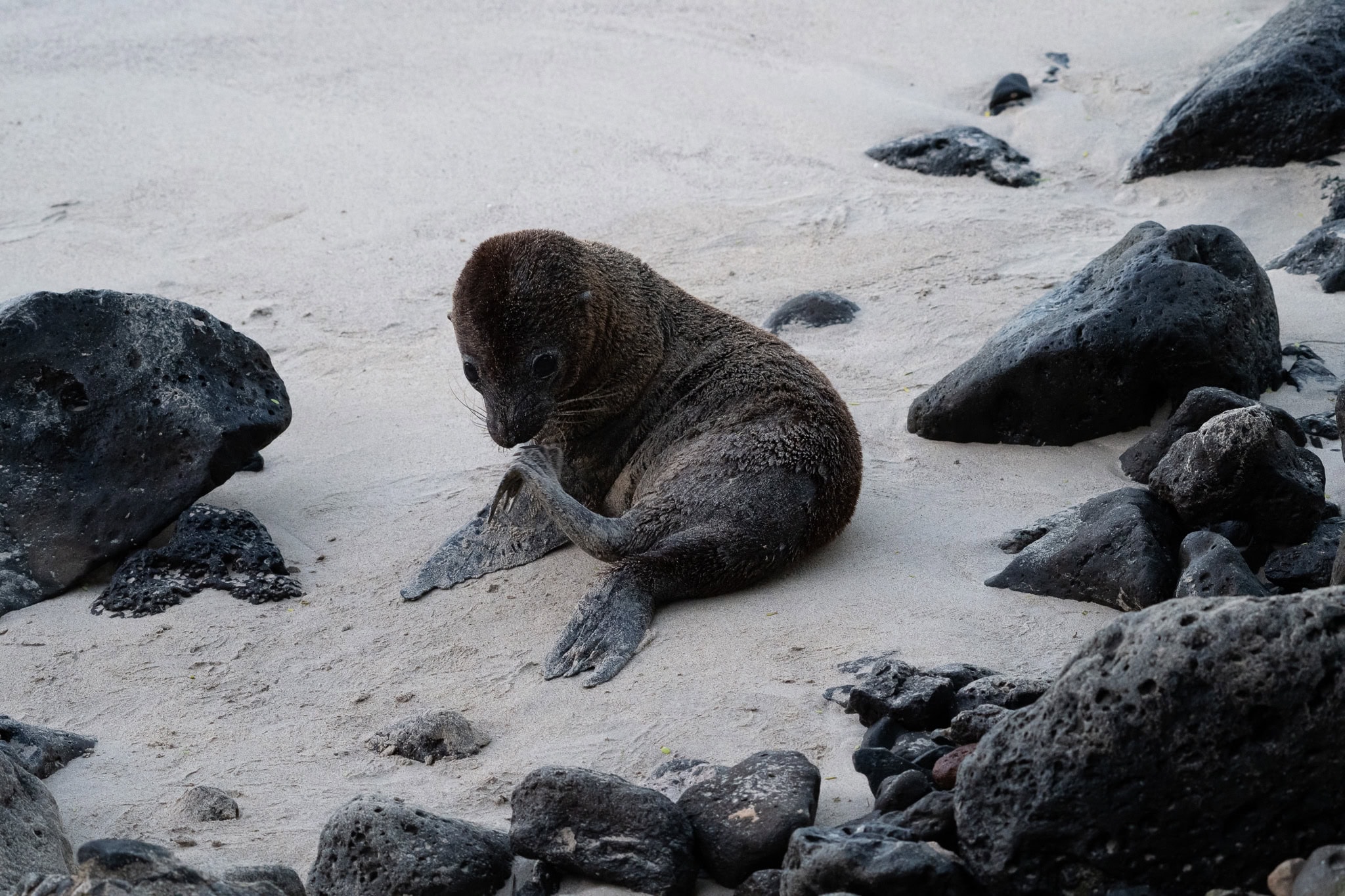
At the pier, the next surprise awaited us: a cordoned-off beach packed with hundreds of sea lions — a breathtaking sight in the light of the setting sun.

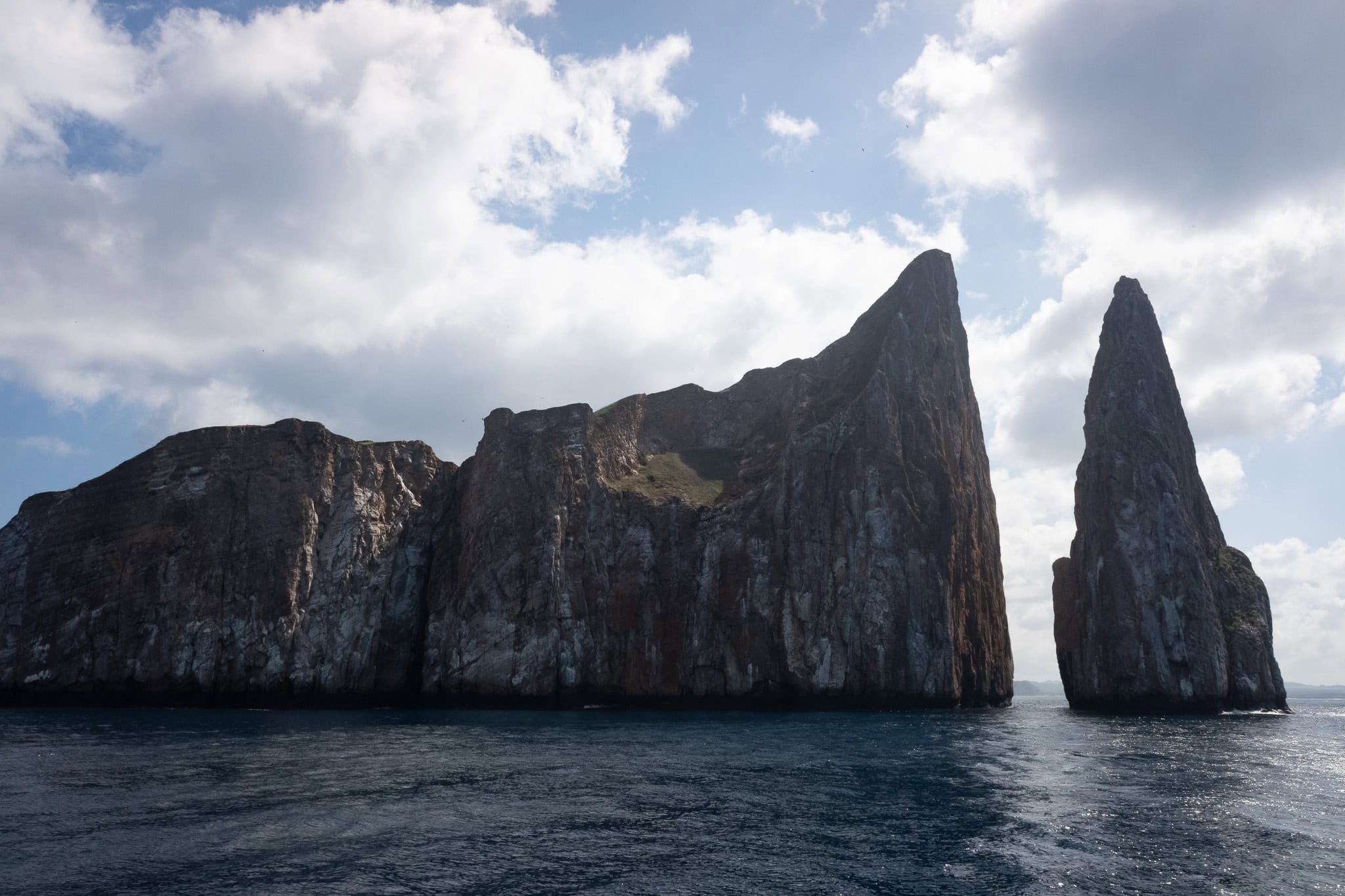
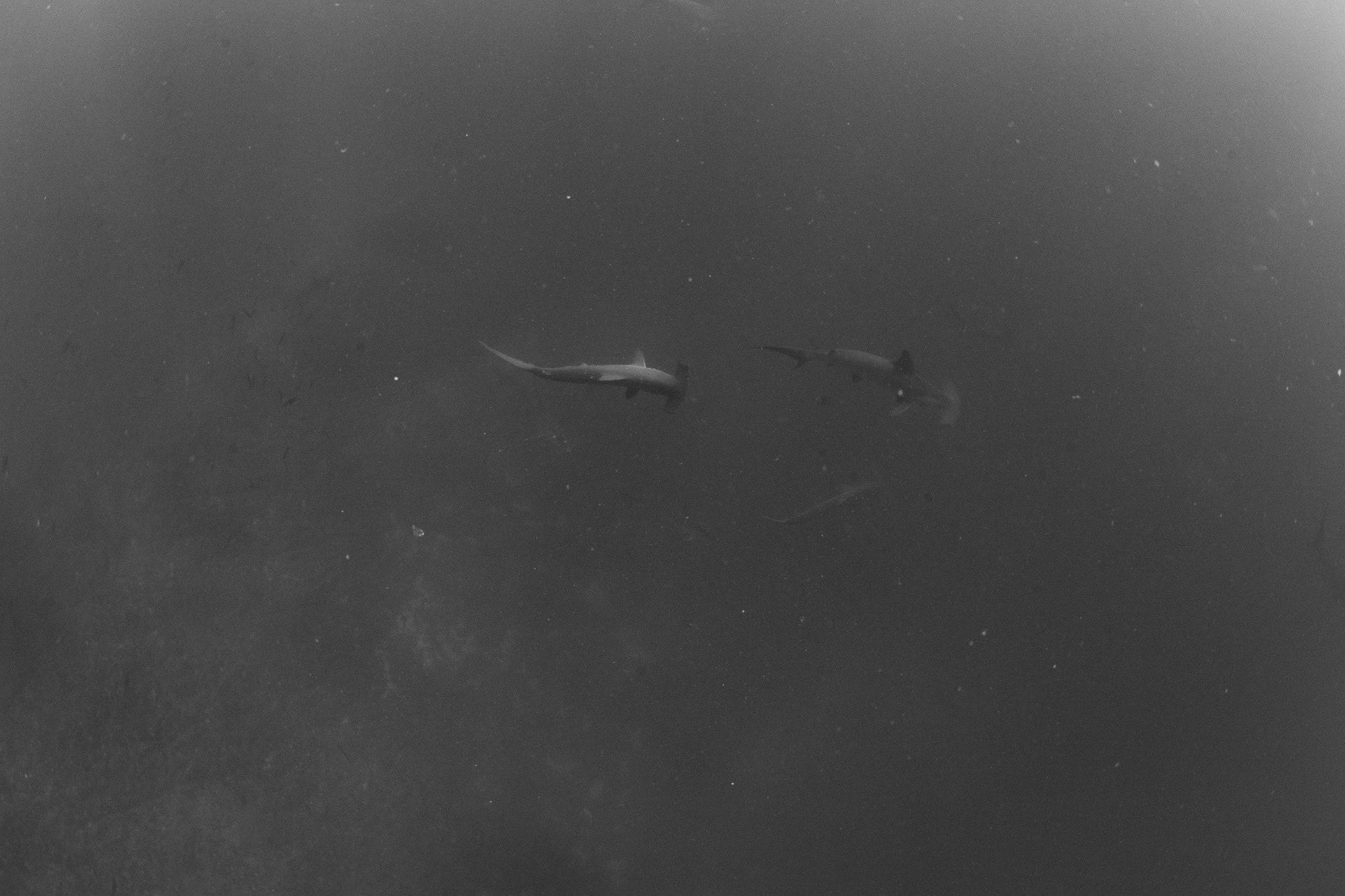
On this island as well, we booked a snorkeling tour. From the very beginning, I wanted to go to Kicker Rock, as it’s said to be a place where even snorkelers can see hammerhead sharks. My expectations for the spot were therefore quite high. Somehow, while booking, the conversation turned to our Isla Tortuga tour from two days earlier. For a brief moment, we were kind of famous.

Back to Kicker Rock: the site lived up to its promise. We saw 15 scalloped hammerhead sharks (Sphyrna lewini), Galápagos sharks (Carcharhinus galapagensis), Pacific spotted eagle rays (Aetobatus laticeps), and four Japanese devil rays (Mobula japanica). Unfortunately, our guide wasn’t particularly motivated and seemed eager to wrap up the day. As a result, we had to fight the current for an hour and couldn’t really enjoy this incredible spot as much as we would have liked.

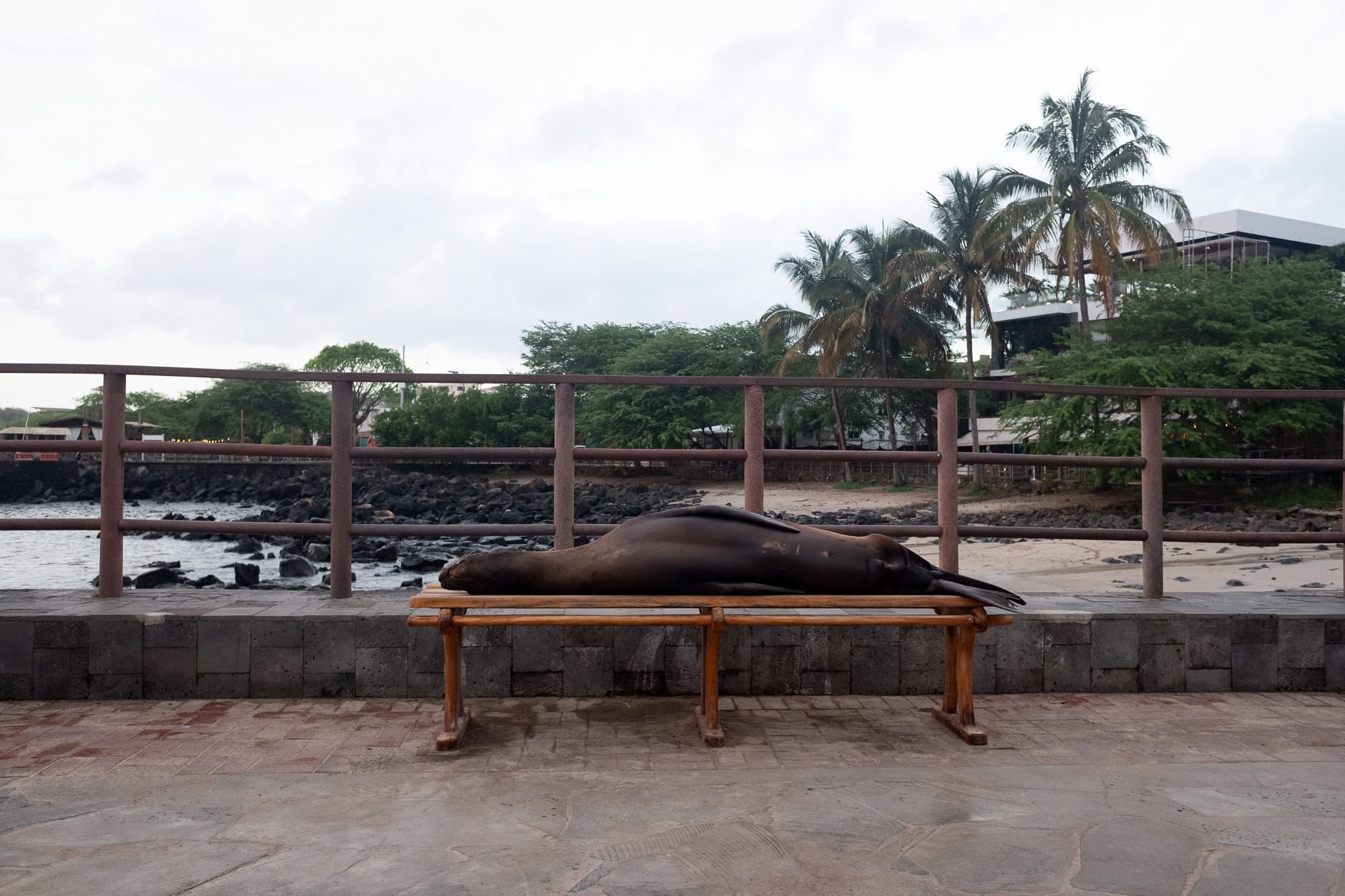
The remaining days followed a familiar rhythm: we went to Playa Mann, drank fruit shakes, played Skip-Bo, and defended our towels against curious sea lions. You could say we were enjoying life among animals.

After three almost identical days, it was already time to head home. We took the ferry back to Isla Santa Cruz to begin our journey home.

ISLA SANTA CRUZ & FAREWELL TO ECUADOR

We only had one evening here and spent it shopping, eating, and watching wildlife at the pier. It felt as if the island wanted to wish us well one last time. We saw around ten juvenile blacktip reef sharks (Carcharhinus melanopterus), a huge dark ray, as well as several sea lions and pelicans.

We let the final days on the Galápagos Islands — and in Ecuador in general — pass through our minds once more and savored our shared memories. We knew that what we had experienced on the Isla Tortuga tour was truly unique and undoubtedly the highlight of our journey.

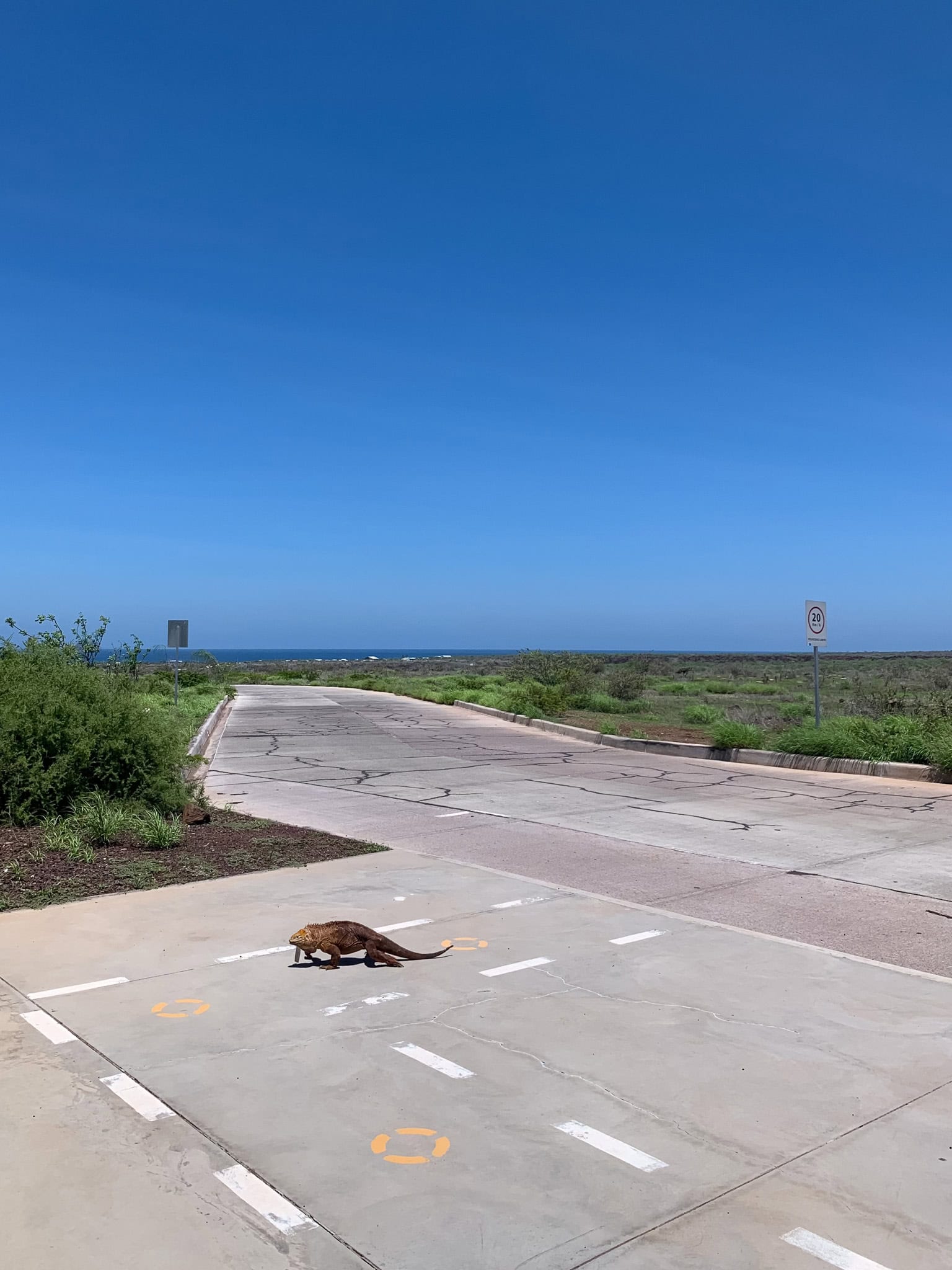
The next day, we were bid farewell at the airport by several land iguanas (Conolophus subcristatus) before boarding our flight to Colombia and leaving Ecuador behind.

EQUIPMENT USED IN ECUADOR

Nikon Z8

Fujifilm XF10

Nikkor 8–15mm f/3.5–4.5 Fisheye

Nikkor 200–500mm f/5.6

Nauticam Z8 Housing

Video: 4K@120fps N-RAW with N-Log


You can find more information about my equipment HERE.

Imprint | Privacy Policy | Cookie Guidelines (EU) | Copyright: Daniel Kainz 2026